
Households
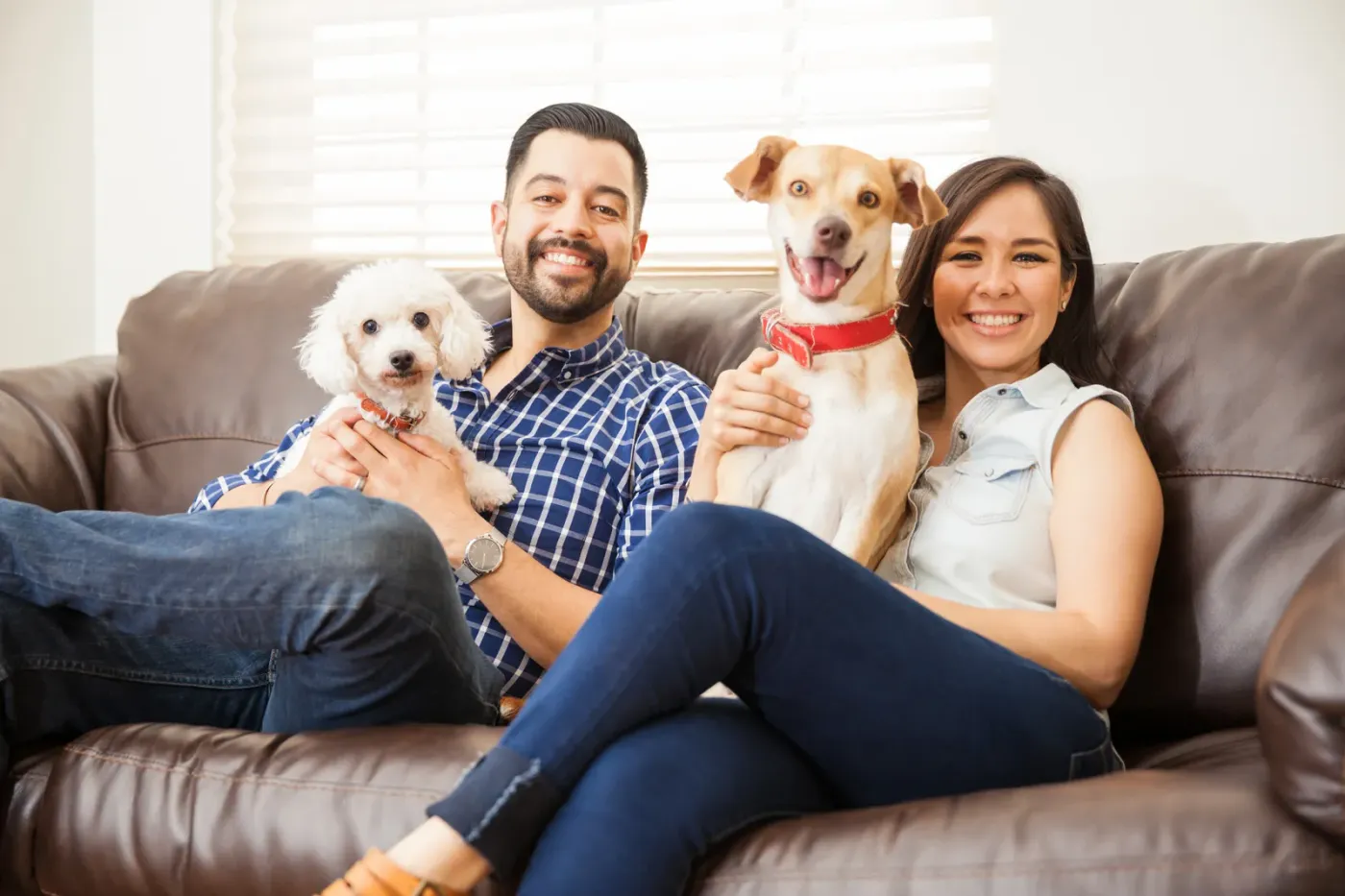
Two dogs of different ages, training together
A four-month-old puppy and a nine-year-old dog often want different things from a training session. One may need to move; the other may prefer short, quiet work and a long rest afterwards. Running them in the same session at the same standard tends to shortchange both. Here is how we train each dog on its own terms, then merge the sessions without the puppy learning the wrong lessons from the adult.
Last reviewed September 24, 2026
Separate sessions first
One dog, one session, one standard at a time.
We put the adult in a crate or behind a closed door with a chew and work the puppy for a few minutes: name, sit, down, a little leash work. Then we swap. The puppy rests, the adult gets its own short session on what it actually needs, often sharpening a stay or a recall that has gone soft. Session length follows the dog: a puppy may be done in three minutes, an older dog may manage longer or need less.
The older dog is a model, not a teacher. A puppy may copy an adult who settles on a mat. It may also copy window barking and counter-surfing, so we check what is on display. Rewards follow the individual, not the birth certificate: some puppies work hardest for food, some seniors do too, and some dogs prefer a toy or a calm word. We protect the senior. A puppy that body-slams the old dog is removed before the old dog has to object.
- One dog works, one rests
- Adult models, does not teach
- Rewards matched to each dog
- Senior gets a puppy-free zone
Merging the sessions
Bring them together on place and by name.
Once each dog holds place alone, we put two beds down, well apart, and send each dog to its own. Then we play name games: say one name, mark and pay only that dog, so the other can learn that a different name means nothing is coming. Feeding is different: we feed in physically separate areas, a crate or a closed door apart, and never rely on a place cue or a release word to keep two dogs off one bowl. Doorways come last.
Two mistakes often create a two-dog problem. The first is letting the puppy learn the house from the adult, so we fix the adult's door rush first. The second is punishing a growl when the puppy climbs on the senior; in our experience shutting it down can teach the adult to skip the warning. We move the puppy instead. When winter has two dogs wrestling indoors, Day Training at $650 plus GST per week gives one dog one-on-one work Monday to Friday.
Asked and answered
The questions people ask us.
Can you train two dogs at once?
Not well at the start, in our experience. We give each dog its own short session while the other rests, because two dogs competing for one hand tend to shove rather than think. Once both are settled alone, joint sessions on separate mats and by name can begin.
How do I train a puppy with an older dog in the house?
We crate or separate the older dog during the puppy's sessions so the puppy practises working for you rather than following the adult. We let the adult model the good habits, like settling on a bed, and keep it out of sight for anything it does badly. The senior also gets a room the puppy cannot enter.
Is a puppy and a senior dog together a bad idea?
In our experience it can work when the senior is protected and the puppy is managed. We do not expect the old dog to raise the puppy, and we do not punish it for growling when the puppy oversteps. Our job, and yours, is to remove the puppy before the old dog has to.
What is the best way to train multiple dogs at home?
We start with separate sessions and rewards chosen for each individual dog, then move to joint work on place, name games and doorways, with feeding in physically separate areas throughout. If one dog needs more work than the household can give it, Day Training at $650 plus GST per week gives that dog daily one-on-one sessions Monday to Friday. Which program fits, if any, is a consultation question, and we recommend a smaller option when it is enough.
Keep reading
Two dogs, one household plan
Two ages, two sets of needs. Book a consultation and we will map out sessions that suit both dogs.
From real owners
Rated 5.0 on Google.
Real Northline dogs