
The method
How to walk two dogs at once
Two dogs on one walk is not twice the work. It is more than that, because the third dog is the pair. Each dog brings its own habits, and together they share momentum, distractions and excuses. This guide covers how to build each dog separately, how to pair them with a coupler or two leashes, who walks where, and the tangle drills that keep the walk civil.
Last reviewed August 26, 2026
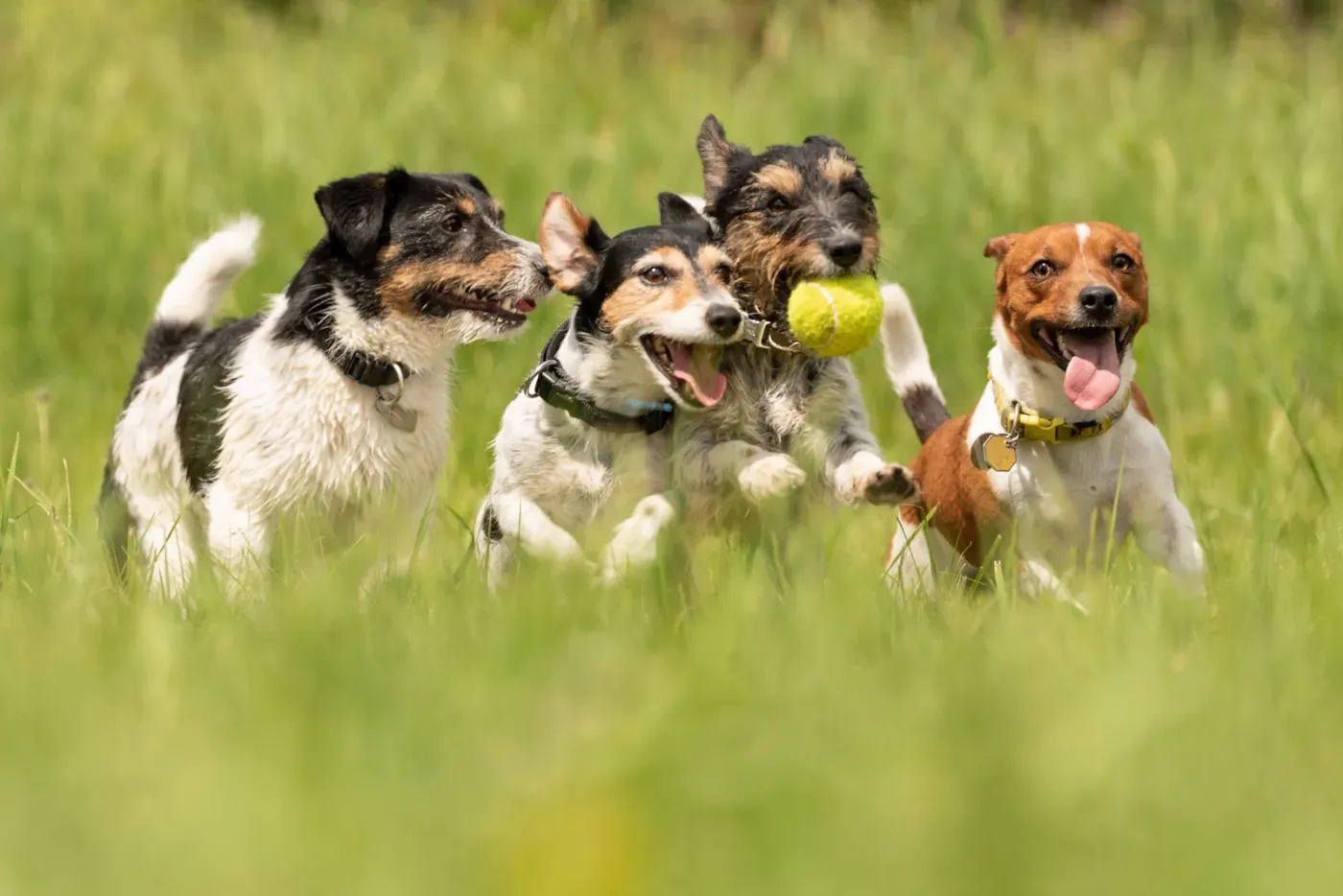
One dog, then two
Earn the pair one dog at a time.
Each dog needs to walk well solo before you ask for a pair. That means the leash stays slack, the dog holds a side, and a stop from you produces a stop from the dog. If one of them cannot do that alone, the pair will simply teach the weaker dog to pull harder. Split walks for a couple of weeks if you have to. It feels like a step backward and is the fastest route to walking both.
When you pair them, assign sides and never swap. The steadier dog takes the outside, nearer the road or the pathway traffic; the more excitable dog walks on the inside. Two leashes in one hand, or a short coupler clipped to a single leash, both work; the coupler keeps them from crossing but lets one dog drag the other. Run tangle drills in the yard: walk a figure eight, stop, and have both dogs sit before you unwind. Repeat until it is boring.
- Each dog walks well solo
- Fixed sides, never swapped
- Both leashes in one hand
- Figure-eight drills in the yard
Two dogs, one pathway
When the pair is the problem.
Two dogs share reactions. One stiffens at a passing dog, the other reads it and joins in, and now you have two barking dogs braced against each other's leash. That is double reactivity, and it builds fast. On winter pathways it is also a physics problem: two medium dogs lunging together on ice will move an adult. Manage distance before you manage behaviour. Cross early, use parked cars and hedges as visual blocks, and reward the first dog that looks back at you.
Sometimes one dog needs a program before pairs work. If a single dog cannot pass another dog on a slack leash, pairing it will not fix that; it will spread it. Two weeks of On-Leash Foundations ($1,865) resets the single-dog walk, and the handover lesson shows you how to hold the same standard at home. The free follow-up sessions are a natural place to bring the second dog in. Reactivity in either dog is a Behaviour Rehab conversation, assessed first, not a coupler purchase.
The programs
Walks, fixed professionally.
If the method above needs more hands, these formats rebuild the walk with us.
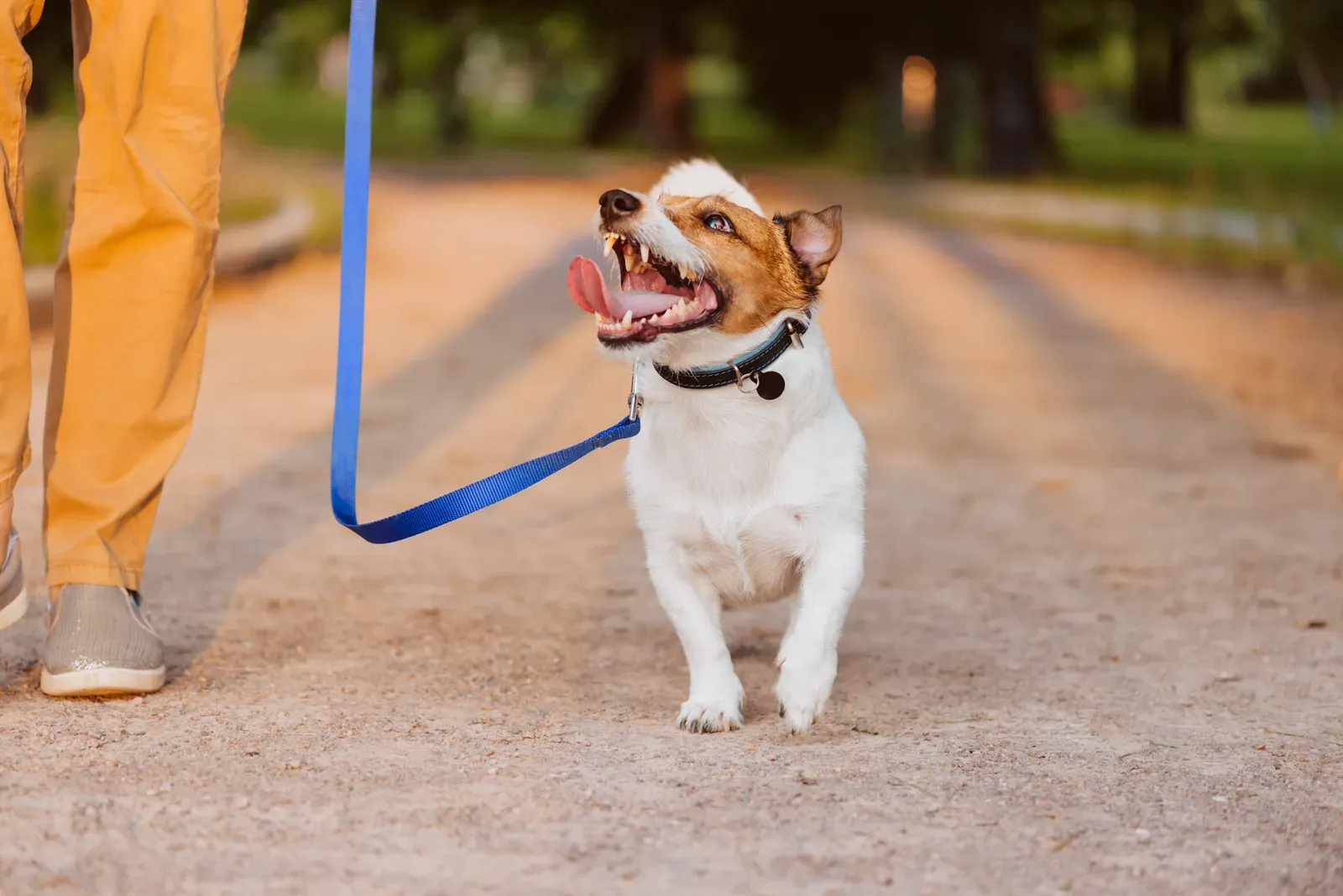
W · One-hour session
Private Training
One-on-one coaching with you on the other end of the leash.
Includes a written weekly plan to work from
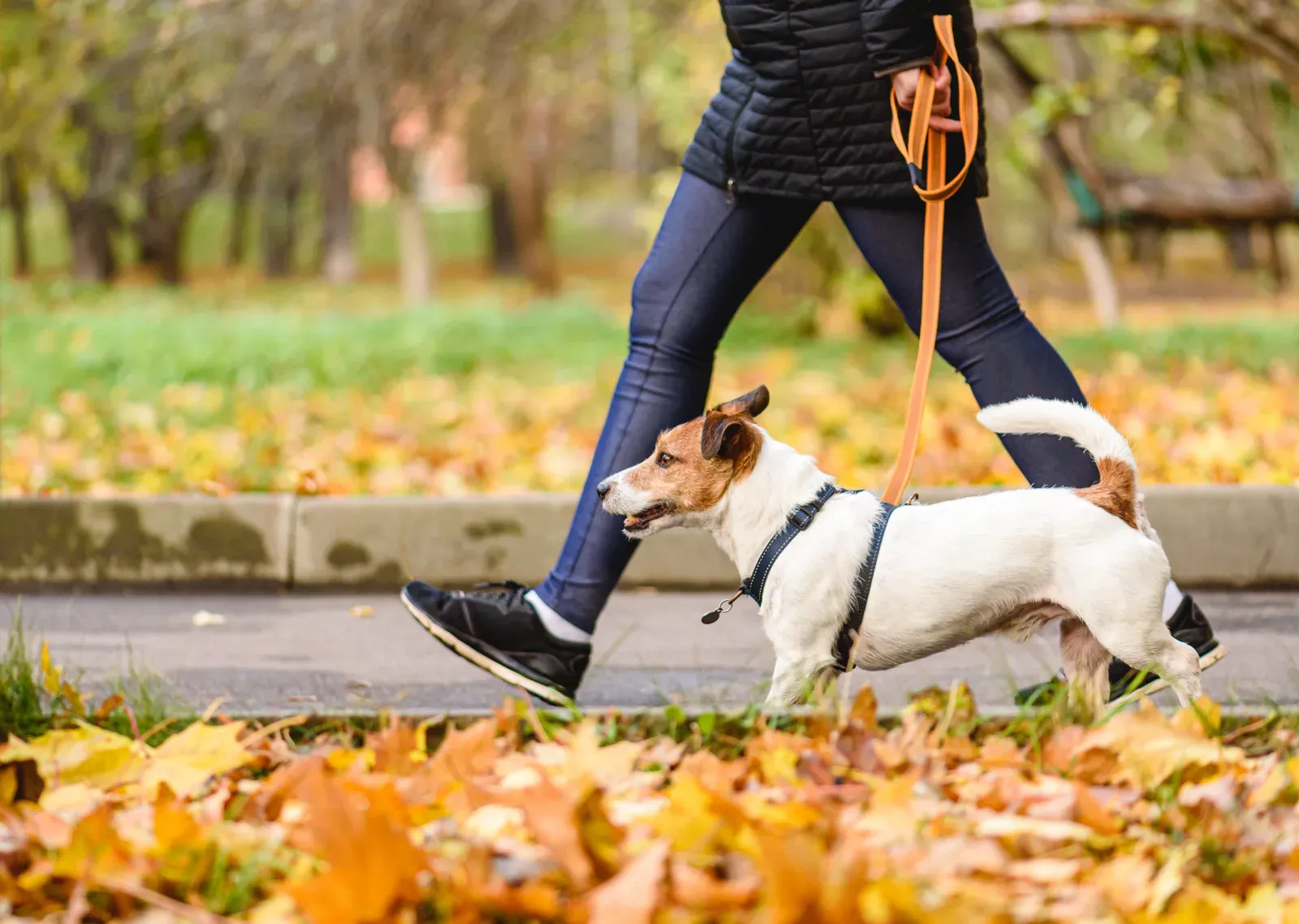
NE · 2-week board & train
On-Leash Foundations
If every walk is a wrestling match, pulling, barking, zig-zagging, this two-week program rebuilds the walk from the ground up with foundational on-leash obedience..
Includes handover lesson, follow-up session, lifetime support, slip lead + collar
Asked and answered
The questions people ask us.
How do you walk two dogs at the same time?
Teach each dog to walk on a slack leash on its own first, then pair them with assigned sides that never change. Hold both leashes in one hand so the other stays free for food and doors. Stop the pair the moment either leash tightens.
How do you walk two dogs on one leash?
A coupler splits one leash to two collars and works once both dogs already walk politely, because it stops the crossing but lets one dog tow the other. Two separate leashes give more control while the pair is learning. Many owners start with two and graduate to the coupler.
How do you walk two dogs that pull?
Stop walking them together for now. Pulling compounds in a pair, so fix each dog's leash skills solo, then rebuild the pair in the yard before the street. If one dog is much stronger, that dog goes first.
How do you walk two dogs without getting tangled?
Fixed sides do most of the work: the dog on the left stays left, and the dog on the right stays right, every walk. Practise figure eights and sit-to-unwind in the yard so the dogs learn to hold position while you sort the leashes. Keep the leashes short enough that crossing takes effort.
Keep reading
Two dogs, one calm walk.
Not sure whether the pair is the problem or one dog is? Book a consultation and we will watch both walk.
From real owners
Rated 5.0 on Google.
Real Northline dogs