The method
How to teach a dog loose leash walking
Most pulling is not defiance. It is a dog that learned tension gets it where it wants to go. Loose leash walking flips that deal: slack moves you forward, tension stops the world. This guide covers the J-shape standard, where to pay, the penalty-yard reset, and how to proof it on Calgary's shared pathways once cyclists, joggers and other dogs enter the picture.
Last reviewed August 26, 2026
The default walk
Set the standard before you set out.
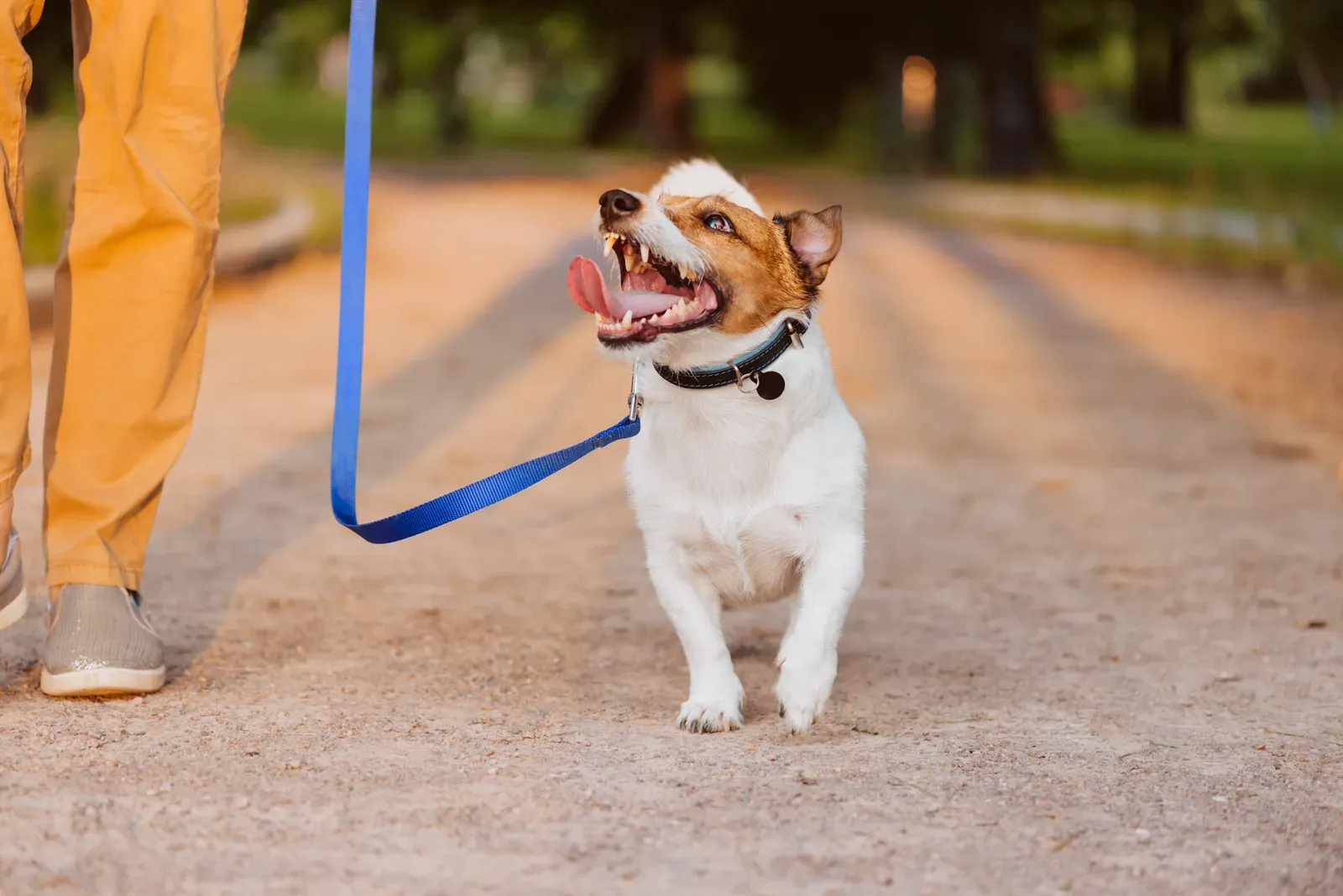
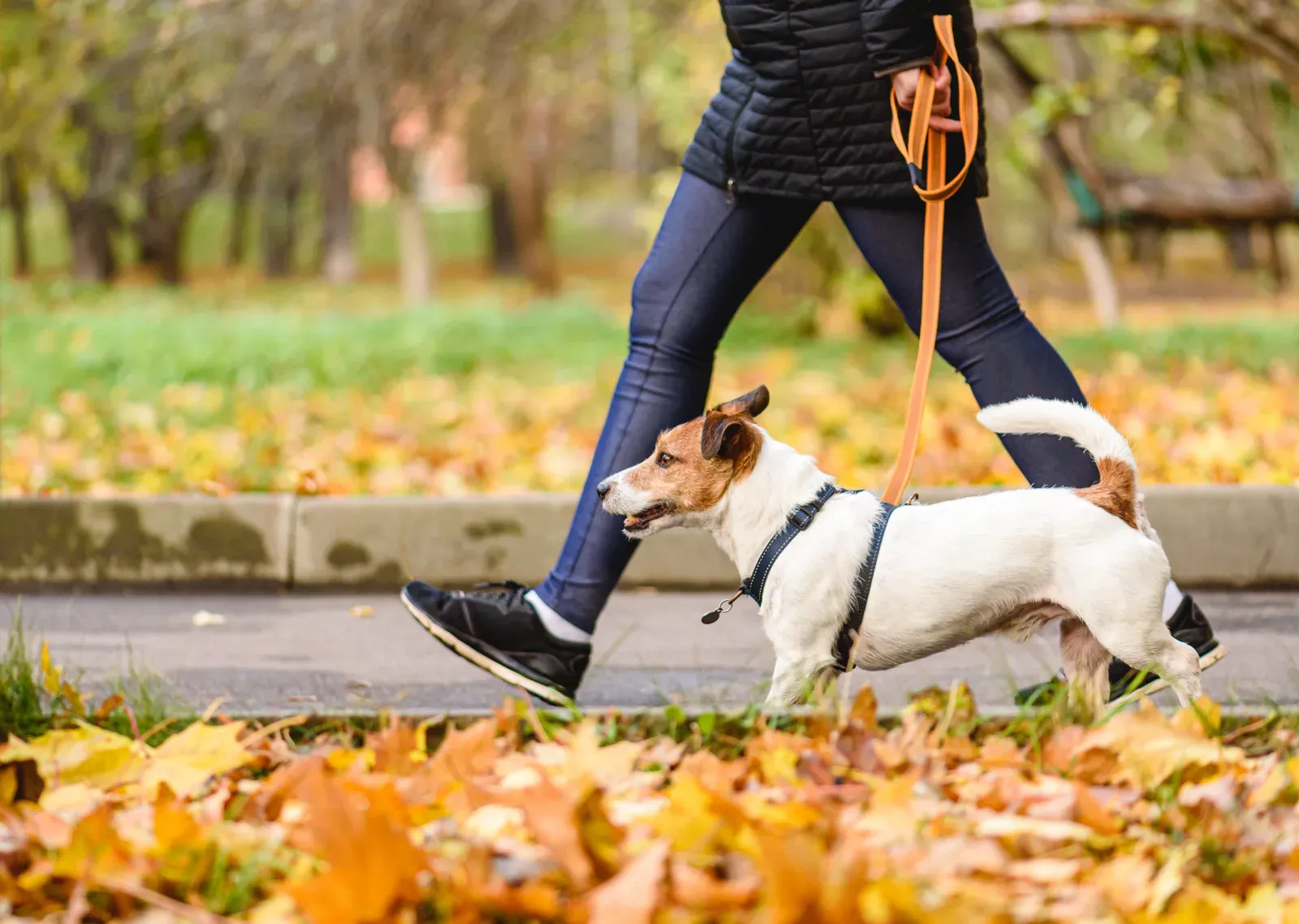
Choose a leash length and hold it so the clip hangs in a soft J below the dog's collar. That J is the entire standard. The dog can sniff, drift or look around, but the moment the J straightens into a line, forward progress ends. You stop, plant your feet, and wait. When the dog turns back and the leash softens, mark it and walk on. The walk is the reward; you are not bribing, you are paying with motion.
Add a pay position so the dog knows where good things land. Feed at the seam of your pant leg, hand low, every time the dog checks in there. Early on that is a lot of food; that is fine. For a persistent puller, use penalty yards: the moment the leash tightens, walk backward a few steps, then resume. The dog learns that pulling toward the lamppost costs distance from the lamppost. Keep sessions short and end on slack.
- Leash hangs in a J
- Pay at the pant seam
- Tension stops all forward motion
- Penalty yards for repeat pullers
Pathway proofing
Proof it where the bikes are.
Calgary's pathway system is a proofing course whether you planned it or not. Cyclists come from behind with little warning, joggers pass close, and off-leash dogs appear at the edge of a field. Start on a wide stretch at an off-peak hour and keep the dog on the side away from the traffic lane. When something fast approaches, cue the pay position early, before the leash tightens, and feed through the pass. Distance is your dial; widen it whenever the J fails.
Equipment should match the dog, not the trend. A flat collar and six-foot leash suit most young dogs. A slip lead gives clearer information to a big, distracted adolescent. A prong collar, fitted and introduced properly, can make the J readable for a dog that has leaned into a harness for years. If none of that holds on the pathway, the mechanics need a rebuild; that is what the two-week On-Leash Foundations board and train ($1,865) is for, follow-ups included.
The programs
Walks, fixed professionally.
If the method above needs more hands, these formats rebuild the walk with us.
W · One-hour session
Private Training
One-on-one coaching with you on the other end of the leash.
Includes a written weekly plan to work from
NE · 2-week board & train
On-Leash Foundations
If every walk is a wrestling match, pulling, barking, zig-zagging, this two-week program rebuilds the walk from the ground up with foundational on-leash obedience..
Includes handover lesson, follow-up session, lifetime support, slip lead + collar
Asked and answered
The questions people ask us.
How do you train a dog to walk on leash without pulling?
Make slack the only thing that moves you forward. Stop the instant the leash tightens, back up a few steps if the dog is a strong puller, and feed beside your leg when the leash softens. Practise in a hallway before you ask for it on a busy sidewalk.
How do you train a dog to walk beside you?
Choose one side and feed only there, low at your pant seam, so the dog starts drifting to that spot on its own. Reward frequently at first, then stretch the steps between payments. The side becomes a habit long before it becomes a command.
How do you train a dog to heel walk?
Heel is a precise position, dog's shoulder at your leg, held until released. Loose leash walking is looser: the dog may sniff and wander as long as the leash stays slack. Teach the loose leash default first, then layer heel on top for crossings and crowded stretches.
How do you teach a dog leash manners?
Leash manners are a standard you hold every walk, not a trick you run occasionally. Decide what a good leash looks like, pay for it consistently, and stop rewarding tension by refusing to follow it. If the dog has years of pulling practice, expect a few weeks of consistent resets before it settles.
Keep reading
Walks that stop hurting your shoulder.
The J keeps straightening no matter what you try? Book a consultation and we will look at the dog and the mechanics together.
From real owners
Rated 5.0 on Google.
Real Northline dogs