
Leash training
Leash training in Calgary
Our leash training in Calgary starts by looking at the whole walk rather than one label. Some dogs lean into the collar and tow toward every smell. Some lose their composure when another dog appears. Plenty do both. We work out what is going on at the consultation, then train the walk one-on-one and hand it back to you with a follow-up session to keep it on track.
Last reviewed September 25, 2026
Reading the walk
How we read a walk before we recommend anything.
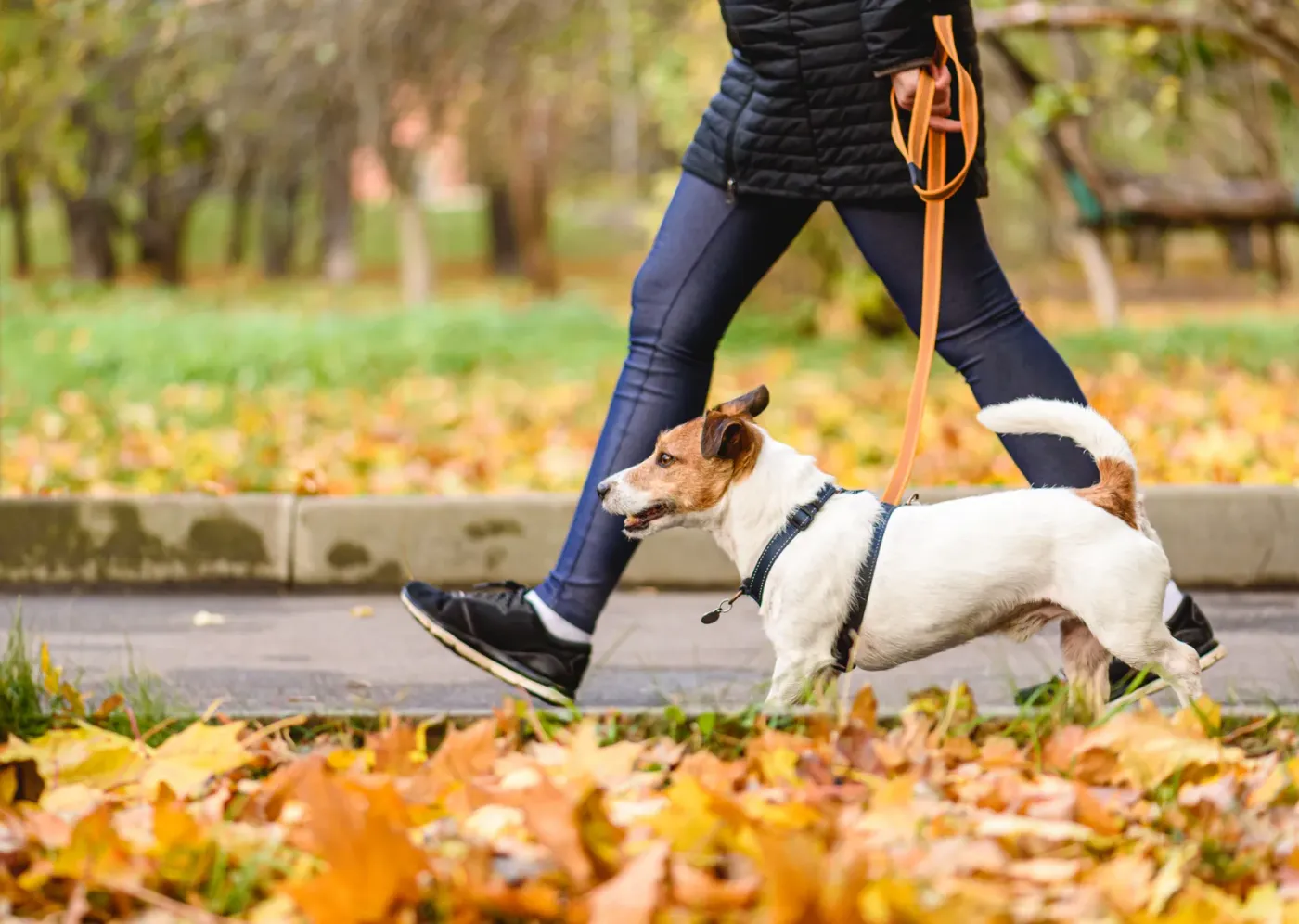
Pulling is often a habit with a payoff. The dog leans in, gains ground toward the smell or the park gate, and the leash pays out, so every walk that reaches the destination quietly rehearses it. Many pullers are otherwise relaxed: loose body, happy to take food, curious about a passing dog without fixating. We look for that picture, and we also look for the dog whose body tightens, who refuses food, or who is slow to settle after a trigger.
The two are not either-or. A dog can pull for the whole block and also bark and lunge when a dog crosses the road, and a dog that looks reactive may mostly be over-aroused and under-practised on the leash. We do not sort that from a checklist, and barking at a trigger does not automatically mean Behaviour Rehab. The consultation is where we hear about the walks, ask our questions and recommend a program, including the smaller one when it is enough.
- Where on the walk it happens
- Whether the dog still takes food
- How long settling takes afterward
- Whether both are happening at once
Program options
What each program works on, and who it is built for.
On-Leash Foundations is a two-week board and train at $1,865 + GST. It works on loose-leash walking, heel, sit, stay, down and place around everyday distractions, then a handover lesson teaches you the system. One free follow-up session and lifetime phone and email support are included, along with the slip lead and training collar. Private Training is a one-hour session with a plan to practise all week, built for owners who want to do the reps themselves.
Behaviour Rehab is a five to six week board and train at $4,850 to $5,760 + GST, customized after a full assessment, with two free follow-up sessions and in-depth owner education. It is built for the barkers, lungers, hiders and growlers, and works on reactivity at the dog's pace, confidence building and structured socialization. A bite history does not rule a dog out; it goes through the same assessment. Day Training at $800 + GST per week is the weekday, home-every-night option.
The programs
Programs and prices
W · One-hour session
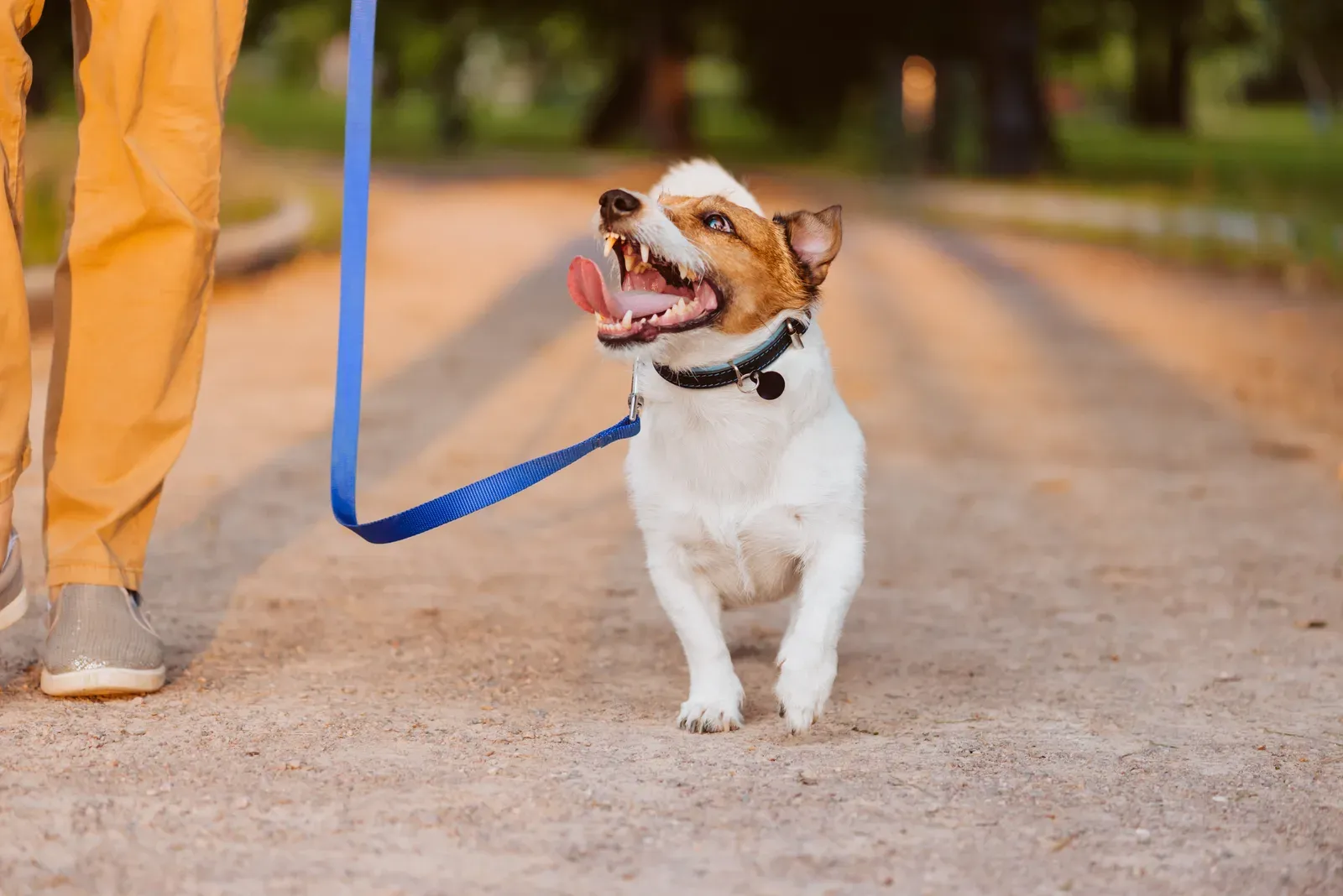
Private Training
One-on-one coaching with you on the other end of the leash.
Includes a written weekly plan to work from
SW · Weekdays, drop-off 10 am–12 pm · pick-up 5–7 pm
Day Training
Professional training all day, your couch at night.
Includes weekly one-hour go-home lesson, daily structure
NE · 2-week board & train
On-Leash Foundations
If every walk is a wrestling match, pulling, barking, zig-zagging, this two-week program rebuilds the walk from the ground up with foundational on-leash obedience..
Includes handover lesson, follow-up session, lifetime support, slip lead + collar
Asked and answered
The questions people ask us.
How much does leash training cost in Calgary?
With us, private sessions run an hour, Day Training is $800 + GST a week, and On-Leash Foundations, the two-week board and train, is $1,865 + GST. Behaviour Rehab, built for dogs whose walks involve lunging, barking or fear, is $4,850 to $5,760 + GST for five to six weeks, customized after a full assessment. We recommend the program at the consultation, and a smaller one when it is enough.
How do I know if my dog is reactive or just pulling?
Often it is both, and it is common for a dog to tow toward every smell and also lose its composure when another dog appears. A stiff body, refusing food and taking a long time to settle after a trigger often point toward reactivity rather than habit, but none of those is a diagnosis on its own. We work it out with you at the consultation rather than from a checklist.
How long does it take to stop a dog pulling on the leash?
We do not promise a timeline, because every dog and every household practises differently. What we can describe is the work: On-Leash Foundations is two weeks of daily one-on-one training plus a handover lesson and a free follow-up session, and private sessions move at the pace of your practice between visits. Loose-leash walking also has to be proofed around real distractions before it holds up.
Can an older dog still learn loose leash walking?
In our experience, yes. Adult dogs are taught loose-leash walking the same way we teach it to puppies, with markers and rewards first and consistent handling after, though the habit is usually more practised in an older dog, so the work is about replacing a long-rehearsed pattern. We take the dog's age and history into account at the consultation.
What collar do you use for leash training?
We match the tool to the dog in front of us rather than running one system for everyone. Every skill is taught with markers and rewards before any tool comes into it, and slip leads, prong collars and modern Educator e-collars are introduced properly and taught to you at handover. On-Leash Foundations includes the slip lead and training collar.
Does my dog have to be on a leash in Calgary?
Yes, in most public places. The City of Calgary's bylaw page says to keep your dog on a leash at all times unless posted signs say otherwise or you are on your own property, and on pathways the leash can be no longer than two metres. That is a big part of why loose-leash walking matters here, and the City's page has the current wording.
Keep reading
Ready for a loose leash?
Tell us what your walks look like. We will say which program fits, including the smaller one. Book a consultation.
From real owners
Rated 5.0 on Google.
Real Northline dogs