
The method
How to leash train a dog
An adult dog who pulls is not stubborn; nobody ever made walking beside a human worth anything. That is fixable at two, five or ten years old. The plan below covers equipment, the stop-and-pay method and direction changes for dogs who never learned, then the slower road for rescues and scared dogs, plus the icy-sidewalk problem every Calgary walker knows.
Last reviewed August 26, 2026
The core method
Stop paying the pull, start paying the position.
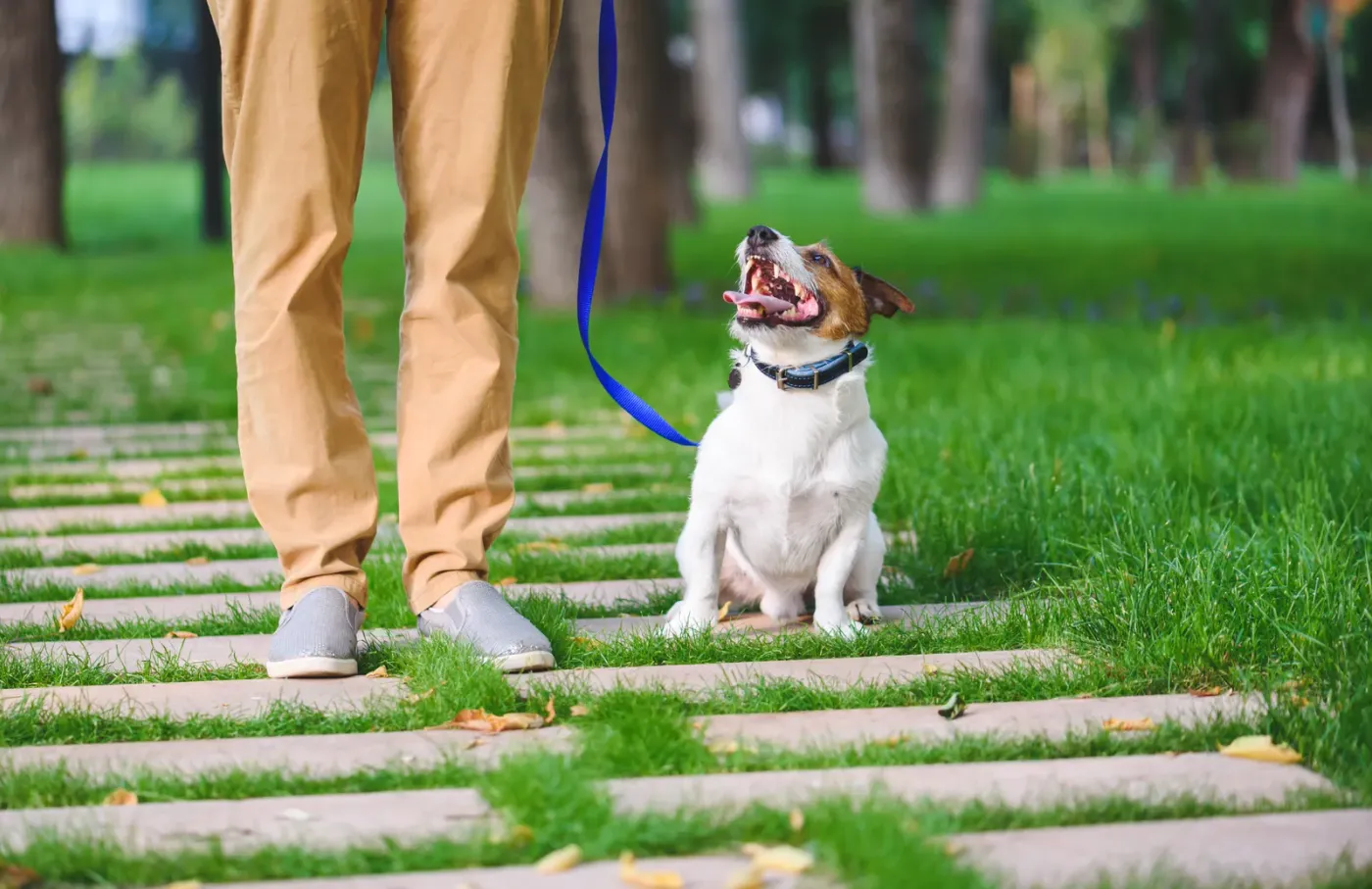
Equipment first: a flat collar or slip lead on a four to six foot leash, treats in the pocket on the side you want the dog. We match tools to the dog, but no tool replaces the method. The method is blunt: the instant the leash tightens, stop moving; the instant it slackens, mark and feed beside your leg. Forward motion becomes something a loose leash buys.
Direction changes do the rest. Every time the dog's nose passes your knee, turn 180 degrees without a word and pay when they catch up to your side. Do this in the most boring place you can find, a hallway, a garage, an empty parking lot, for five minutes at a time. Distractions come later; adolescent dogs especially need the skill installed somewhere dull before a busy pathway has a hope.
- Flat collar or slip lead
- Stop when the leash tightens
- Feed at your pant seam
- Boring places before busy ones
Harder cases
Rescues, scared dogs and skating-rink sidewalks.
A rescue or scared dog needs a preamble the confident dog skips: let them drag a light leash around the house for a few days, pay every voluntary check-in, and keep the first outdoor sessions to the quietest block at the quietest hour. Freezing, crouching and crab-walking are information, not defiance. Shorten the outing, add distance from whatever worried them, and let confidence set the pace.
Winter adds a footing problem: you cannot stop-and-stand on glare ice while a 70-pound dog leans into the leash. Through freeze-thaw season, train the pattern indoors and in cleared parkade lanes, and save sidewalk mileage for grippy days. If you want the whole job done at once, our Complete On-Leash Foundations is a 2-week board and train at $1,865 plus GST covering loose-leash walking, heel and everyday distractions, with a handover lesson and lifetime phone and email support.
The programs
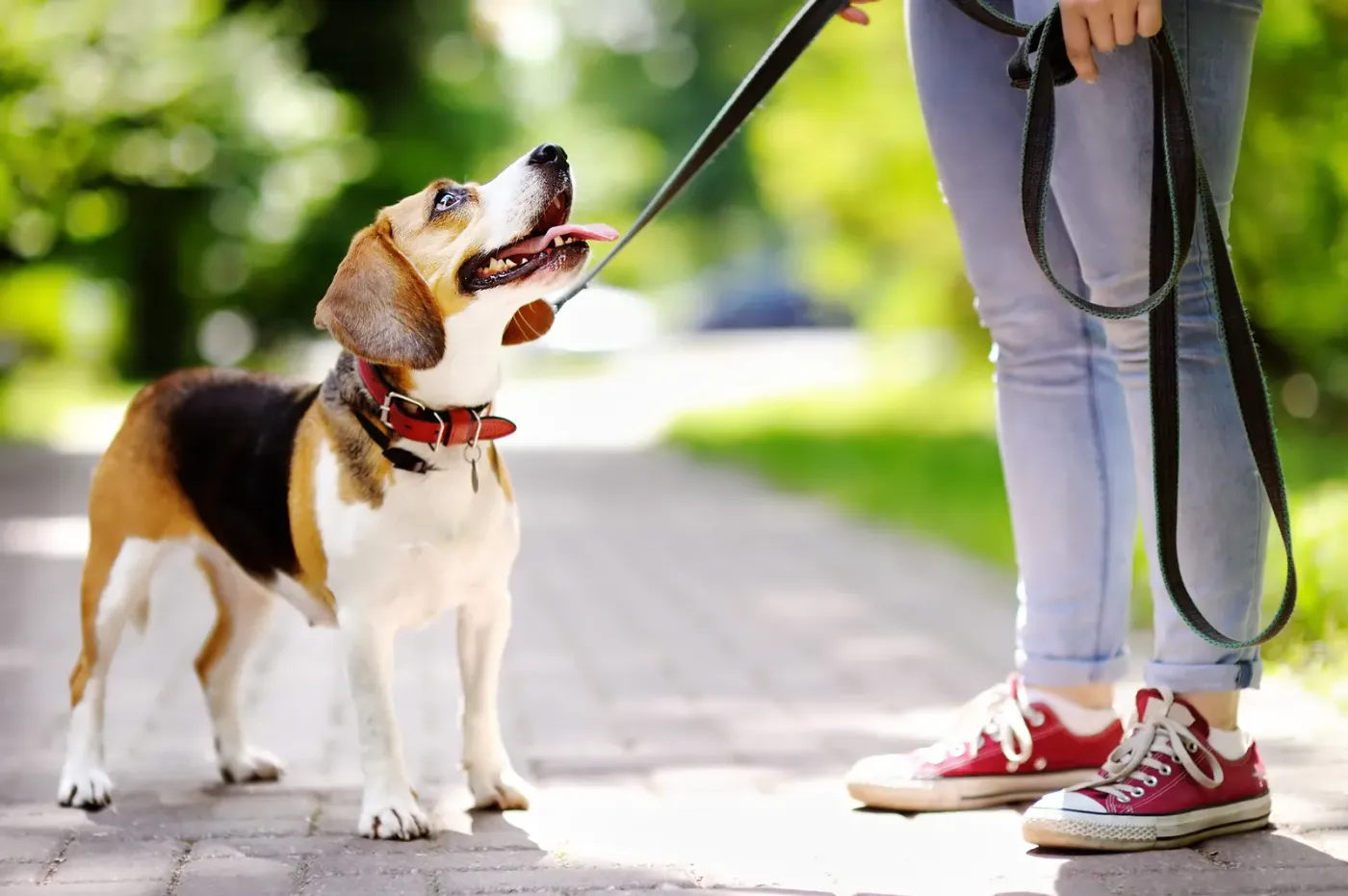
Walks, fixed professionally.
If the method above needs more hands, these formats rebuild the walk with us.
W · One-hour session
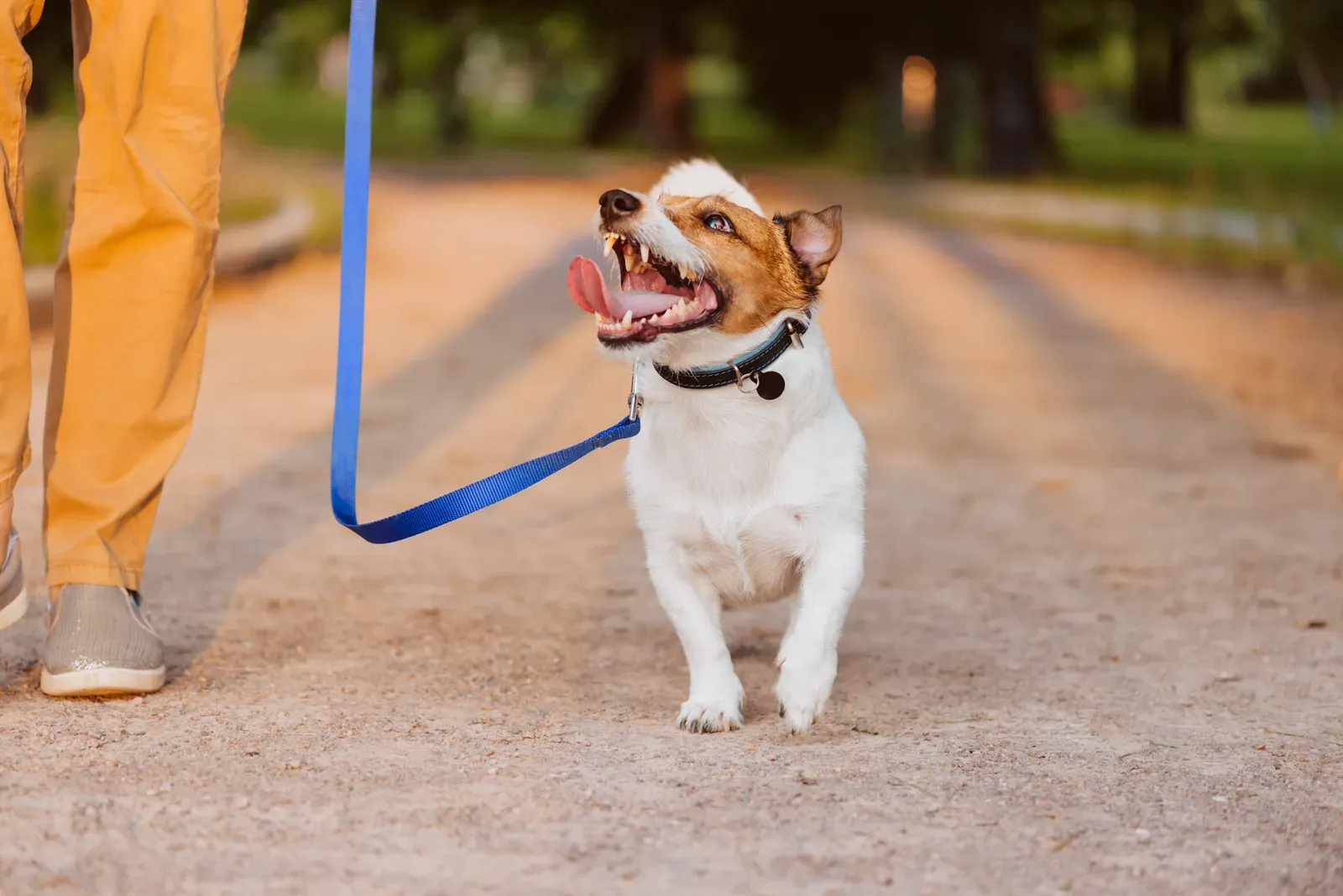
Private Training
One-on-one coaching with you on the other end of the leash.
Includes a written weekly plan to work from
NE · 2-week board & train
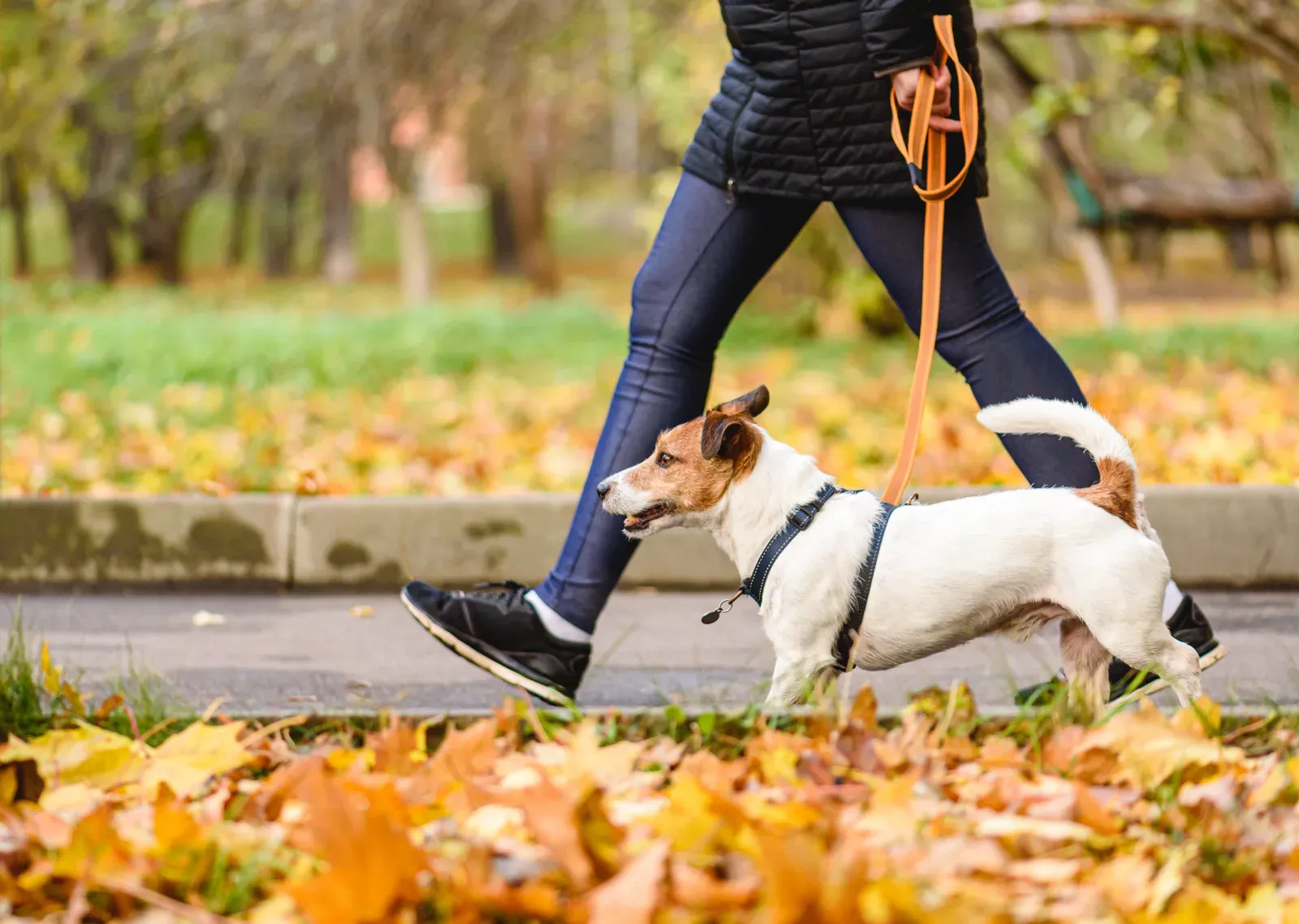
On-Leash Foundations
If every walk is a wrestling match, pulling, barking, zig-zagging, this two-week program rebuilds the walk from the ground up with foundational on-leash obedience..
Includes handover lesson, follow-up session, lifetime support, slip lead + collar
Asked and answered
The questions people ask us.
How do I leash train an adult dog who has pulled for years?
The same way as any dog, with more history to outbid. Stop when the leash tightens, pay generously at your side, and change direction often enough that watching you becomes the job. Expect the first week to involve very little forward progress and a lot of turning.
Is it too late to leash train an older dog?
No. Older dogs often learn faster because they bring more focus and less bounce. Keep sessions short, mind stiff joints on the turns, and choose softer footing where you can.
How do I leash train a scared dog?
Start indoors with a light dragging leash and pay every step of voluntary closeness before you ask for position. Outside, pick the quietest street you know and treat retreat as data rather than failure. Pressure slows scared dogs down; distance and repetition speed them up.
Where should I start with leash training?
Start in the least interesting place you have access to: a hallway, garage or empty lot. Teach the stop-and-pay pattern there until a slack leash is the dog's default, then add quiet streets, then busier ones. Location order matters more than session length.
Keep reading
Walks still a workout?
Two weeks with us, or a plan you run yourself. Honest advice either way. Book a consultation.
From real owners
Rated 5.0 on Google.
Real Northline dogs