After the program
When a trained dog gets old
An older dog who stops coming when called may not be ignoring you. Many senior dogs lose hearing, sight or comfort long before they lose what they learned. The kind response is to change how you ask, not to drill harder. This page covers adjusting cues and walks, and why pain or confusion goes to your vet before it goes to a trainer.
Last reviewed October 4, 2026
Adjust the asks
Change the cue, keep the habit.
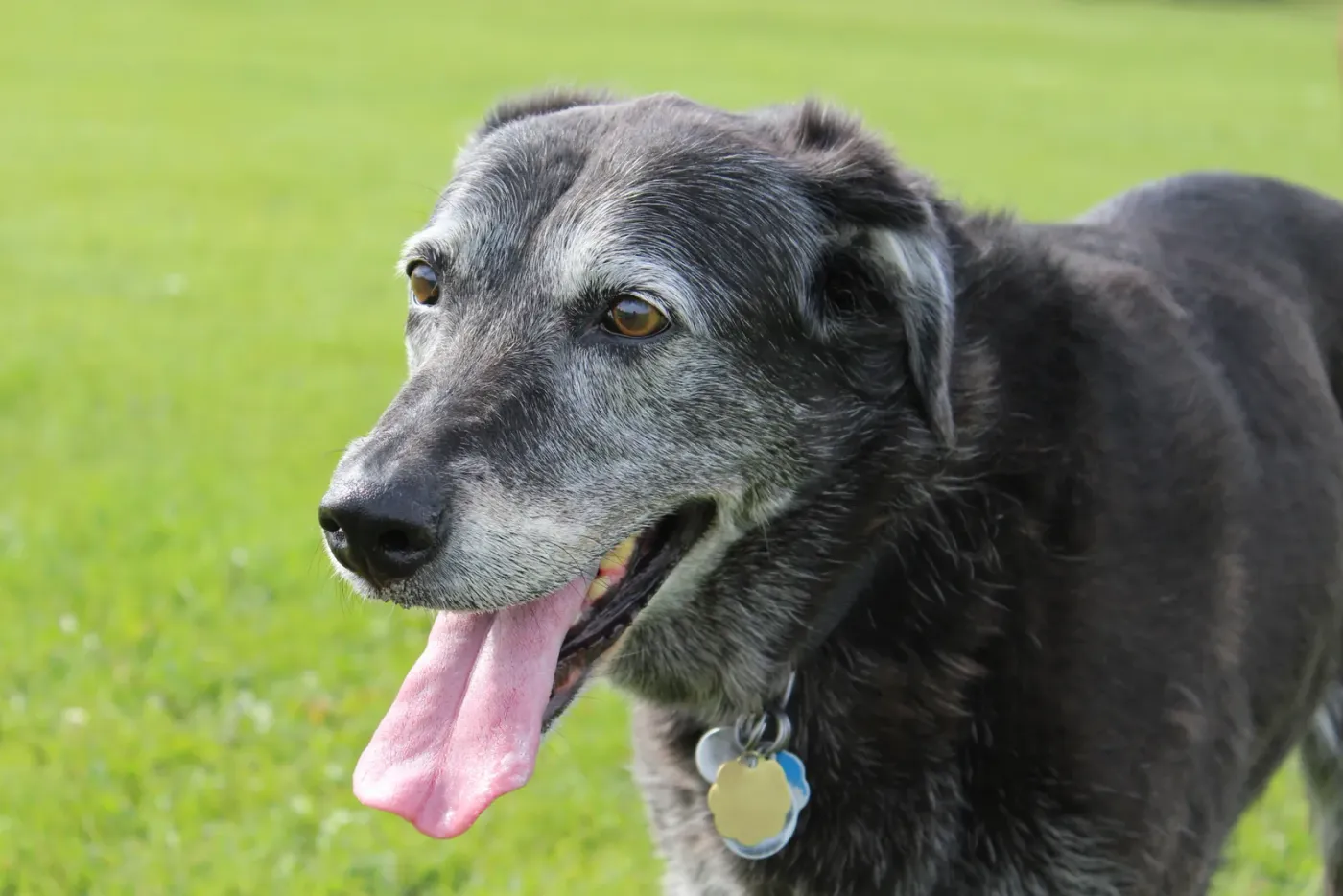
Hearing loss often shows up as a dog who sleeps through the doorbell or startles when touched. Pair each verbal cue with a clear hand signal now, while some hearing remains, then lean on the signal. For a dog losing sight, use one consistent touch for each cue, and let the dog sniff your hand before you touch a resting dog so it is never startled awake.
Walks can get shorter and slower without losing the loose-leash manners your dog already knows. Grass and packed trails are often kinder to stiff joints than long stretches of pavement or ice, and a rug runner on slippery floors helps a dog hold a sit or down without splaying. Keep place, meals and bedtime at the same times and spots. Many older dogs lean on that routine more than ever.
- Hand signals paired with words
- Touch cues for fading sight
- Shorter walks on softer ground
- Same routine, same spots
Vet first, then training
Pain and confusion are medical questions before training ones.
A dog who refuses a down, growls when lifted, or snaps when touched may be hurting. A senior who wanders at night, gets stuck in corners or forgets house manners may be showing a change your vet should assess. Neither is a training failure, and neither should be corrected. Never punish a growl; it is information. Book a vet visit before changing anything else, and tell the vet exactly which cues have slipped.
Once your vet has weighed in, training help is about the household as much as the old dog. A Private Training session is one hour at $150 + GST, with owner education, behaviour troubleshooting and a written plan customized to your home, so the changes fit the rooms, people and routine your senior actually lives with. If you are unsure you need help at all, say so. We make the program recommendation at the consultation, including a smaller option when it does the job.
Asked and answered
The questions people ask us.
Why is my old dog ignoring commands?
Often it is hearing or vision loss, or discomfort that makes a sit or down unpleasant. Check with your vet first, then switch to hand signals or touch cues the dog can still perceive.
Can you train a deaf senior dog?
Yes, many deaf dogs learn hand signals and touch cues well, and a trained dog already understands the idea of a cue. Teach each signal with markers and rewards, using a visual marker such as a thumbs-up in place of a spoken word.
Is it too late to train an older dog?
No. Older dogs can learn new cues, though practice should be shorter and gentler on their bodies. Ask your vet what movement is safe before teaching anything physical, like stairs or a new position.
My senior dog has started growling, what should I do?
Do not punish it. Growling is often a sign of pain or of a dog that was startled, so give space, avoid handling sore areas, and book a vet visit. If it continues after a medical check, a professional assessment is the right next step.
Keep reading
Help for the senior years
Book a consultation to adjust cues, walks and the home around your older dog, once your vet has had a look.
From real owners
Rated 5.0 on Google.
Real Northline dogs