
After the program
The weekly maintenance plan for a trained dog
Training does not end at the handover lesson, but it should not become a second job either. A small, repeatable weekly structure keeps skills sharp without eating your evenings. Here is the plan we suggest to graduates: short daily reps, one new place, one hard thing and a written log, followed by how to fit it around a commute and what to do when a skill slips.
Last reviewed October 4, 2026

The weekly structure
Four parts, none of them long.
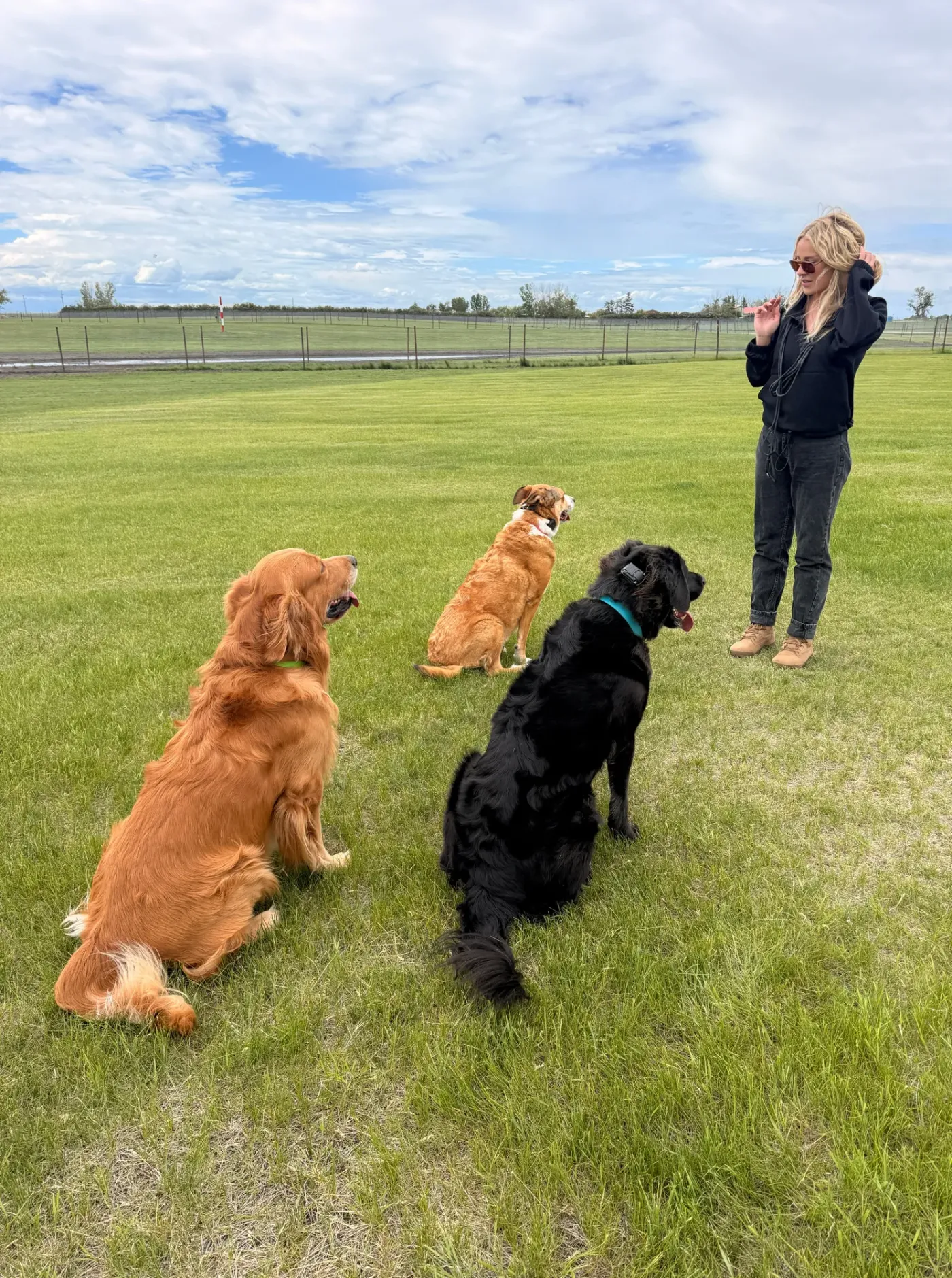
On most days, run a few minutes of the skills your dog learned: a sit at the curb, a place during dinner, a recall in the yard. Fold the reps into ordinary life rather than scheduling a formal session. Once a week, go somewhere new, such as a different street, a quiet parking lot or a friend's driveway, so the skills keep travelling beyond the places they were first taught.
Also once a week, choose one hard thing: a longer down while someone walks past, a heel beside a barking yard, a wait at an open car door with the leash held. Keep it a notch above easy, not three notches. Then write two lines in a log: what you practised, what went well, what wobbled. Bring that log to your follow-up session so the time gets spent where it matters.
- A few minutes most days
- One new place weekly
- One hard thing weekly
- Two-line log after each
Real-life weeks
Fitting practice around a commute, and fixing a wobble.
On a commuting week, attach practice to things that already happen. A wait at the door before the morning walk. A place while the coffee brews. A heel for the first block home from the bus stop. If your dog attends Day Training, the weekly one-hour go-home lesson makes a natural checkpoint, and the weekend can carry the new place and the hard thing.
When a skill slips, step back to where the dog last succeeded and rebuild from there, with more reward and less distraction. Check the log for patterns: one location, one time of day, one person. A sudden change in behaviour can have a physical cause, so a vet visit is sensible if it appears out of nowhere. If the slip persists, use your follow-up or book a private session.
Asked and answered
The questions people ask us.
How often should I practise with my dog after board and train?
A few minutes on most days is a practical baseline, folded into ordinary routines. Add one new location and one harder challenge each week to keep the skills general.
What should I write in a training log?
Keep it short: the skill, the place, what went well and what wobbled. Patterns show up quickly on paper, and the log gives your follow-up session a clear focus.
How do I keep training going with a full-time job?
Attach reps to things you already do, such as doors, meals and the first stretch of each walk. Save the new place and the harder challenge for a day off.
What do I do if my trained dog suddenly forgets a command?
Go back to an easier version in a quieter place and rebuild. If the change is sudden or unusual, check with your vet, and if it persists, ask for a professional review.
Keep reading
Want your plan reviewed?
Book a consultation and we will look at your log, your week and your dog, then suggest what actually needs attention.
From real owners
Rated 5.0 on Google.
Real Northline dogs