
After the program
Refresher drills after Puppy Fundamentals
Three weeks of daily routine gave your puppy a vocabulary: name, sit, down, place, a calm crate and a leash that means something. Back home, that vocabulary needs daily use or it quietly shrinks. The drills below fit into ordinary moments, need only the slip lead and training collar you took home, and keep the socialization work growing at a pace your puppy can handle.
Last reviewed October 4, 2026
Daily puppy reps
Small practice folded into an ordinary day.
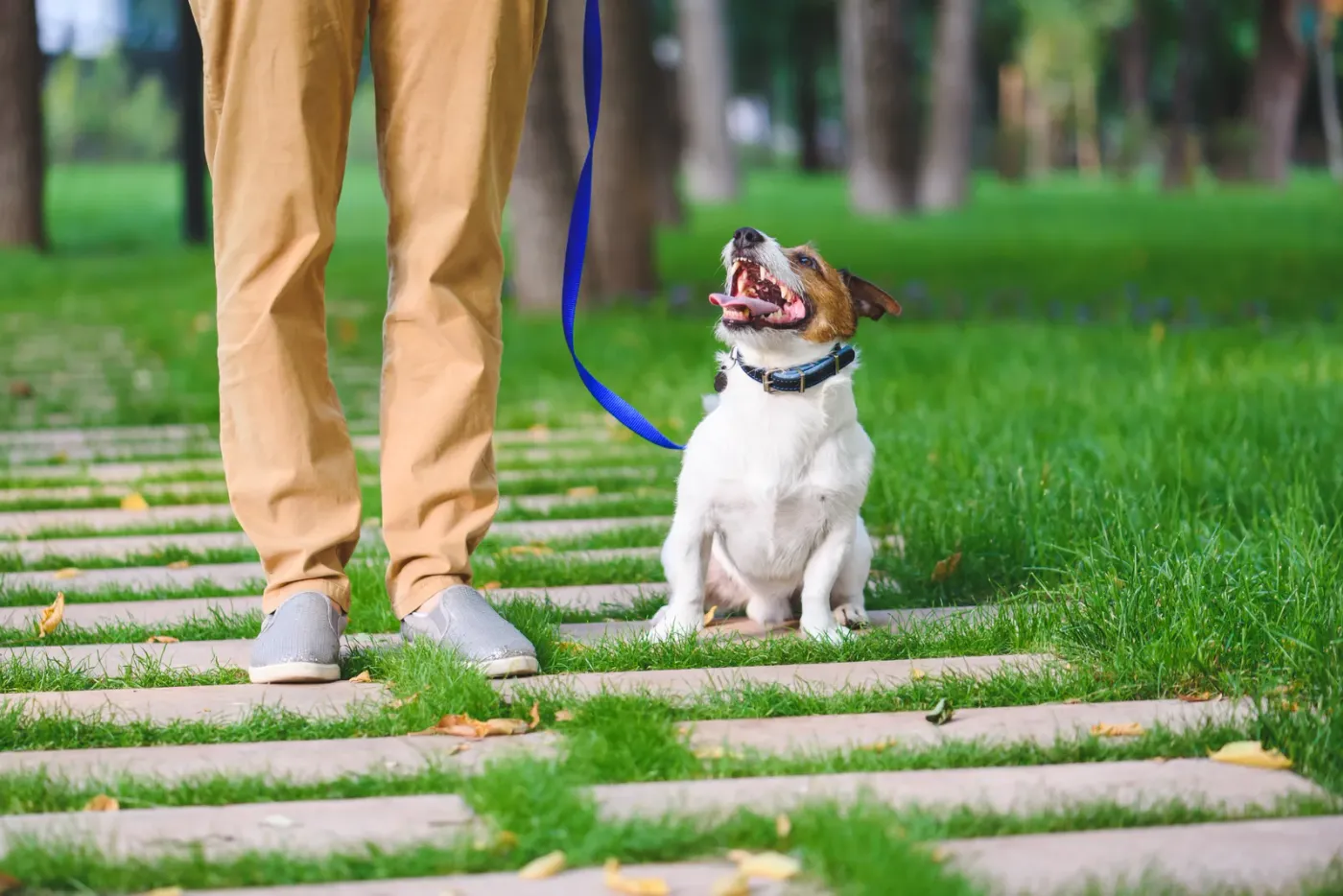
Say your puppy's name once and reward the head turn, several times a day, in different rooms. Ask for sit or down with a brief stay before the food bowl lands, and build the stay slowly by adding a little distance or a little duration, never both at once. Send your puppy to place while you cook or eat, and reward quiet. These moments already happen, so the practice costs you almost nothing.
Keep the crate a calm, normal spot: a chew or a meal inside, the door closed only while your puppy is relaxed, and never used as punishment. The crate-training guide from your welcome package is the reference here. On walks, ask for a few loose-leash steps and reward the slack. For socialization, let your puppy watch traffic, umbrellas or skateboards from a distance where it can still eat and stay loose, and leave early if it starts to worry.
- Name, then reward the look
- Brief stays before meals
- Place during family dinner
- Calm exposure from a distance
Adolescence ahead
The teenage phase and your follow-up session.
Many puppies go through an adolescent stretch where a well-known sit suddenly seems optional and the name gets ignored near anything interesting. This is often a normal phase rather than lost training. Respond by making the drills a little easier again, rewarding generously, and managing the environment so your pup cannot rehearse habits like jumping or pulling. Behaviour may temporarily get louder; if it persists or escalates, reassess with a professional.
Puppy Fundamentals includes one free follow-up session within 60 days. Use it well: write down which skills are wobbling, where, and what you have tried. Bring the slip lead and training collar so we can check fit and handling. If a change is sudden, or comes with signs your puppy feels unwell, start with your vet. When adolescence asks for more than refreshers, the consultation is where we suggest what fits, smaller options included.
The programs
Programs and prices
Asked and answered
The questions people ask us.
How do I keep my puppy's training going after board and train?
Fold short reps into routines you already have: meals, dinner, walks and crate time. Keep the cues and rewards you learned at the handover lesson.
Why is my puppy ignoring commands it used to know?
Many puppies test known cues as they move into adolescence, and it often looks like forgetting. Make the drill easier, reward well and manage the setting. If the change is sudden or comes with other signs, speak with your vet.
Should I keep socializing my puppy after the program?
Yes. Keep offering new sights and sounds from a distance where your puppy stays relaxed, and leave before it gets overwhelmed. Never pull or lure a worried puppy closer.
When should I use the puppy follow-up session?
Puppy Fundamentals includes one free follow-up session within 60 days. Book it when you have a clear list of what is slipping, so the time goes to real problems.
Keep reading
Keep the puppy habits growing
Weighing Puppy Fundamentals for a young dog, or need help after it? Book a consultation and tell us what you are seeing.
From real owners
Rated 5.0 on Google.
Real Northline dogs