
After the program
Moving house with a trained dog
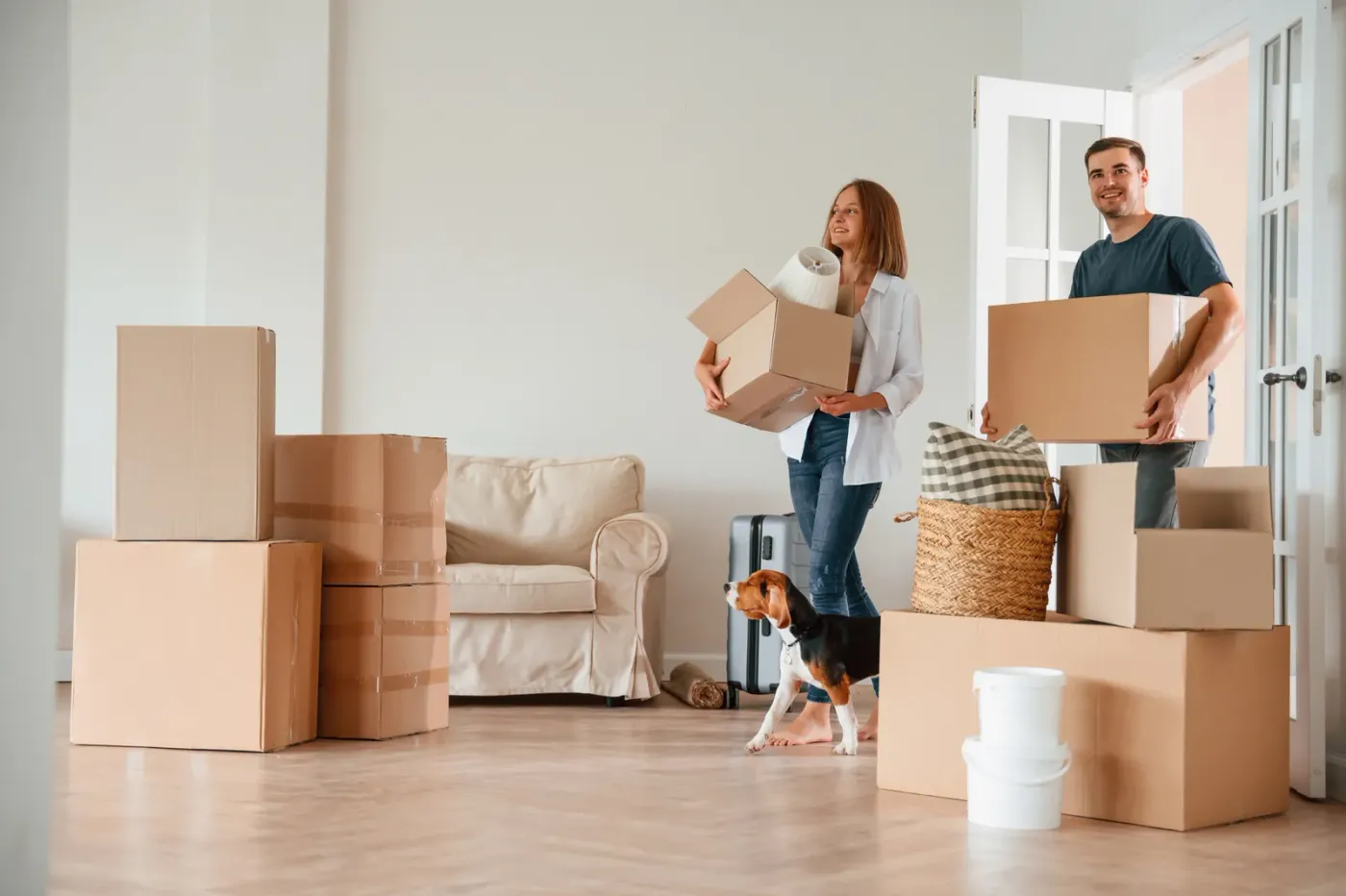
Boxes, open doors, furniture carried past the dog bed: a move is a stress test for even a well-trained dog. The skills are still in there, but they were learned in specific places. The plan is to keep everything familiar that you can carry with you, then rebuild the rest in the new house one room and one street at a time.
Last reviewed October 4, 2026
Through the move
Carry the routine, the crate and the cues with you.
Keep feeding, walks and bedtime on the same schedule while the house fills with boxes. Pack the crate or place mat last in the old home and set it up first in the new one, so the dog always has a known spot. On moving day, crate the dog in a quiet closed room or have it stay with a trusted person, because propped doors and busy hands are when door-dashing happens. Movers should never be asked to watch the dog.
In the new house, treat every cue as if it were taught somewhere else, because it was. Practise place in the new living room, sit at the new front door with the leash held, and a down-stay in the kitchen. Reward generously at first. The dog is learning that the same words mean the same things here, and that the new doors carry the same threshold rules as the old ones.
- Same feeding and walk schedule
- Crate set up first
- Dog secured on moving day
- Re-proof cues room by room
The first days
House rules for settling into a new address.
Keep freedom small at first: a leash or gates indoors, the crate for rest, and supervised yard time while you check the fence line for gaps. Walk the new neighbourhood on leash at quiet times, letting the dog sniff and look around before asking for a polished heel. Hold off on off-leash recall until you have practised it on a long line in the new area. Unfamiliar smells, dogs behind fences and new traffic noise all count as distractions.
Some regression after a move is normal. House-training can slip, the dog may bark at unfamiliar sounds, or pull toward the dogs next door, and behaviour may temporarily increase as the dog tests the new place. Drop the difficulty, pay the dog more generously, and keep the days boring and predictable. If the change persists or escalates, or the dog seems unwell, reassess with your vet or a professional. Your included follow-up session is a good place to raise it.
The programs
Programs and prices
Asked and answered
The questions people ask us.
How do I help my dog adjust to a new house?
Keep the routine, meal times and crate the same, and give the dog a known resting spot from the first day. Practise familiar cues in each new room and keep freedom small while the dog gets its bearings.
Is it normal for a dog to have accidents after moving?
House-training can slip in a new home because the cues for where to go have changed. Take the dog out often, reward outdoor toileting, and see a vet if accidents come with other changes.
When can my dog go off leash in a new neighbourhood?
Only after you have practised recall on a long line in the new area and the dog responds around local distractions. Check local rules for where off-leash time is allowed before you start.
Should my dog be home on moving day?
Only if it can rest safely in a closed, quiet room or crate away from the traffic. A day with a trusted friend or sitter is often simpler, because open doors are a real escape risk.
Keep reading
Moving with a trained dog?
Book a consultation and we will help you plan the move and re-proof your dog's skills in the new home.
From real owners
Rated 5.0 on Google.
Real Northline dogs