After the program
Maintaining door manners after board and train
The front door is usually the first place a trained dog's manners quietly come apart. It is loud, it is exciting, and it tends to happen when your hands are full of groceries. This guide covers the door habits that keep a board and train graduate settled: the leash, the cue, the guest briefing and the parcel plan, plus how to rebuild after a slip.
Last reviewed October 4, 2026
The threshold routine
Four habits that keep the doorway boring.
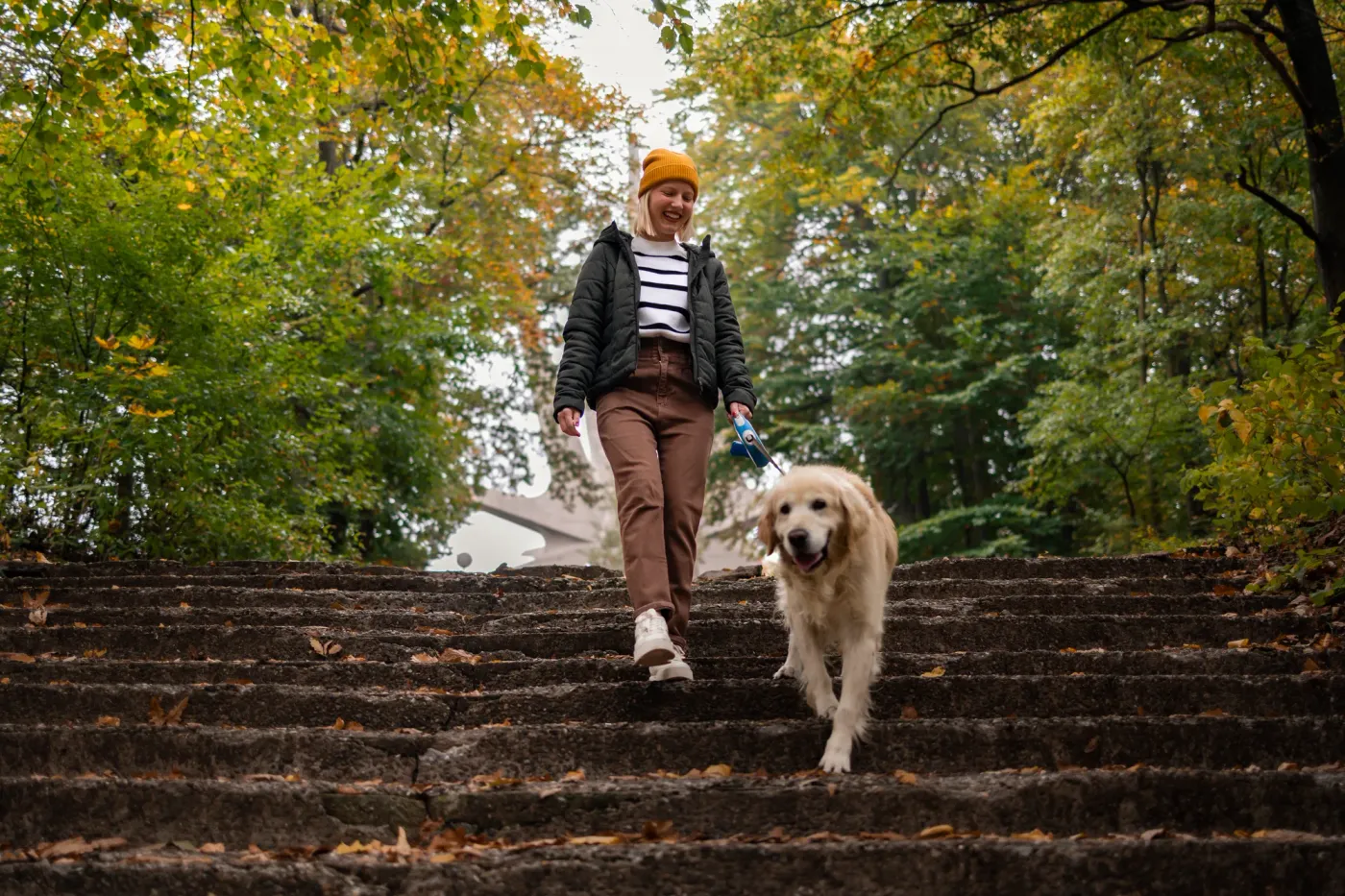
Start with the leash. In the early days home, clip it on before you answer a knock, and keep it in an adult's hand rather than trailing on the floor. That way the dog cannot rehearse a bolt onto the step or a leap at a visitor while you are busy with the handle. A baby gate or a closed room works too, when you cannot hold a leash and open a door at the same time.
Then ask for the same cue every time: place on a bed with a sightline to the entry, or a wait a step back from the threshold. Never shut the door on a dog to stop a rush; step calmly into the gap with your body and reset. Brief guests to stay outside until you say so, and ask couriers to leave parcels, so the doorbell stops meaning a party.
- Leash on before the knock
- Same cue every single time
- Guests briefed before entering
- Parcels left, not handed over
After a slip
One exception teaches more than a week of rules.
Door manners rarely fade gradually. They usually break on the day someone makes an exception: a favourite relative bursts in, a teenager lets the dog greet the pizza driver, a party leaves the door propped open. Many dogs learn fast that a rule is sometimes negotiable, and a rule that is sometimes negotiable is worth testing every time. Everyone who opens that door needs to run the same routine, including the people who find it fussy.
If the dog has already slipped, go back a step rather than getting firmer. Put the leash back on for door moments, practise knocks with an adult helper while the dog is calm, and reward the place or wait generously. Rushing may briefly increase when the old habit stops paying off. If it persists or escalates, use your follow-up session or book a private session so someone can watch the doorway with you.
Asked and answered
The questions people ask us.
How do I keep my dog from rushing the door after training?
Secure the dog before the door opens, with a leash held by an adult or a gate, then ask for place or a wait. Open only when the dog holds the position, and release calmly once the guest is inside.
Should my trained dog stay on leash at the door?
For the first stretch at home, yes, because a leash prevents a rehearsal you would otherwise have to undo. Drop it once the cue holds with real visitors, and bring it back after any slip.
What do I do about delivery drivers and the doorbell?
Reduce how often the bell rings by asking for parcels to be left at the door. When it does ring, treat it like any visitor: secure the dog, cue place, then answer.
Why did my dog's door manners fall apart?
Often one exception crept in, such as a guest who encouraged jumping or a door left open during an event. Return to the leash and the routine, and reach out through your follow-up if it does not settle.
Keep reading
Help with a door slip
Book a consultation and we will look at your doorway routine with you, then recommend the right next move for your dog.
From real owners
Rated 5.0 on Google.
Real Northline dogs