
After the program
Introducing a new baby to a trained dog
A dog who holds place and greets guests politely has a head start when a baby arrives, but trained skills are not a safety plan on their own. Babies make strange sounds, smell different and spend time at dog height on play mats. This page covers how to use what your dog already knows, how to set up the house, and which signs deserve a professional's eyes.
Last reviewed October 4, 2026
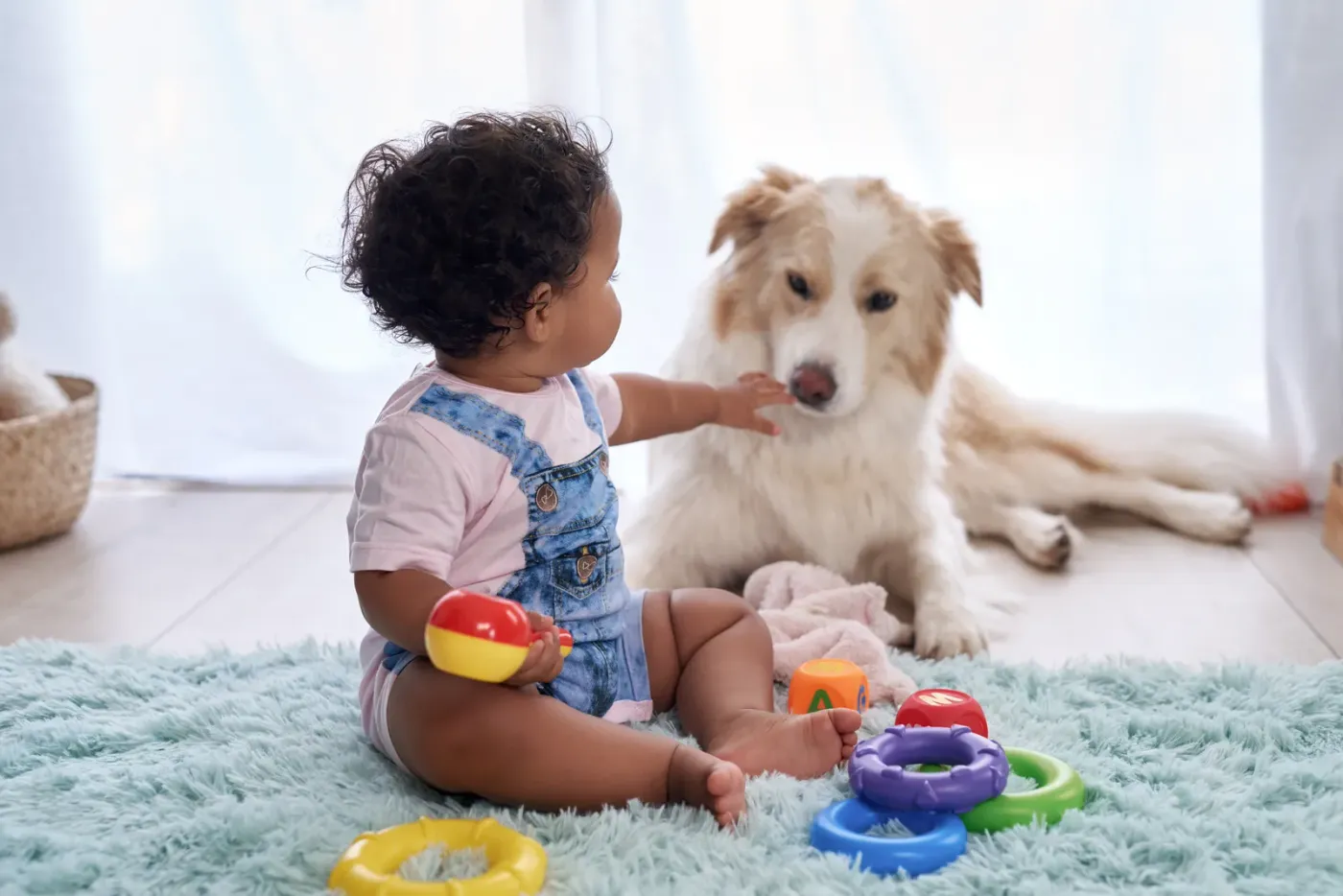
Skills plus management
Use the trained skills, then manage every moment.
Before the baby comes home, polish the skills you will lean on: place while you move around the room, a calm wait at doors, four paws on the floor when someone walks past carrying something. Set up gates, a crate or a closed door so the dog has a quiet room of its own. Run the dog's normal routine with the new furniture in place, and let it sniff nursery items while you watch.
Once the baby is home, the dog stays on place or behind a gate while an adult holds the baby, calm and at a distance. No face-to-face contact, no licking, no sniffing the baby's head. Whenever no adult is actively watching, dog and baby are in separate rooms or divided by a gate or crate. Keep the dog's walks, meals and attention going, so the baby does not come to predict losing everything good.
- Place cue polished beforehand
- Gates and quiet room ready
- No face-to-face contact
- Separate whenever unsupervised
Watching for warnings
Signs to take to a professional and a vet.
Watch the dog's body around the baby. Stiffening, staring, lip licking, showing the whites of the eyes, a tucked tail, leaving the room, freezing or growling are all ways a dog says it is uncomfortable. Do not punish a growl; it is an early warning, and suppressing it only removes the warning. Increase distance, use the gate, and get a professional assessment rather than trying to work through it alone.
A sudden change in a previously steady dog, such as snapping when touched, new guarding of food or toys, changes in sleep or appetite, or stiffness, deserves a vet check, because pain often shows up as irritability. Behaviour Rehab works on anxiety, fear and reactivity after a full assessment, and Private Training at $150 + GST per session gives you a written plan for your own home. The consultation is where we recommend which one fits.
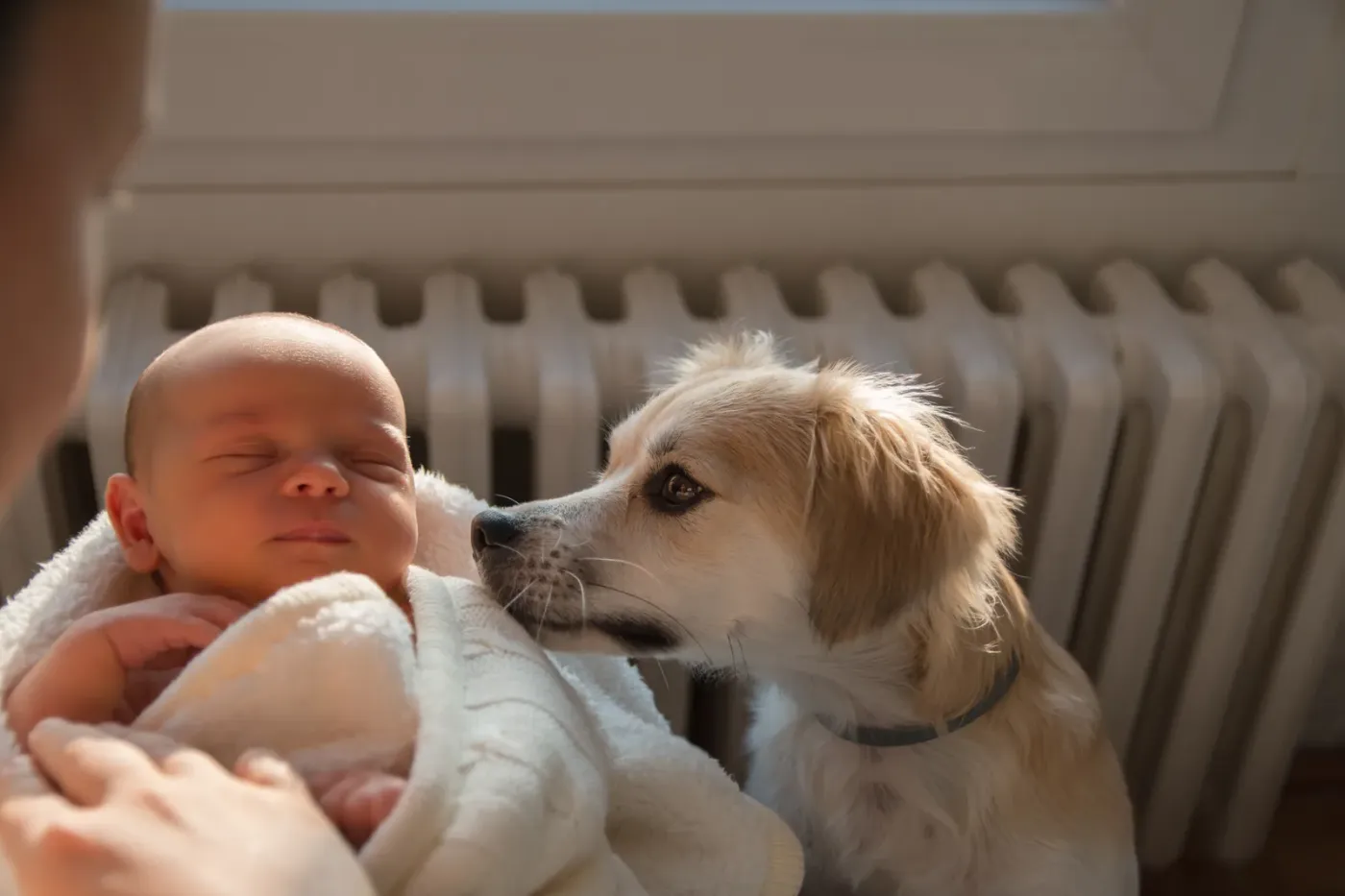
Asked and answered
The questions people ask us.
How do I introduce my dog to my newborn?
Have the dog settle on place or behind a gate while a calm adult holds the baby at a distance. Reward the dog for staying relaxed, and skip face-to-face sniffing entirely.
Should my dog sleep in the baby's room?
No. Dog and baby should be separated whenever an adult is not actively supervising, and that includes sleep. Give the dog its own quiet resting spot elsewhere.
What if my dog growls at the baby?
Do not punish it, because the growl is a warning you want to keep. Separate dog and baby, increase distance, and get a professional assessment, plus a vet check if the change is sudden.
Can a trained dog be trusted around a baby?
Training helps, but no dog should be left unsupervised with a baby, however well trained. Supervision and separation do the safety work; skills like place and calm at doors make that management easier.
Keep reading
Preparing for a new baby?
Book a consultation and we will review your dog's skills and help you plan the household setup.
From real owners
Rated 5.0 on Google.
Real Northline dogs