
Manners & obedience
How to teach a dog to relax on cue
Plenty of dogs will hold a down for a cookie. Far fewer know how to switch off when the house gets busy. A settle cue fills that gap. It asks for a mood rather than a posture: hips rolled to one side, chin low, breathing slow. Below you will find how to capture calm, attach a word, avoid the mistakes that keep a dog wired, and stretch the skill beyond the living room.
Last reviewed October 4, 2026
Settle versus down
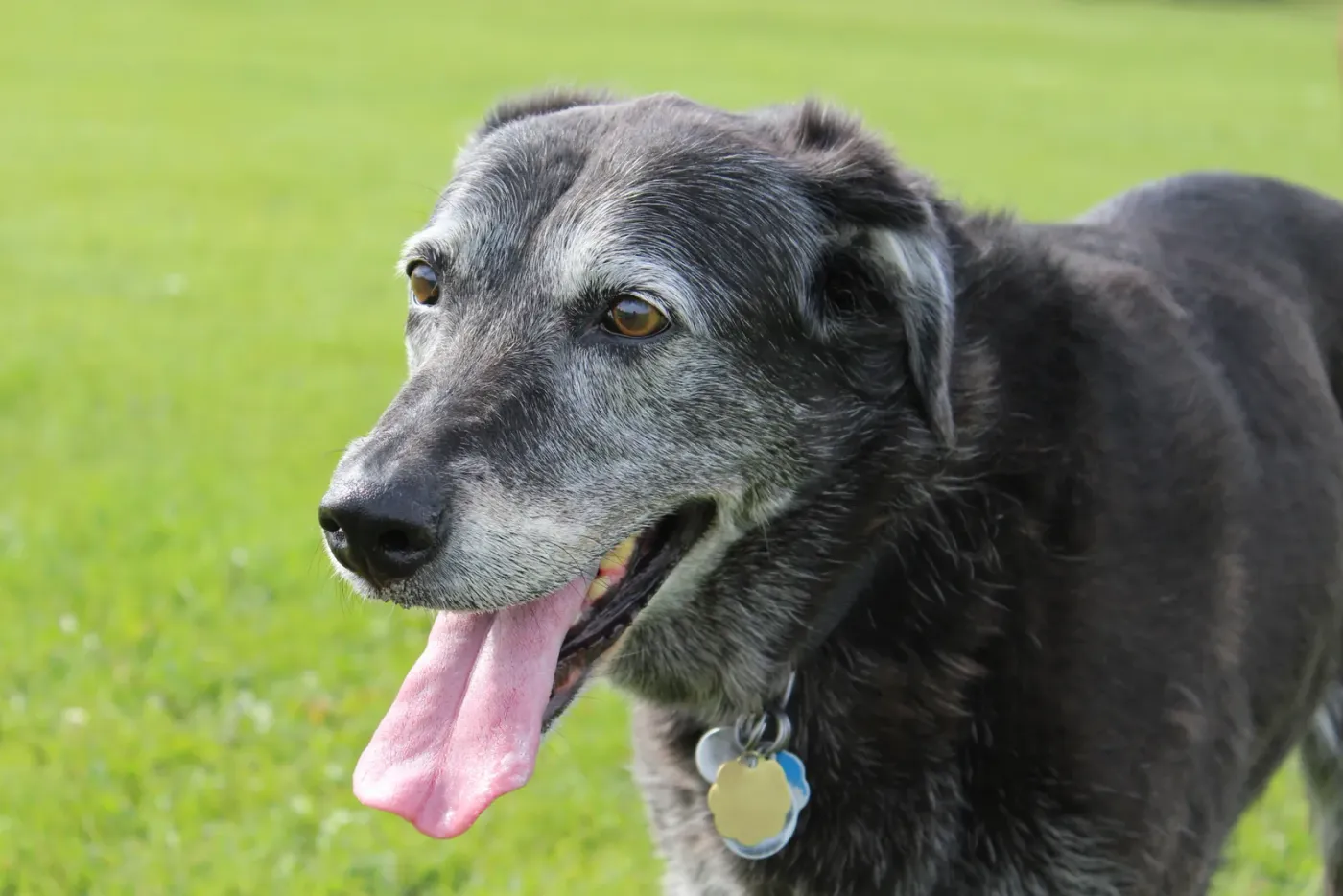
A settle asks for a mood, not a position.
A down is a position. The dog lies on its belly, elbows on the floor, and holds there until released, often alert and watching for the next cue. A settle is closer to an off switch. The dog picks a comfortable spot on its mat, rolls onto a hip, rests its chin and lets its breathing slow. It may stretch, shift or close its eyes, and none of that breaks the cue.
That difference changes how you train it. With a down you reward the posture quickly. With a settle you reward signs of calm, slowly and quietly, so the reward itself does not wake the dog up. Before starting, rule out the obvious: a dog that cannot rest because it is sore, itchy or unwell needs a vet visit first, not a cue. Restlessness that appears suddenly is always worth a check-up.
- Hip rolled to one side
- Chin resting on paws or floor
- Slow, even breathing
- A sigh or soft blinking
Tonight's steps
Capture calm first, then attach a settle word.
Pick a quiet evening, a mat or folded towel, and a handful of low-value food. Put the mat near your chair and sit down with a book. Ignore the dog. When it lies on the mat, calmly place a piece of food between its front paws. When it rolls onto a hip or rests its chin, deliver another. Keep the pace slow and your voice low, as if you are trying not to wake a baby.
Once the dog drifts to the mat on its own, add the word. Say "settle" softly as it lies down, then reward the relaxed signs that follow. End each session with a clear release word such as "free" before you stand up, so the dog learns the mat ends when you say so. Short sessions at naturally sleepy times of day, like after a walk or dinner, tend to suit an excitable dog best.
Common mistakes
Where settle training tends to go sideways.
The first mistake is rewarding too fast and too brightly. A cheerful "good girl" and a tossed treat can turn the mat into a game, and the dog pops up for more. Place food rather than throw it, and keep praise to a murmur. The second mistake is sending the dog to its mat as a time-out after it misbehaves, which teaches it that the mat predicts trouble rather than rest.
The third is asking for calm from a dog that has had no outlet. A young, under-exercised dog often struggles to switch off, so a walk or a sniffing game beforehand can make the mat easier to accept. Never push a dog into position or hold it there with your hands. If your dog cannot lie still without panting, pacing or whining, that pattern deserves a professional look rather than more repetitions.
Proofing the cue
Building the settle across distance, duration and distraction.
Change one variable at a time. For duration, wait a few extra seconds between rewards, then a little longer, and release before the dog gets up on its own. For distance, take one step away, return and reward, then build toward walking to the kitchen and back. If the dog stands up, quietly guide it back to the mat without fuss and make the next repetition easier.
Distraction comes last. Start with small household noise: a cupboard closing, someone walking through the room. Later, try the mat on a friend's patio or in a vet waiting room, bringing the same mat so the dog carries a familiar cue with it. When the doorbell rings, secure the dog with a leash or a gate first rather than testing a new settle against a real visitor.
A second pair of eyes
When coaching or a program makes the work easier.
Settle training looks simple, which is exactly why small timing errors hide so well. In a Private Training session ($150 + GST for one hour), we watch you run the mat routine, adjust how and when the food lands, and leave you with a written plan for the week. It suits owners who want to do the practice themselves with a professional reading over their shoulder.
Some dogs need more structured repetition than a busy household can give. Puppy Fundamentals and On-Leash Foundations both work on a place command inside a daily routine, and every board and train ends with a handover lesson so you learn the cue as well. The consultation is where we recommend a program, and we will point you to the lighter option when that is all your dog needs.
Asked and answered
The questions people ask us.
What is the difference between settle and down?
A down is a held position, often with the dog alert and waiting for what comes next. A settle is a relaxed state on a mat where the dog can shift, stretch or doze until you release it.
How do I teach my dog to calm down on command?
Begin by quietly rewarding the calm your dog already offers, then add a soft cue word just before those moments. Build duration, distance and distraction one at a time, never all at once.
Should I use a mat or a bed for settle training?
A portable mat helps because it travels with you and becomes part of the cue. Keep it for training sessions at first so it stays meaningful.
What if my dog can't relax at all?
Pacing, panting or whining that never eases can point to pain, illness or anxiety. Start with a vet check, and if the vet finds nothing, a professional behaviour assessment is the sensible next step.
Keep reading
Want calmer evenings at home?
Book a consultation and we will look at your dog's routine and recommend the right level of help.
From real owners
Rated 5.0 on Google.
Real Northline dogs