Straight answer
What is marker training for dogs?
Dogs live in half-seconds. By the time your hand reaches the treat pouch, the sit you wanted to pay for has turned into a stand, a sniff and a glance at the door. A marker solves that. It is a bridge between the moment and the reward, and once a dog understands it, teaching almost anything gets faster, cleaner and a lot less frustrating for both of you.
Last reviewed August 26, 2026

How it works
A snapshot of the right moment, then the pay.
The marker starts out meaning nothing. You charge it: say "yes" or click, hand over a piece of food, repeat until the dog's head snaps around at the sound. From then on, the marker is a promise. Dog's bottom touches the floor, mark, reward. Dog looks at you instead of the squirrel, mark, reward. The dog is not guessing which of the last six things it did was the good one. The marker told it, right on the instant.
Timing is most of the skill on the human side. Mark late and you pay for whatever came after: the sit that became a lunge, the recall that ended in a jump. Mark early and you pay for intention rather than behaviour. We use a verbal marker as the everyday tool because your hands are usually holding a leash, and a clicker for precision work like shaping a place command or a clean heel position. Markers sit under every program we run.
- Charge the marker before teaching
- Mark the instant, pay after
- Late marks pay the wrong thing
- Word for walks, clicker for precision
Markers and tools
Where the marker meets the leash, and where beginners slip.
A marker does not retire when a tool comes out. With a slip lead, a prong collar or an Educator e-collar, the marker is what makes the tool make sense: leash pressure or a collar tap says try something else, the marker says that was it, and the reward closes the loop. Without a marker, a tool only tells the dog what not to do. With one, the dog has a yes to aim at.
The beginner mistakes are predictable. Saying the marker and then rummaging for food, so the marker stops meaning anything. Marking with the same word you use for praise, so the dog hears yes all day and it goes flat. Repeating the cue three times before marking, which teaches the dog that the cue is sit-sit-sit. Marking then not paying, because the dog seemed to get it. Fix those four and most dogs look like they have been swapped for a smarter model.
The programs
When teaching it yourself stalls.
The guide above is the real method. These are the faster routes.
W · One-hour session
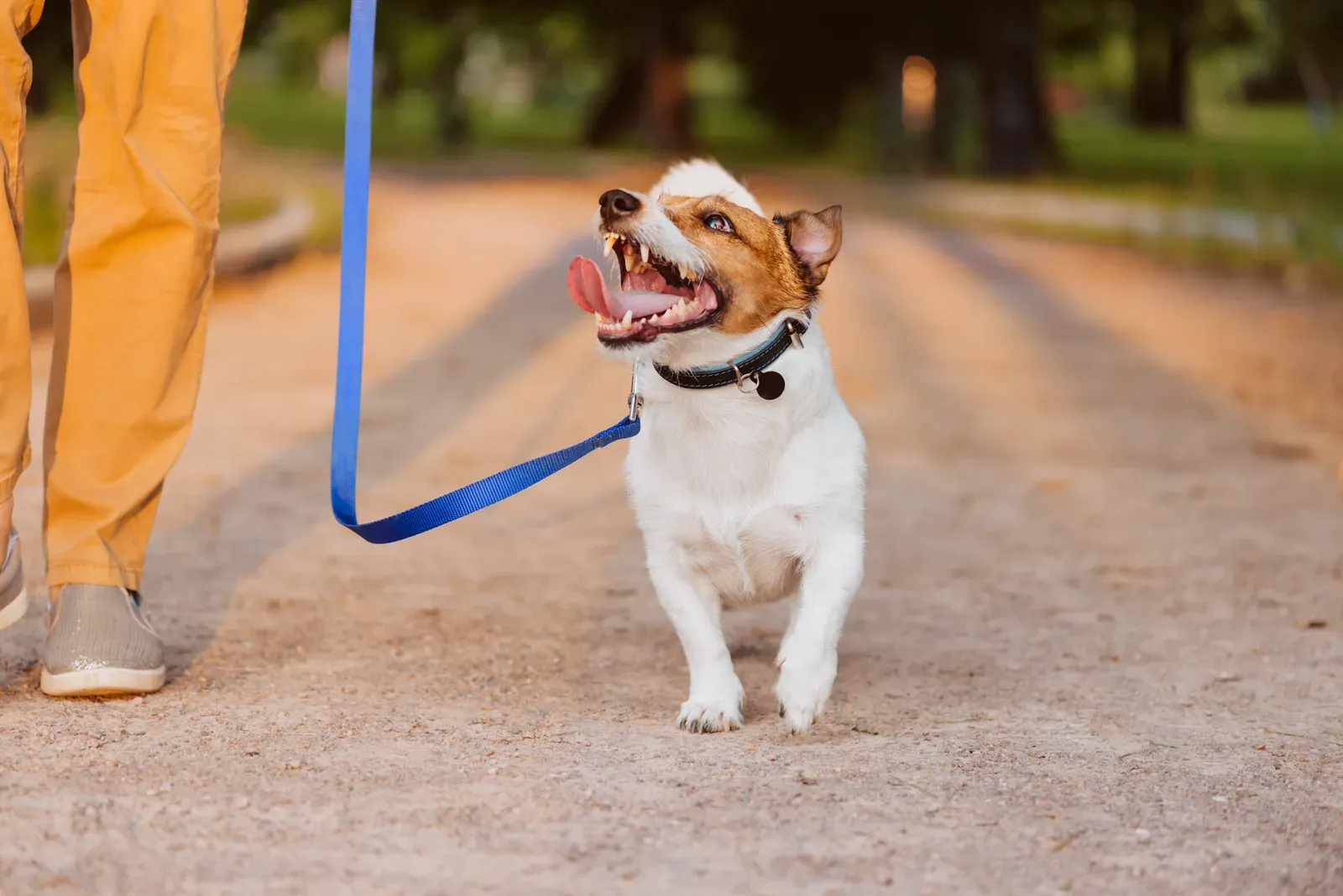
Private Training
One-on-one coaching with you on the other end of the leash.
Includes a written weekly plan to work from
N · 3-week board & train
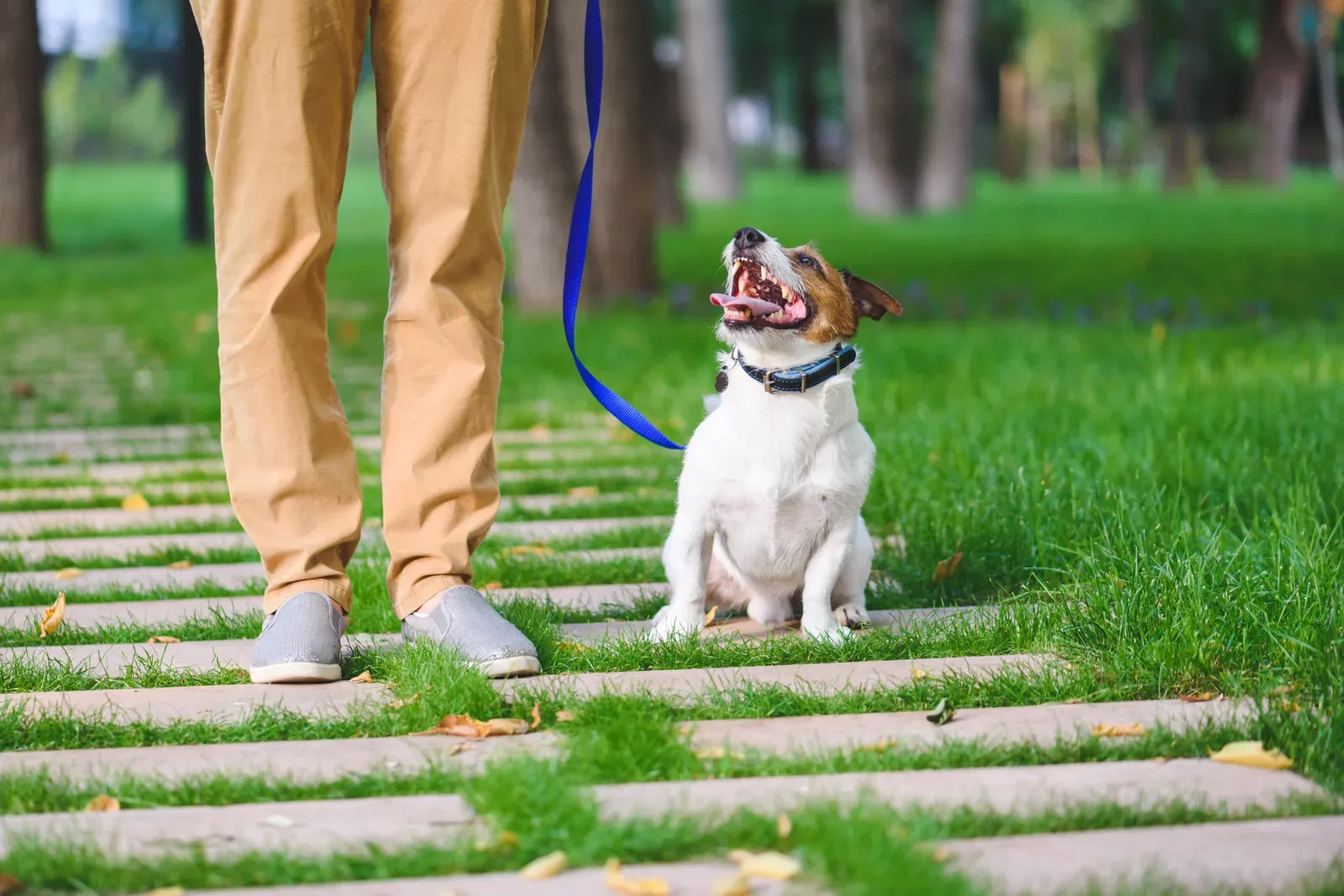
Puppy Fundamentals
Your puppy's first months decide the habits of a lifetime.
Includes handover lesson, follow-up session, slip lead + collar
Asked and answered
The questions people ask us.
What is marker training?
It is a way of teaching where a short signal, a word or a click, marks the precise moment the dog does what you wanted, and a reward follows every time. The signal lets you be exact about what earned the pay, which speeds up learning.
What is puppy clicker training?
Clicker training is marker training where the marker is a mechanical click instead of a word. Puppies pick it up quickly because the sound is identical every time, and it works well for shaping precise positions like a straight sit or a full place.
How does marker training work?
First the marker is paired with food until the dog expects a reward on hearing it. Then you mark the exact behaviour you want and pay afterward, so the dog links the sound to the action rather than to your hand moving. Over time the food thins out and the marker plus praise carries the work.
Clicker training explained: is it different from marker training?
Not in principle. The clicker is just one kind of marker, chosen for consistency and precision. A verbal marker does the same job and frees up a hand, which matters more once a leash and real-world distractions are involved.
Keep reading
Learn the timing with us
Every program starts with markers and rewards before any tool. Book a consultation and we will show you how it works with your dog.
From real owners
Rated 5.0 on Google.
Real Northline dogs