Manners & obedience
How to teach a dog to heel past other dogs
Passing another dog on a sidewalk is the hardest few seconds of many walks. The dog at your side has to ignore something it badly wants to sniff, chase or greet, and do it while your leash hand tightens. This page breaks the pass into four parts you can practise tonight: engagement, distance, the pass itself, and the reward that lands once you are clear.
Last reviewed October 4, 2026
Before the pass
Start with safety, then build engagement at a distance.
First, a quick safety check. If your dog lunges, barks hard, growls or freezes when another dog appears, treat that as reactivity rather than an obedience gap, and book a professional assessment before drilling passes. Never punish the growl; it is information. For everyone else, choose routes with room to step off the path, keep the leash short but loose, and practise first with dogs you can see from a long way off.
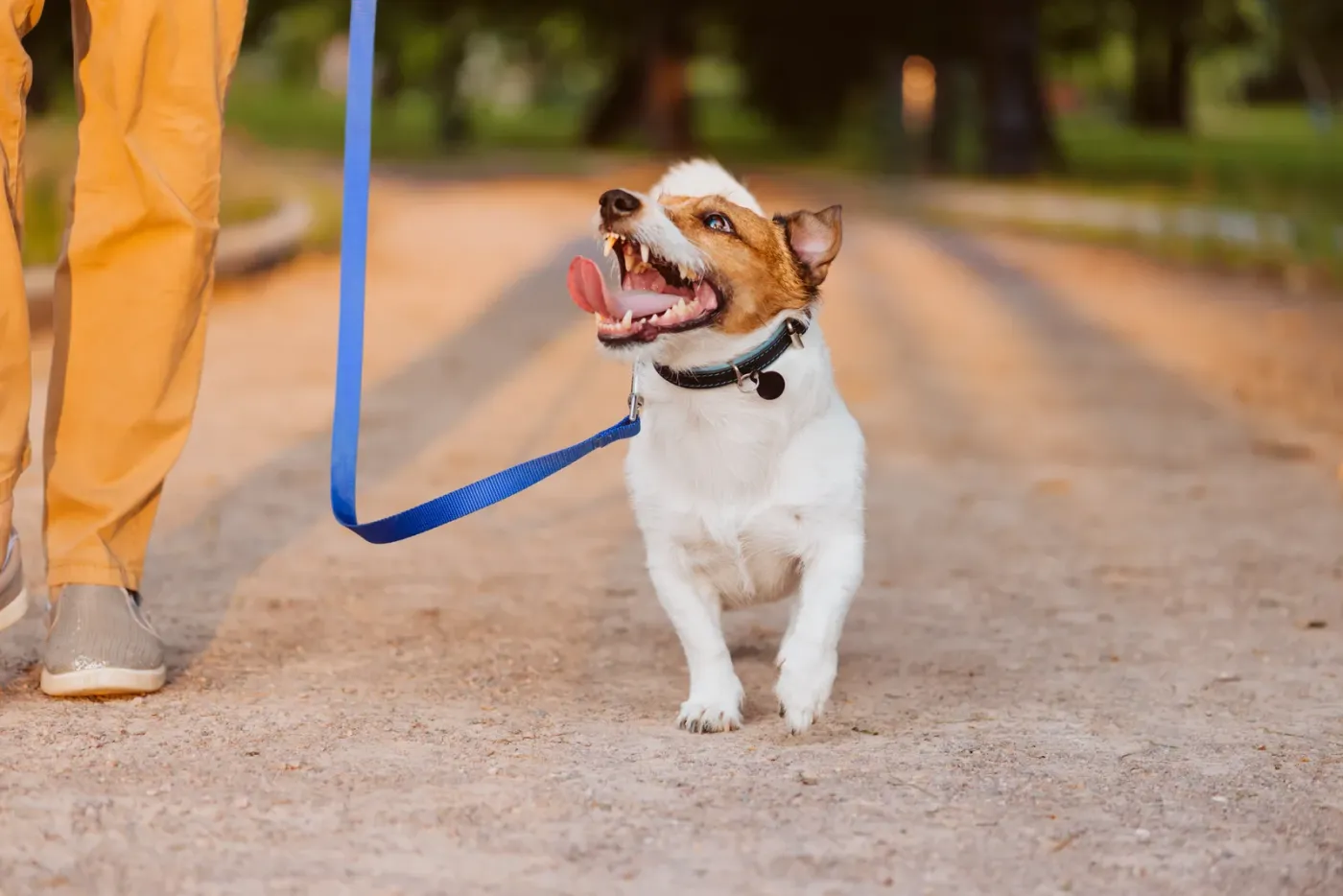
Step one tonight is engagement. Walk your usual heel in a quiet spot and mark and reward every glance up at you. Step two is distance: find the point where another dog is visible and your dog can still eat and respond. That is your working line. Step three is the pass: arc wide, put your body between the dogs, keep a brisk, steady pace, and do not stop to chat.
- Dog still takes food here
- Your body between both dogs
- Keep walking through the pass
- Reward lands once you are clear
Where passes wobble
The usual slips, and how to stretch the pass further.
The common mistakes are predictable. Owners close the gap too fast, tighten the leash as the other dog approaches, or pay the dog while it is still staring, which rewards the stare. Another is letting dogs greet on leash while the heel is wobbly, so every pass becomes a promise of a visit. Deliver the reward after the pass, on the far side, when your dog chooses you over the dog behind it.
Proof one thing at a time. Shrink the distance only on a good day, lengthen the heel before and after the pass, then add harder dogs: bouncy puppies, barking dogs behind fences, a dog coming straight at you. For a professional eye on your timing, a one-hour Private Training session is $150 + GST and comes with a written weekly plan. On-Leash Foundations works on heel around everyday distractions, and the consultation will say so if a smaller step suits you better.
Asked and answered
The questions people ask us.
How do I get my dog to ignore other dogs on walks?
Start at a distance where your dog can still take food and respond, and reward attention on you rather than waiting for a perfect heel. Close the gap slowly, and only on good days. If the response is lunging or growling, an assessment comes first.
Should I let my dog say hi to other dogs on leash?
While you are teaching the pass, skip on-leash greetings so other dogs stop predicting a visit. Leashes tangle, and many dogs feel cornered on a tight lead.
Which side should my dog be on when passing another dog?
Put your dog on the side away from the oncoming dog so your body sits between them. That may mean switching sides before the pass, so teach the switch in a quiet spot first.
What if my dog growls at a passing dog?
Do not punish the growl. Calmly add distance, keep walking, and note how far away the other dog was. Repeated growling, lunging or freezing is a reason to get a professional assessment before more practice.
Keep reading
Want smoother passes on walks?
Book a consultation and we will watch your dog pass another dog, then recommend the smallest plan that fits.
From real owners
Rated 5.0 on Google.
Real Northline dogs