After the program
How to maintain loose-leash walking after training
A loose leash is not a trick a dog performs once and owns forever. It is a standard, and standards hold only as long as someone holds them. Maintenance is lighter work than the original training, provided it is daily and the leash never quietly becomes a tow rope again. Here is what the daily walk looks like, how winter changes it, and how to spot the slide before it is a habit.
Last reviewed October 4, 2026
The daily walk
Hold the standard on short walks, and pay for the position.
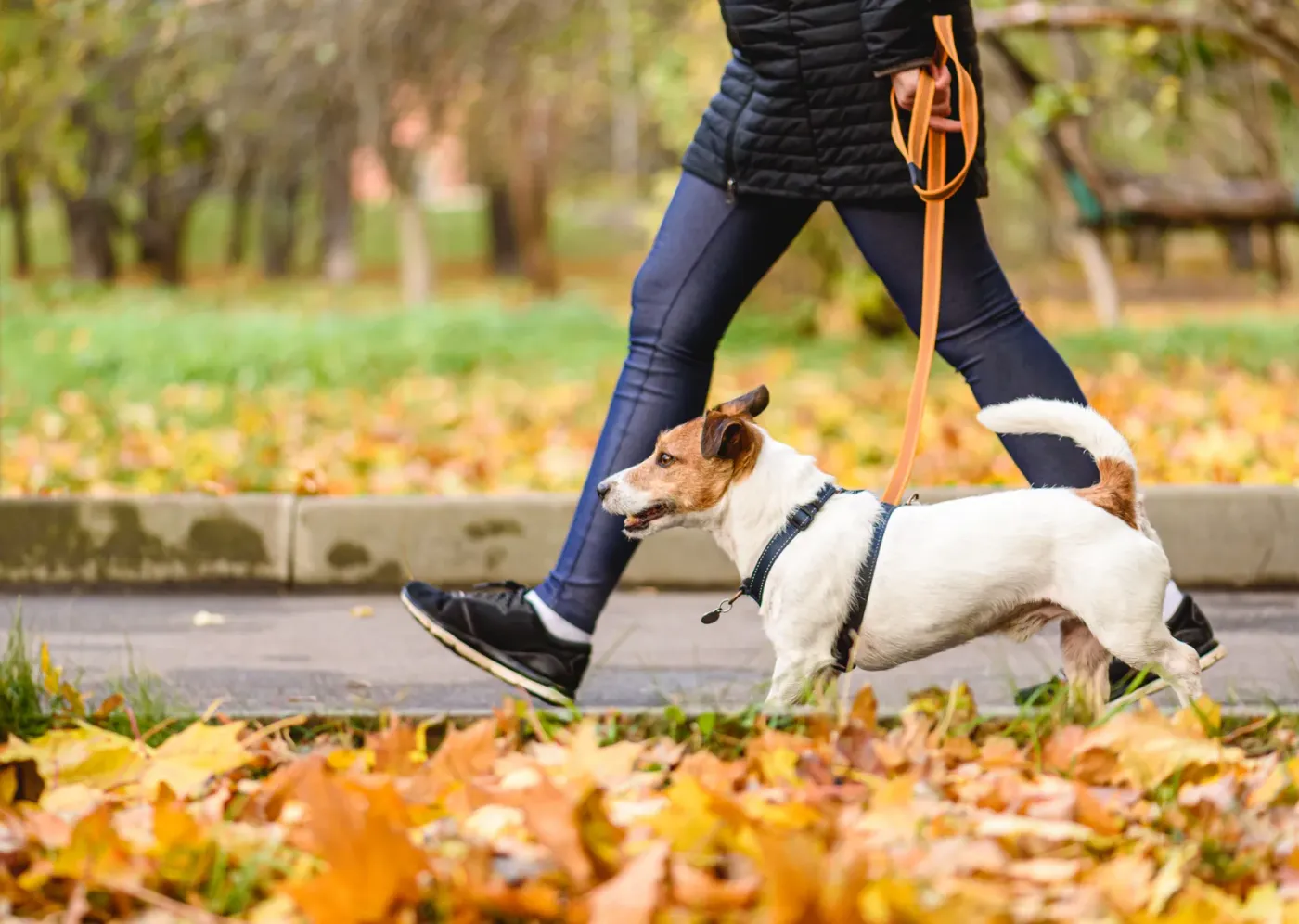
Pick the standard your dog went home with and do not negotiate it. For many graduates that is the dog's shoulder level with your leg and the leash hanging in a J. Walk it daily, short enough that you can hold the standard the whole way, and carry something worth having. Pay the position itself, not just the stop: a piece of food delivered at your seam while the dog is walking correctly tells the dog exactly where the money is.
When the leash tightens, turn. A calm about-turn puts the dog behind you, and the walk resumes the instant the leash is slack. The turn is the lesson, not a tug. Winter needs adjustments: shorten your grip so a lunge cannot take you off your feet, slow down on packed snow, choose cleared sidewalks, and on glare ice stop still rather than turning. Add new places one at a time: a new block before a new park, a quiet park before a busy one.
- Short walks, standard held throughout
- Food delivered at your seam
- Turn the moment it tightens
- Stop still on glare ice
Catching the slide
The slide usually starts with someone else holding the leash.
The standard rarely collapses on a training walk. It goes on the walks nobody counts: the guest who takes the leash for a block and gets towed to every tree, the child handed the leash in the yard, the rushed morning when you let the pull slide because stopping would make you later. Each one teaches the dog the rule has exceptions. Keep the leash in adult hands, and when a walk cannot be done to standard, make it a yard break instead.
Watch where the dog's shoulder sits at the first corner. Forging at the door, a leash that goes taut at every smell, needing the turn three times on a block you used to walk clean, those are the first signs. Go back to shorter walks and more food. Then use the follow-up session that came with your program; it exists for exactly this. On-Leash Foundations graduates also have lifetime phone and email support, so ask before the drift becomes a habit.
The programs
Programs and prices
Asked and answered
The questions people ask us.
How do I keep my dog walking on a loose leash after training?
Walk daily, short enough to hold the standard the whole way, and pay the dog for being in position rather than only for sitting at curbs. When the leash tightens, turn and carry on once it is slack. Add new routes one at a time so the dog is never tested on everything at once.
Why has my dog started pulling again after board and train?
Often because the rule picked up exceptions: a guest or child held the leash, or a rushed walk let the pull slide. Dogs are quick to notice when the standard only applies sometimes. Tighten the routine back up and book the follow-up session included with your program.
How do I walk a trained dog on ice without losing the loose leash?
Shorten your grip, slow your pace, and choose cleared sidewalks over icy paths. On glare ice, stop still rather than doing a reset turn, since a turn is where feet go out. Keep the walk short and pay generously for the dog matching your slower pace.
Which programs include a follow-up session for leash walking?
Every board and train does. On-Leash Foundations, two weeks at $1,865 plus GST, includes one follow-up and lifetime phone and email support; Advanced Off-Leash includes two. Puppy Fundamentals includes one within 60 days of going home.
Keep reading
Keep the walk you earned
Deciding on a program or watching the leash tighten? Book a consultation and we will tell you which option fits, including the smaller one.
From real owners
Rated 5.0 on Google.
Real Northline dogs