
After the program
How to maintain a recall for life
Recall is the one cue with a real cost when it fails, and often the one owners stop paying first. The dog comes back, the owner says good, clips the leash on, and the walk is over. Do that enough and the word starts to mean the fun is finished. Keeping a recall for the dog's life is mostly about protecting the word from that fate, and from a few other leaks.
Last reviewed October 4, 2026
Paying the word
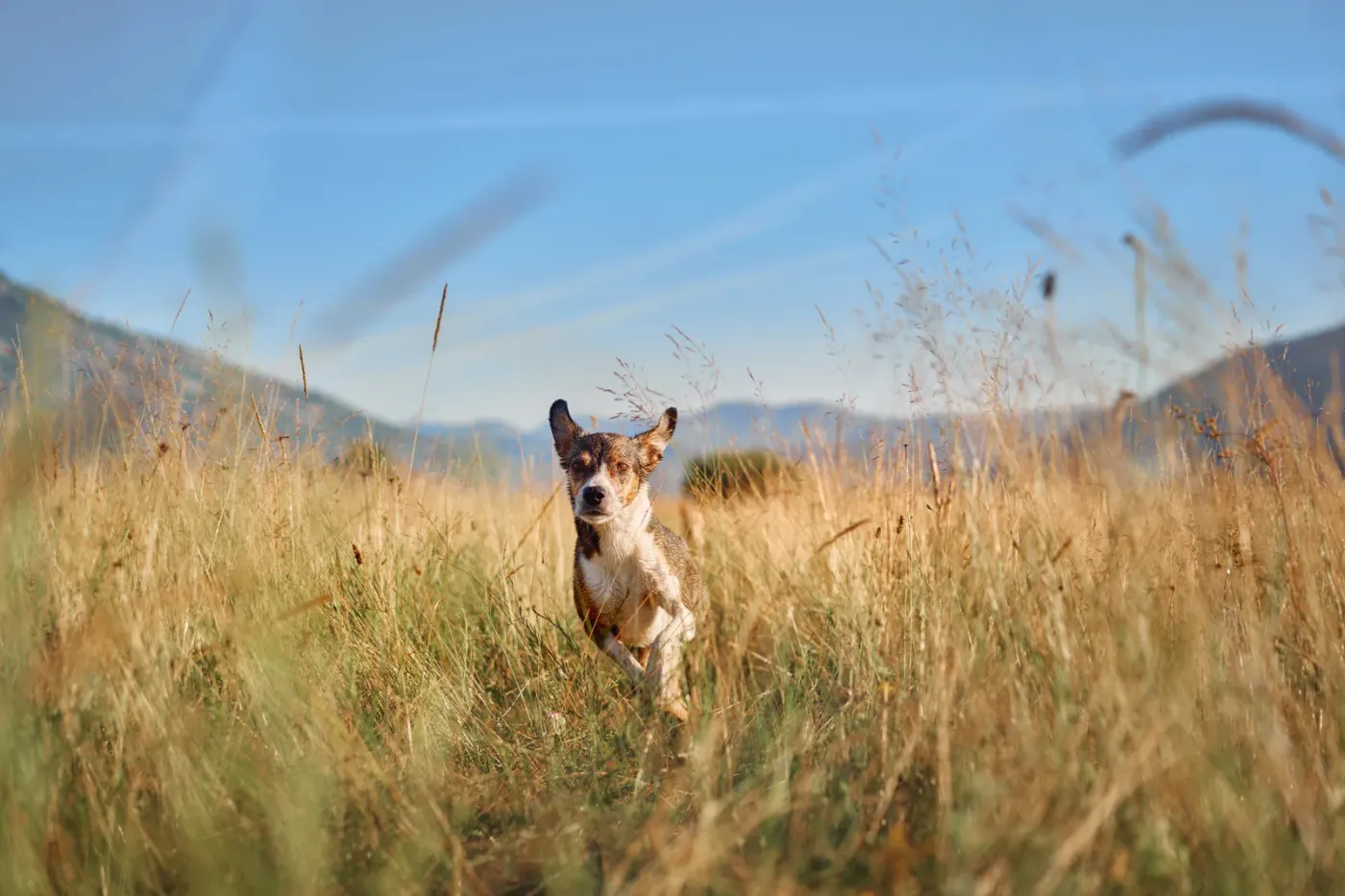
Pay it like it matters, then send the dog back to play.
Decide what your dog works for and bring it on every outing: real food, a tug, a thrown ball. Call once, in the voice you trained, and pay generously the moment the collar is in your hand. Touch the collar before paying, so a hand on the collar predicts good things, not the end of the walk. If your dog went home with a remote collar, use it as the owner education showed; it sits under the recall and never replaces the payment.
Most of your recalls should end with a release back to whatever the dog was enjoying. Call, pay, say your release word, and let the dog go sniff again. Practise somewhere new on purpose: a different trailhead, a friend's acreage, a beach the dog has not smelled. And where failure costs the most, near wildlife, open water, livestock or a road, clip a long line to a flat collar or harness, never a slip lead, and hold it or let it drag.
- Pay with what the dog rates
- Release back to play often
- New places on purpose
- Long line near wildlife and water
The slow leaks
The everyday mistakes that drain a recall, and the yearly check.
You call the dog to the bathtub, to the nail clippers, to the crate before work, and the dog keeps score: that word often precedes something it would rather skip. Fetch the dog for those jobs instead. Repetition is the other leak. Come, come, COME teaches the dog that the cue is the third one, said loudly. Say it once; if the dog does not come, walk in, collect the dog without a word, and use a long line there next time.
Never scold a dog that finally arrives; the arrival is the thing you are paying for. Put a yearly check in the calendar too, like a furnace service. Walk the recall through three environments on a long line and see where it is thin. To tune it up, start with the follow-up sessions in your program, then a Private Training session at $150 plus GST with a written plan, or graduate boarding at $65 plus GST per night with optional refresher work.
Asked and answered
The questions people ask us.
How do I keep my dog's recall reliable for life?
Keep paying it with something the dog genuinely wants, and release the dog back to play far more often than you leash up. Practise in new places so the cue is not tied to one park. Use a long line wherever a miss would be dangerous.
Why does my dog ignore recall after it was trained?
Often the word has started predicting the end of fun, or a chore like a bath or the crate, and the dog has weighed it up. Repeating the cue also teaches the dog to wait for the third, loudest version. Go back to paying single cues well, and put a long line on until it is solid again.
Should I use a long line with a trained off-leash dog?
Yes, in the environments where a miss costs the most: near wildlife, open water, livestock or roads. Clip it to a flat collar or harness, never to a slip lead. It is not a step backwards; it is insurance for the dog you already trained.
How often should I refresh my dog's recall training?
Daily, in small doses, is the real answer: a paid recall or two on every walk. A yearly check across three environments on a long line shows you where it has thinned. Graduates can book the follow-up sessions in their program, a Private Training session, or graduate boarding with optional refresher work.
Keep reading
Keep the word worth something
Rescuing a recall? Book a consultation. We fit the program to the dog and recommend the smaller one when it is enough.
From real owners
Rated 5.0 on Google.
Real Northline dogs