Training concepts
What is impulse control in dogs?
Most dogs know what sit means. Far fewer can hold a sit while a ball rolls past. That gap between knowing and holding is impulse control, and it helps explain why a dog can be clever, affectionate and still exhausting to live with. Below: what it is, the everyday moments we use to grow it, why each setting needs its own practice, and an honest look at where it tends to lag.
Last reviewed September 25, 2026
Everyday routines
Doorways, bowls and leashes are where the practice happens.
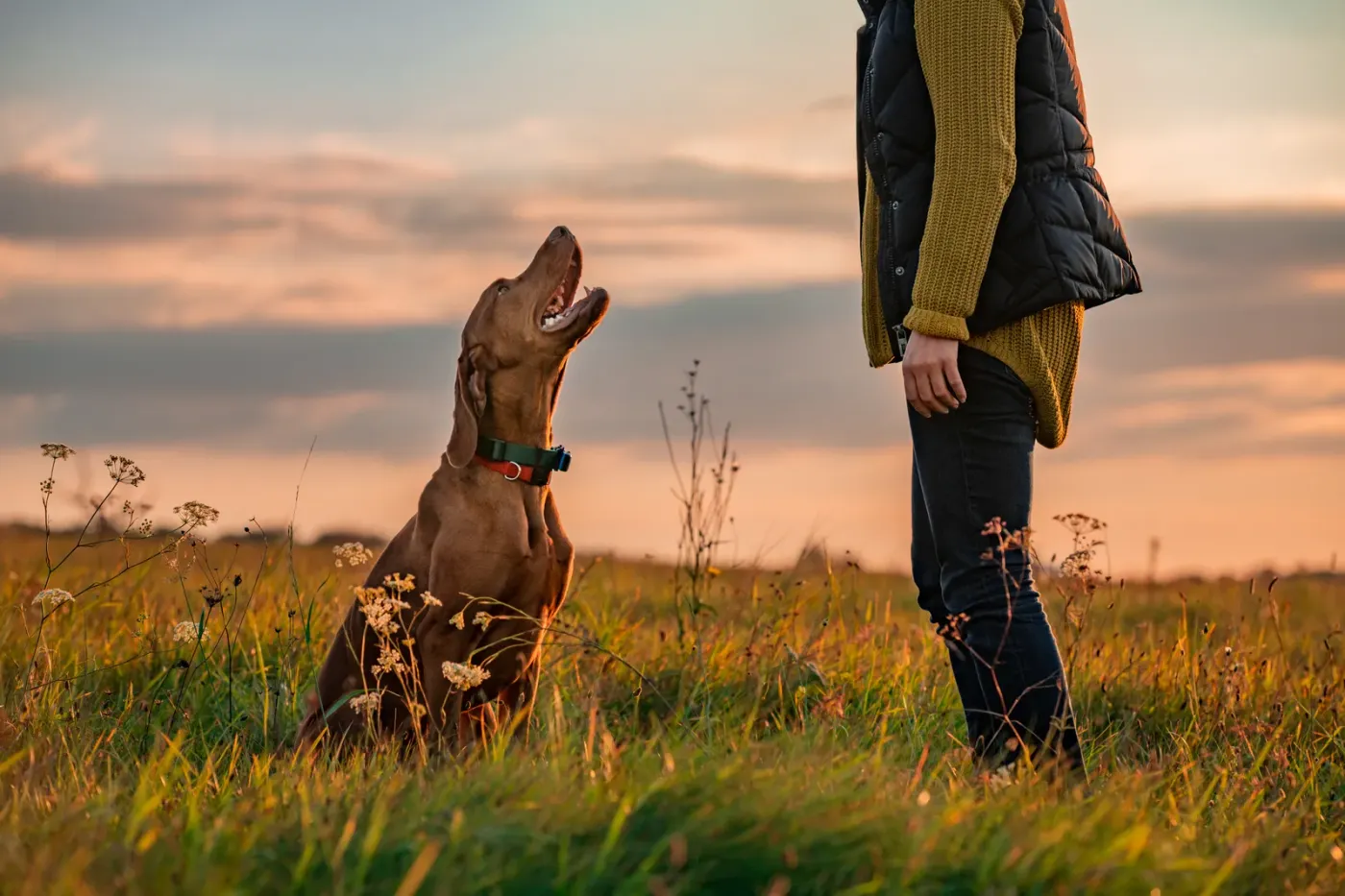
Impulse control can grow from small moments repeated many times. At the door, we ask for a sit, open the door a crack, and close it again if the dog moves; the release word becomes the reward. We do the same with the food bowl, lowering it slowly, lifting it if the dog lunges, and setting it down only when the dog holds still. Neither exercise needs a treat pouch. The thing the dog wants is the payment.
On leash, we stop walking the moment the leash tightens and move again when it slackens, so the walk itself is the paycheque. For greetings, we keep the dog behind us until it offers four feet on the floor, then let the guest in. We mark the calm choice with a word and pay it, so waiting is what unlocks the good thing. The habit does not travel on its own. Each new setting gets its own repetitions before the pause holds.
- Sit before every door opens
- Bowl goes down only when still
- Tight leash stops the walk
- Four on the floor before greeting
Where it lags
Why some dogs find the pause harder.
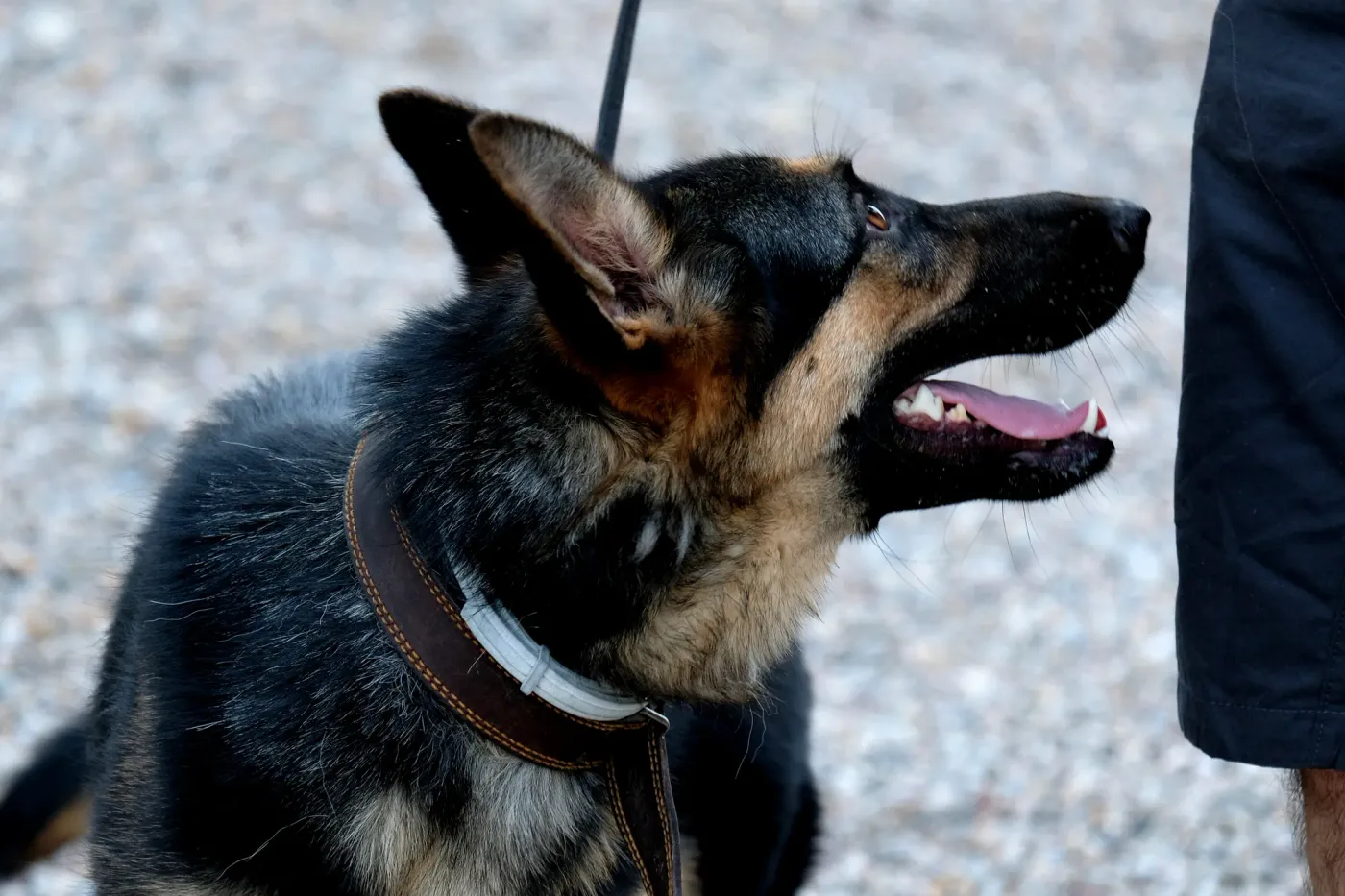
In our experience impulse control tends to come with maturity, so puppies usually have little of it, and many adolescents seem to lose what they had. Breed can play a part: many herding and sporting dogs were selected to move and decide quickly, and many terriers to grab, though individual dogs differ widely within any breed. A dog that never had to wait for anything has never practised, and pulling or counter surfing can reflect motivation, arousal or learning as much as poor restraint.
Puppy Fundamentals, three weeks at $2,775 plus GST, works on crate comfort, leash manners, sit, down and place as a daily routine for puppies in their key learning window. On-Leash Foundations, two weeks at $1,865 plus GST, works on stay, place and loose-leash walking around everyday distractions. Private Training, $150 plus GST per one-hour session with a written weekly plan, suits owners who want to coach it themselves. The consultation is where we recommend one, including a smaller option when it is enough.
Asked and answered
The questions people ask us.
What is impulse control in dog training?
It is the trained habit of pausing before acting: holding a sit while the door opens, leaving a dropped sandwich, walking on a loose leash past another dog. We build it by making the pause the thing that earns the reward. It is a skill that can be taught rather than a fixed personality trait.
What are good impulse control exercises for dogs?
Door manners, bowl waits, loose-leash walking and calm greetings cover a lot of ground, and each one uses what the dog already wants as the payment. We also like a place command for settling while dinner is cooked or the door is answered. We keep sessions short and practise each exercise in the settings where we want it to hold.
Is self control training for dogs the same thing?
Yes. Self control and impulse control describe the same skill: the dog chooses to wait rather than act on the first urge. Whatever it is called, the method is the same, and each new context, from the kitchen to the park, needs its own practice before the pause holds there.
Why do some dogs have so little impulse control?
Age often plays a part, since puppies and many adolescents are still maturing. Breed can add to it, as many dogs selected to chase, herd or grab have strong urges to hold back, though individuals vary. A dog that never had to wait for anything has simply never practised, and what looks like poor restraint can also be high motivation, high arousal or a habit that has been paying off.
Keep reading
Teach the pause.
Book a consultation and describe the moments your dog cannot wait through. We will match the routine to the dog.
From real owners
Rated 5.0 on Google.
Real Northline dogs