
Balanced training
Balanced dog training in Calgary: what it means here
Balanced is one of those words that can mean anything, which is why it makes people nervous. Some trainers use it to mean thoughtful. Some use it as cover. Instead of arguing about the label, this page sets out what it means in our hands: which part is done with rewards, which part uses a tool, how a tool gets introduced, and what you should see before you hand over a leash.
Last reviewed August 26, 2026
Rewards first, always
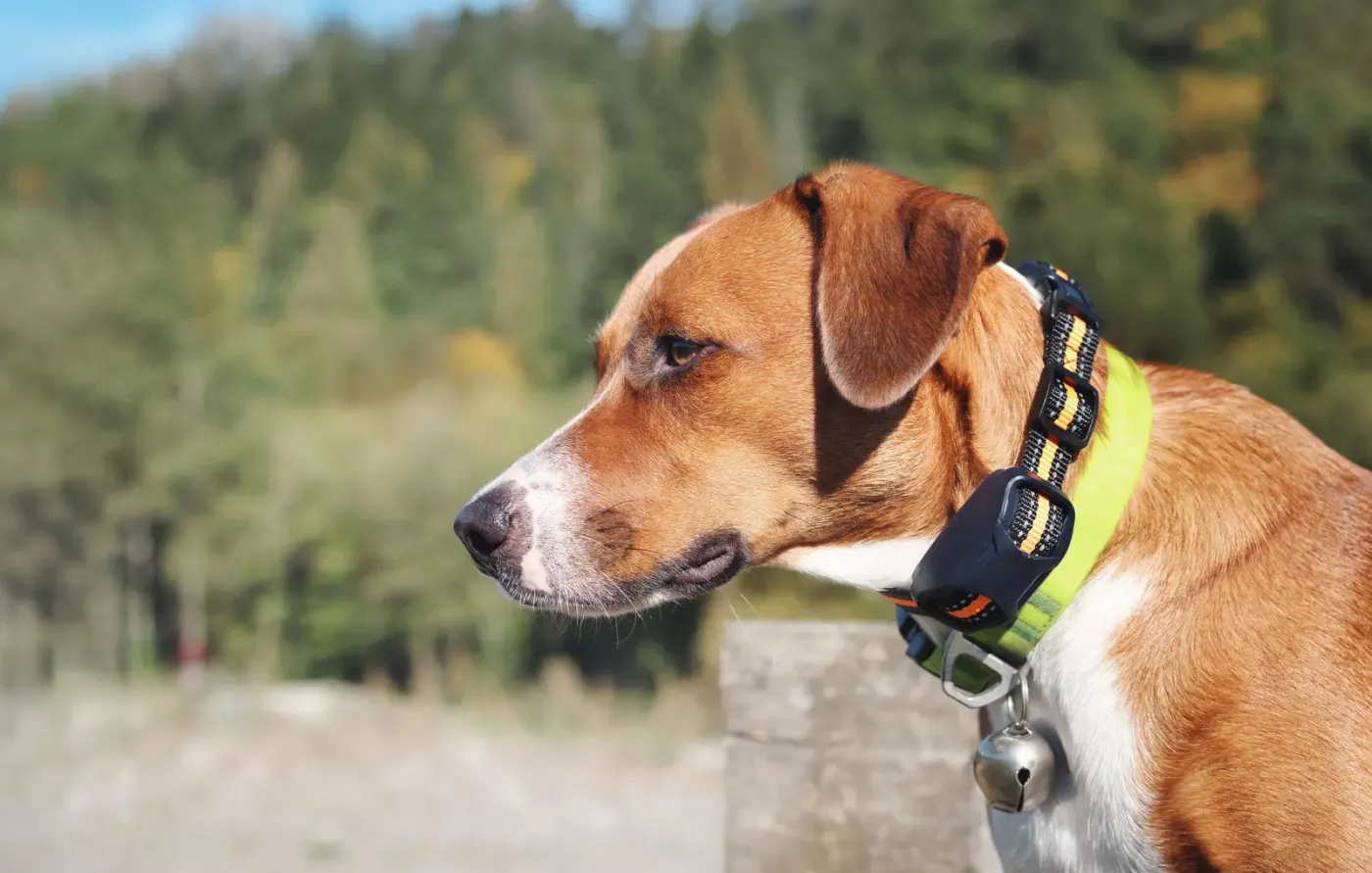
Every skill is taught with markers before any tool appears.
The order matters more than the toolbox. A dog learns sit, down, place, heel and recall through a marker and a reward, repeated until the dog offers the behaviour because it pays. Nothing is corrected that the dog has not been taught, because a correction for something a dog does not understand is confusion with a price tag. Only once a skill is fluent in easy settings do we ask whether this dog needs a tool to hold it around distractions.
Which tool depends on the dog in front of us. A soft, leash-sensitive dog may only ever need a slip lead. A strong puller that ignores food outdoors often does better on a prong collar, where a small, clear pressure replaces dragging. A dog heading for off-leash freedom uses a modern Educator e-collar, introduced at the lowest level the dog notices, only after the recall is fluent. Every tool is fitted, explained and put in your hands, because a tool you cannot use is decoration.
- Markers and rewards teach first
- Tools matched to the dog
- Low-level e-collar introduction
- Owner taught every tool
Questions to ask
What to ask before you trust the word balanced.
Ask any balanced trainer four things. What does the dog learn before any tool goes on, and how? At what level is the e-collar introduced, and can you feel it yourself? What happens when the dog gets it wrong on day one versus day twenty? And what does the owner get taught, in how many sessions? Vague answers to any of these are the tell. A trainer who cannot explain the sequence in plain words is probably not following one.
Then ask to see it. Watch a dog that is partway through a program work in a distracting spot: does it look at the handler because it wants to, or because it is bracing? A well-trained balanced dog is loose, wagging and quick to re-engage after a correction, not flat or flinching. If a trainer can put a tool in a nervous owner's hand at handover and the dog stays happy, the label is doing its job. If not, no name fixes that.

The programs
What choosing us looks like.
The formats below are how most owners start; prices are public on every one.

NE · 2-week board & train
On-Leash Foundations
If every walk is a wrestling match, pulling, barking, zig-zagging, this two-week program rebuilds the walk from the ground up with foundational on-leash obedience..
Includes handover lesson, follow-up session, lifetime support, slip lead + collar

E · 3-week board & train
Functional Off-Leash
Everything in the on-leash program, then the next level: reliable off-leash recall even around distractions.
Includes handover lesson, follow-ups, Educator remote collar
S · 5–6 week board & train
Behaviour Rehab
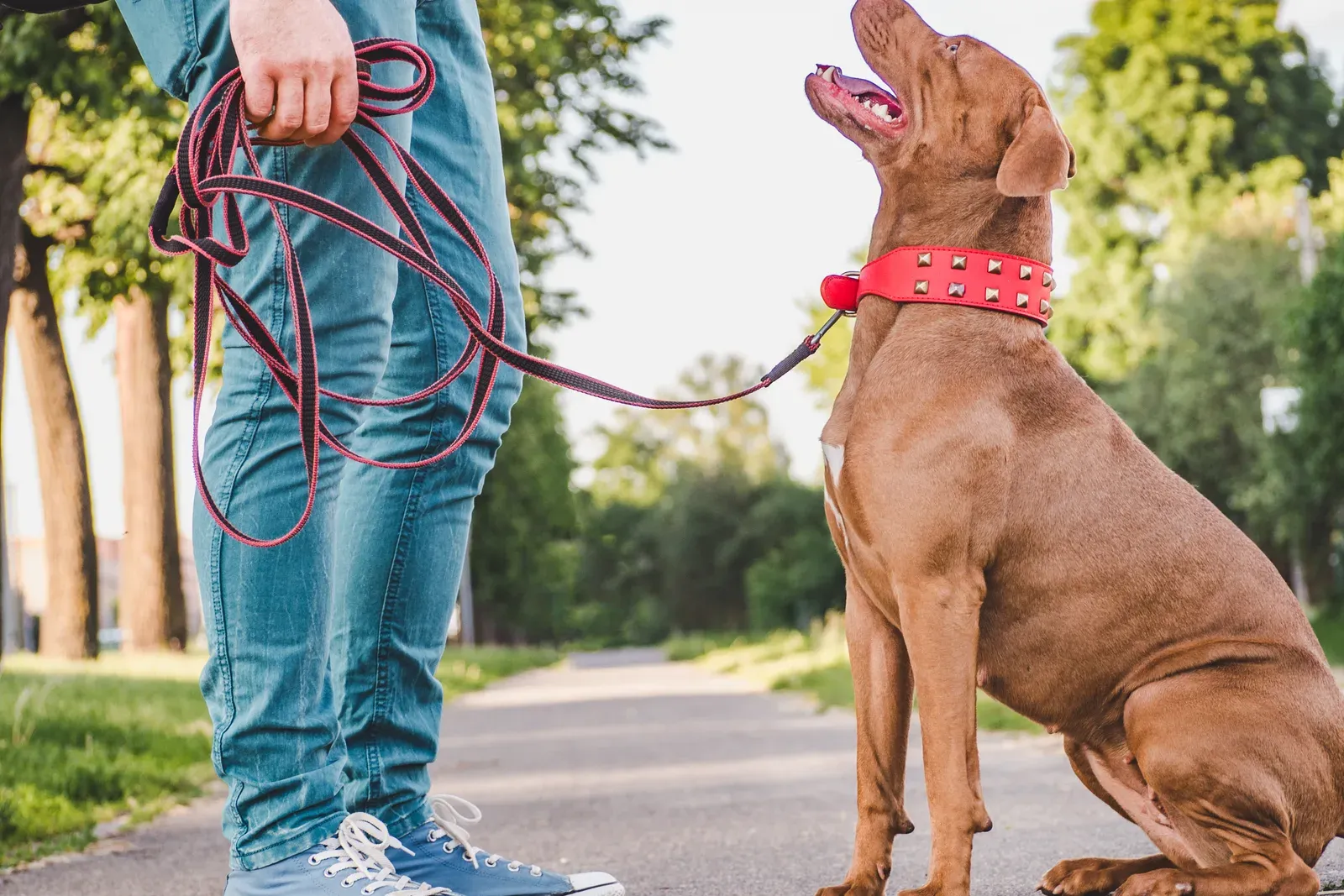
Kaitlin's specialty, and the work she loves most.
Includes assessment-built plan, 2 follow-ups, deep owner education
Asked and answered
The questions people ask us.
What is balanced dog training in Calgary?
Balanced training uses rewards to teach skills and, where a dog needs it, a fair correction to make those skills reliable around distractions. At Northline K9 every skill is taught with markers and food first, and tools are matched to the individual dog and taught to the owner.
Balanced training vs positive only: which is better?
For teaching a new skill, both start the same way, with rewards. The difference shows up in proofing: a balanced trainer will add a tool when a dog's recall or heel falls apart around real distractions, while a positive-only trainer keeps managing the environment instead. Which suits your dog depends on the dog and on how much freedom you want it to have.
How do you find a good e collar trainer in Calgary?
Ask at what level the collar is introduced, whether you can feel it on your own hand, and what the dog learns before the collar ever goes on. A good e-collar trainer uses modern Educator collars at low levels on a recall the dog already knows, and teaches you the handset before the dog comes home.
Does a prong collar trainer in Calgary use it on every dog?
Not here. A prong collar goes on a dog that pulls hard and does not care about food outdoors, where a light, well-timed cue does the job of a lot of hauling. A soft dog gets a slip lead, and either way you are shown how to fit and use it.
Keep reading
See it before you decide
Ask us the four questions above. We will answer them and show you the sequence on a real dog. Book a consultation.
From real owners
Rated 5.0 on Google.
Real Northline dogs