Puppies
What a puppy needs before board and train
The weeks before a puppy starts training are quieter than people expect. Nobody needs to drill sit at home first. What helps is a pup who has met a crate, keeps a predictable day, and arrives with a plan your vet has already weighed in on. Here is what falls to you, where the crate-training guide in our welcome package helps, and what goes in the bag.
Last reviewed October 4, 2026
Before day one
Your vet and a crate come first.
Vaccines and health checks are medical decisions, and they sit with your veterinarian. Book a visit before the program starts, tell your vet the puppy is going into a board and train, and ask what they recommend for timing and protection. If their answer affects your start date, raise it at the consultation. Our job starts with training, not medicine.
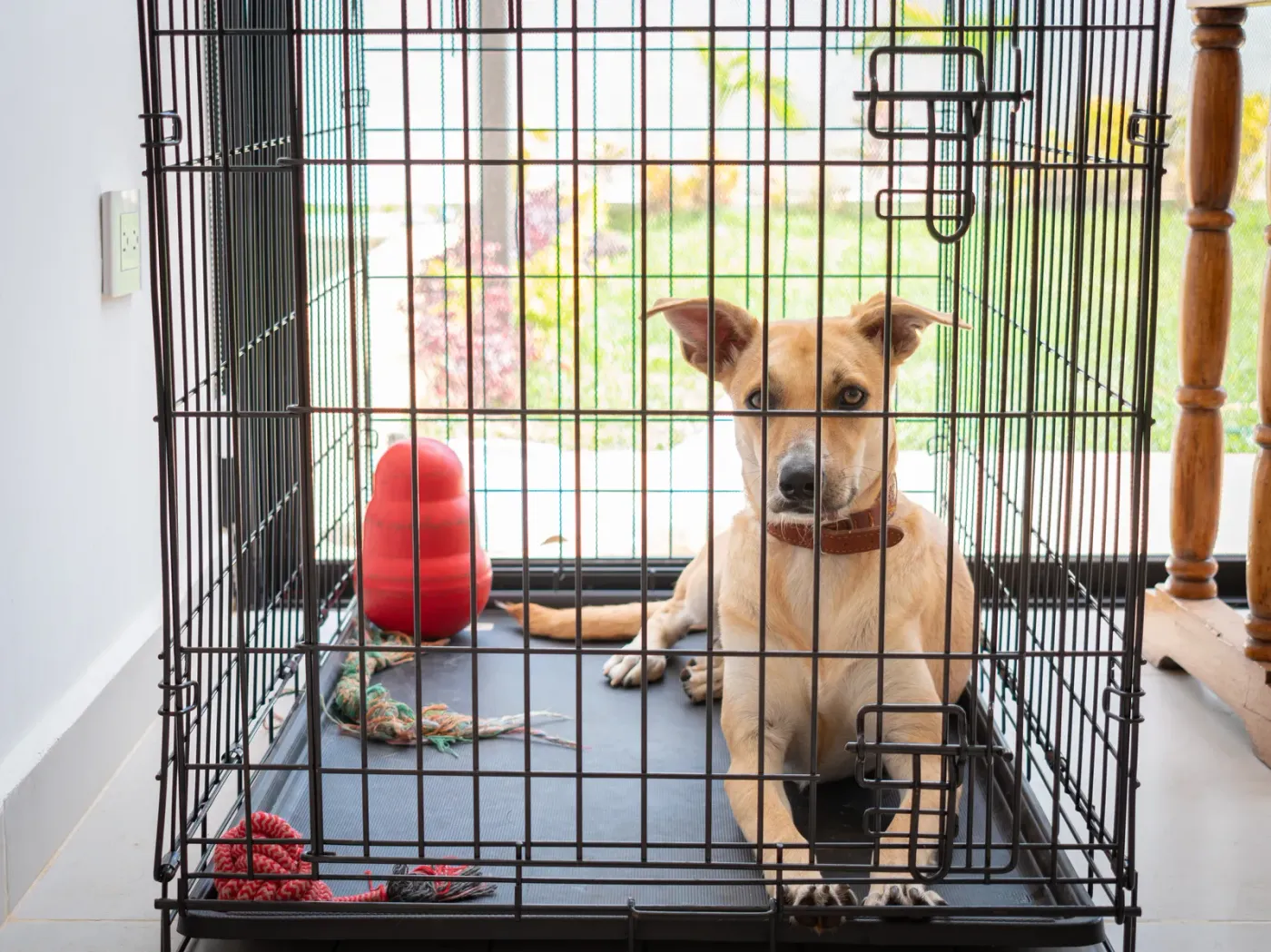
The crate-training guide in our welcome package is worth opening early. A puppy who already rests in a crate at home often finds a structured routine less strange, because one part of the day is familiar. Follow the guide at your puppy's pace. If you see real distress, stop rather than pushing through, and talk it over with your vet or at the consultation.
- Vet visit booked before the program
- Crate introduced at home
- Meal and nap times written down
- Crate-training guide read early
The bag and the handoff
Pack light, and write down the routine.
Check our packing page for the full list of what to send rather than guessing. For a puppy, the most useful thing you can add is information. A short note with feeding times, nap times, the words you already use for toilet trips and anything your vet has flagged gives us a clear picture of the puppy we are meeting. Leave the expensive bed at home; teething is real.
The drop-off day page walks through the handoff itself. The short version: keep the goodbye brief and calm, because a long, emotional farewell can unsettle some puppies. A tired pup also tends to cope better than a wired one, so some play at home that morning may help. After that, updates come through social media and personal phone or email check-ins.
The programs
Programs and prices
Asked and answered
The questions people ask us.
What vaccines does my puppy need before board and train?
That is a question for your veterinarian, who knows your puppy's age and health. Ask what they recommend before the program and follow their schedule. If the timing affects your start date, raise it at the consultation.
Should I crate train my puppy before board and train?
Starting helps. The welcome package includes a crate-training guide, and a puppy who already rests in a crate at home often finds the new routine less strange. Go at your pup's pace and stop if there is real distress.
Does my puppy need to know sit before starting?
No. Puppy Fundamentals works on name recognition, sit, down, place and crate comfort from the beginning. A predictable day at home matters more than any trick you teach in advance.
What should I pack for my puppy's board and train?
Use the packing page for the full list. Add a short written note on feeding, naps and toilet habits, plus anything your vet wants us to know.
Keep reading
Get your puppy ready
Book a consultation and we will talk through vet timing, the crate guide and whether Puppy Fundamentals fits your pup.
From real owners
Rated 5.0 on Google.
Real Northline dogs