
Training myths
"Socialization means meeting every dog": no
Many owners hear that a well-socialized dog is one who has met hundreds of others, so they head to the busiest off-leash park they can find. Some dogs cope fine. Others learn to drag toward every dog on the sidewalk, or get rolled once too often and start lunging. Quality and calm count for more than the number of greetings.
Last reviewed October 4, 2026
Neutral is the goal
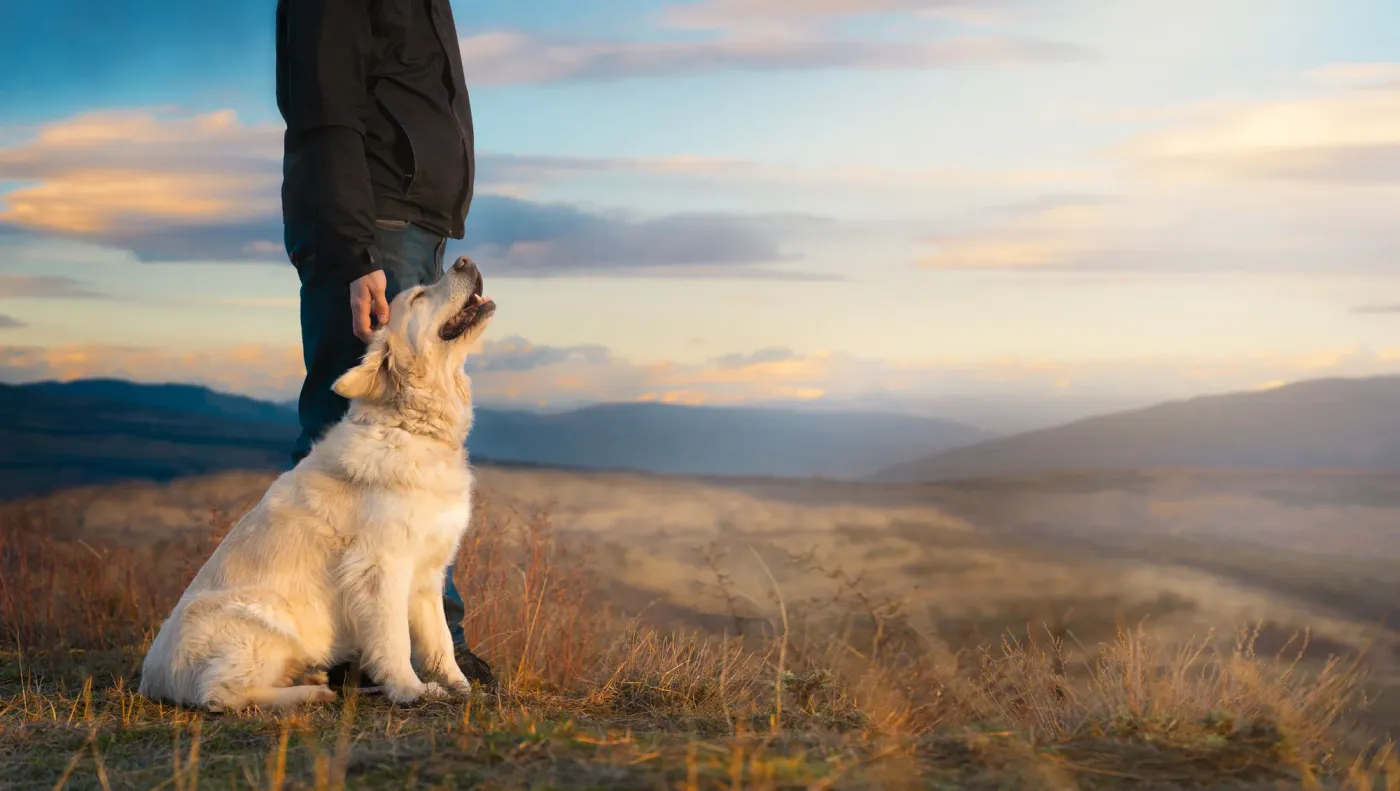
The best-socialized dogs often ignore other dogs.
Picture a dog walking past a busy patio, a dog on the other side of the street, and a kid on a scooter, barely glancing at any of it. That dog is well socialized. Neutrality means the world is ordinary and not worth getting worked up about. It does not mean the dog dislikes other dogs. It means they can choose to engage, or not.
The myth flips this around. If every dog in view means a greeting, a dog learns to expect one, and frustration builds when the leash says no. That frustration often shows up as barking and pulling toward dogs on walks. A dog who has practised walking calmly past other dogs tends to find leash walks much easier for everyone involved.
- Watch from distance, then reward
- Calm walks past other dogs
- A few trusted dog friends
- Leave before your dog overloads
The dog-park trap
Why a crowded park can set socialization back.
Off-leash parks mix dogs of every size, temperament and play style, with owners who are often busy chatting or on their phones. A shy dog can get chased and pinned with no way out. A pushy one gets to rehearse bullying. Neither experience builds the calm confidence socialization is supposed to give, and one frightening encounter can stick with some dogs.
What we do instead is structured socialization, which shows up in Puppy Fundamentals, Day Training and Behaviour Rehab. Dogs see other dogs, people and places at a distance they can handle, with markers and rewards for staying calm. Play happens with selected, well-matched dogs under supervision. If your dog already lunges, growls or hides, a professional assessment is a better next step than more exposure.
Asked and answered
The questions people ask us.
Does my dog need to play with other dogs to be socialized?
No. Many well-adjusted dogs enjoy a few familiar friends and simply ignore the rest. Calm exposure to dogs, people and places matters more than the number of play sessions.
Are dog parks good for socialization?
Sometimes, for confident dogs with attentive owners at quiet times. Busy parks can overwhelm shy dogs and let pushy ones rehearse rude play. Watch your dog closely and leave early if their body language tightens.
Should I let my puppy greet every dog on walks?
We would not. Greeting every dog can teach a puppy to expect it, which often leads to pulling and frustration on leash. Practise walking past calmly, and save greetings for dogs you know are friendly.
What if my dog is already reactive to other dogs?
Stop adding more exposure and get a professional assessment. Behaviour Rehab works on reactivity at the dog's own pace, with structured socialization and in-depth owner education. At a consultation we recommend what fits, and that can be a smaller option.
Keep reading
Calm beats busy
Tell us how your dog handles other dogs, and we will suggest a socialization plan that fits. Book a consultation.
From real owners
Rated 5.0 on Google.
Real Northline dogs