
Puppies
Second puppy and board and train
Bringing home a second puppy feels easier the second time. You know the crate drill and the midnight toilet runs. What catches people out is the other dog. Your first dog becomes teacher, playmate and sometimes bad influence, and the new puppy can end up more tuned in to its sibling than to you. Here is how a live-in program fits that picture.
Last reviewed October 4, 2026
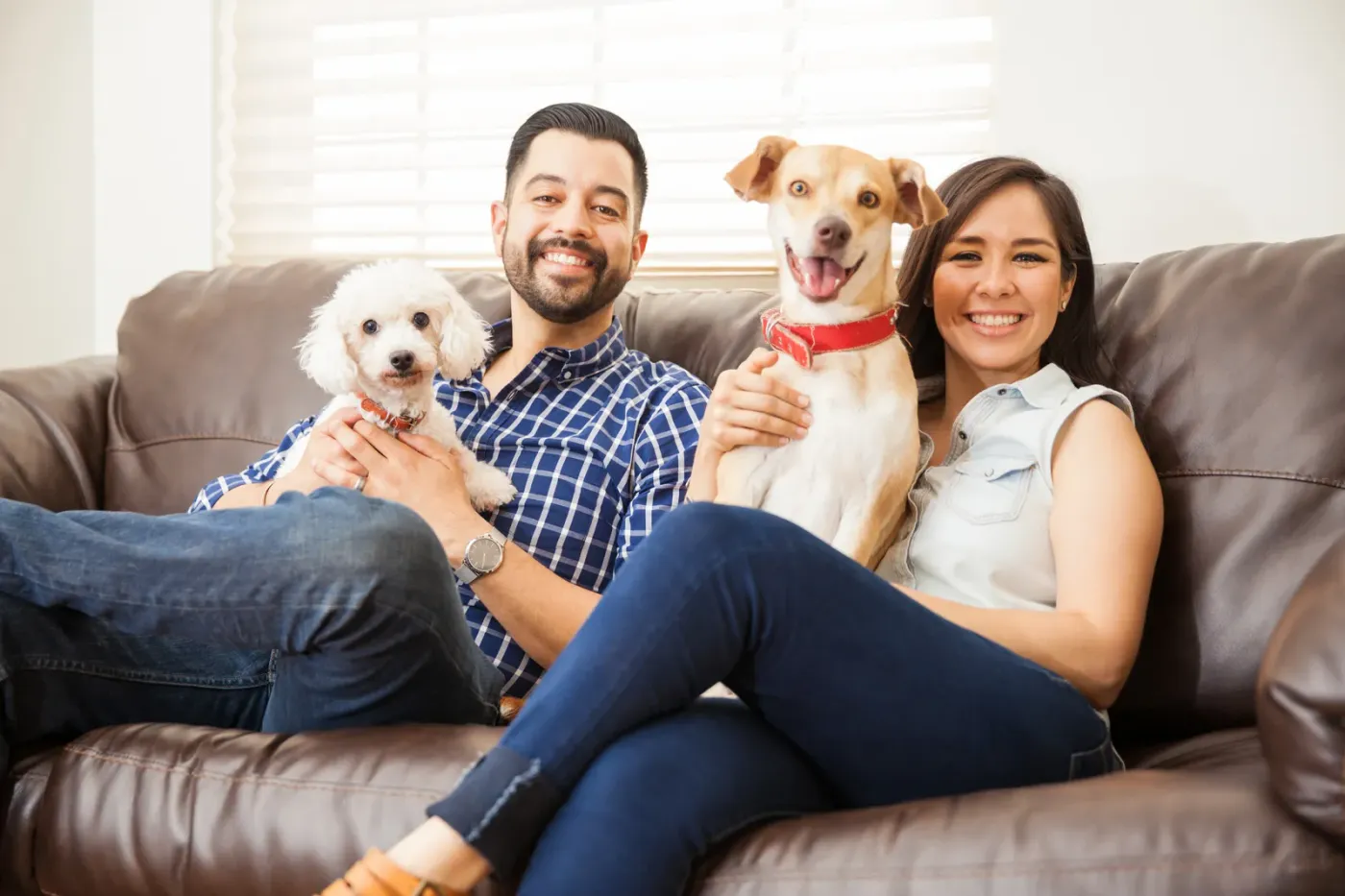
Two-dog dynamics
Why the puppy needs time away from the older dog.
Littermate-style problems are not only for actual littermates. When two dogs share every walk, meal and nap, the younger one can lean on the older one for confidence, struggle to cope alone and treat your cues as background noise. A puppy that only ever explores the world with its big sibling beside it may find a solo vet visit or a quiet evening alone surprisingly hard.
There is also the standard your older dog sets. If your first dog pulls on the leash, barks at the window or bolts through doors, the puppy is likely watching and may copy. If your first dog is polite, that is a gift, but only if the puppy is also learning from you. One-on-one time is how a second puppy builds its own relationship with its people, rather than borrowing one secondhand.
- Separate walks and training time
- Rest time apart, not always together
- Older dog's habits get copied
- Puppy learns cues from people
Plan for two
Program fit and the household routine afterward.
Puppy Fundamentals is the program built for a pup in its learning window: three weeks of daily one-on-one work on crate comfort, name recognition, leash manners, sit, down, place and calm socialization, for $2,775 plus GST. For a second puppy, part of the value is the separation itself. Your pup spends that time focused on a person, not a sibling, and the consultation confirms whether it fits or whether something lighter will do.
The harder work starts once the puppy is home. At the owner handover lesson, bring your questions about the two-dog routine: who walks with whom, where each dog eats, how play gets paused when it tips over. Plan solo walks and solo practice for the puppy, then bring your older dog back into walks gradually. If your first dog is the one setting the bad example, private training at $150 plus GST per session can work on that dog too.
Asked and answered
The questions people ask us.
Should I send my second puppy to board and train?
It can be a good way to give the puppy focused one-on-one time away from your first dog. The consultation looks at your puppy, your older dog and your household before recommending a program.
How do I prevent littermate-style problems with two dogs?
Give each dog separate time for walks, training and rest, so neither depends entirely on the other. If you already see heavy dependence or distress when they are apart, a professional assessment is a sensible next step.
Will my older dog be upset while the puppy is away?
Some older dogs barely seem to notice, while others seem unsettled; it varies. Keeping your first dog's routine steady while the puppy is away tends to help.
Do I need to train my older dog too?
Often it helps, because a puppy tends to copy what the older dog does. Private training at $150 plus GST per one-hour session comes with a written plan built around the household you actually have.
Keep reading
Planning for two dogs?
Book a consultation and tell us about both dogs. We will suggest a plan for the puppy and the household around it.
From real owners
Rated 5.0 on Google.
Real Northline dogs