
Puppies
Puppy biting and board and train
Needle teeth on ankles, sleeves and fingers are part of puppyhood. Biting is how a young dog explores, plays and lets off steam when tired. It is not aggression, and it is not a sign something is broken. The question is not how to stop it overnight but how to teach a softer mouth and better outlets, then keep that teaching consistent at home.
Last reviewed October 4, 2026
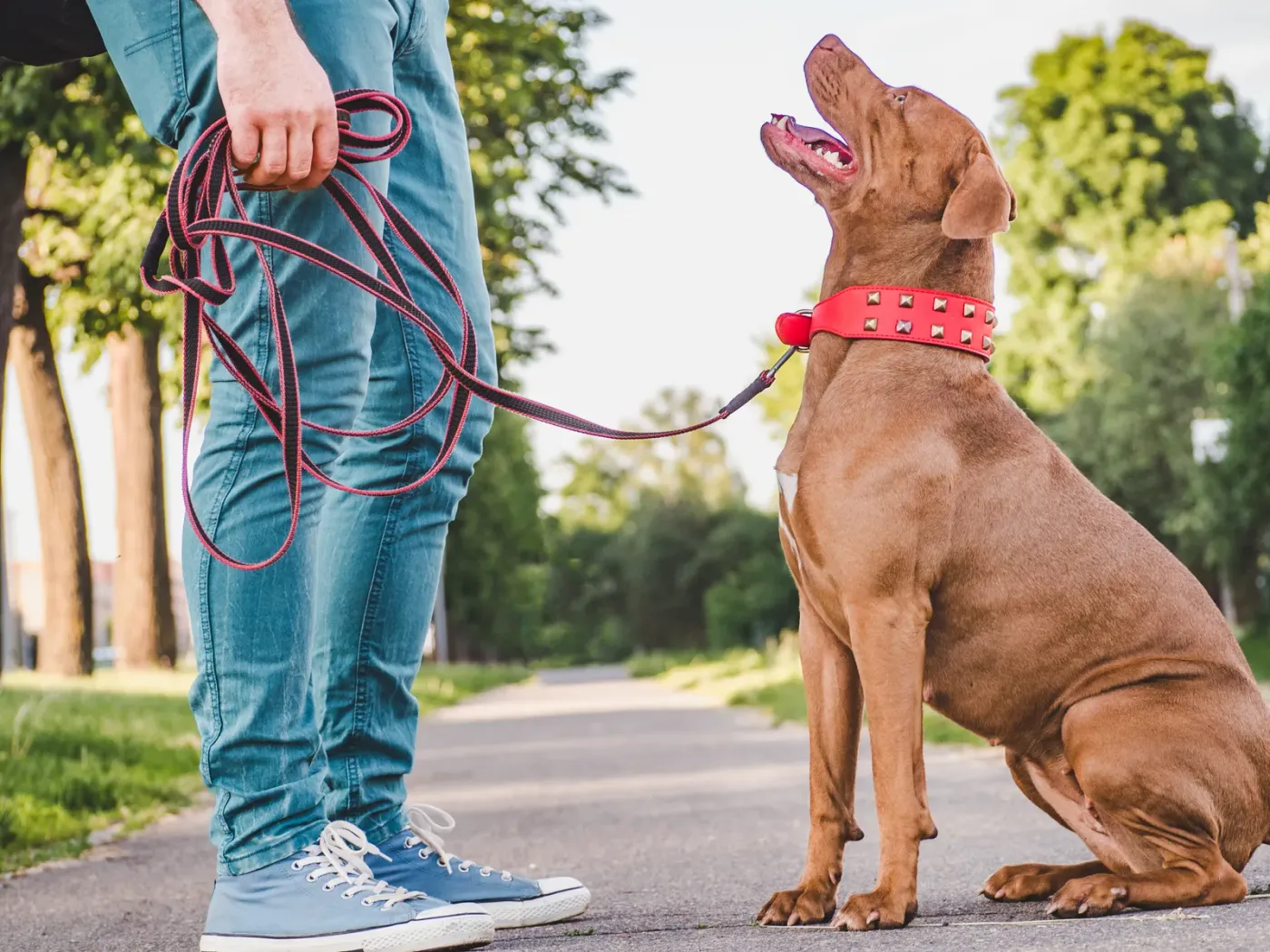
Teeth meet structure
What a structured program does with a mouthy puppy.
Many mouthy puppies are overtired puppies. A structured routine of training, play, rest and crate time tends to take the edge off, because the puppy is not running on fumes at seven in the evening. Inside Puppy Fundamentals, crate comfort, place and calm exposure to new sights and sounds all support that rhythm. Handling stays calm and predictable, so hands stop looking like chew toys or wrestling partners.
Bite-inhibition games teach the puppy to use a softer mouth and to switch to a toy on cue. Play pauses calmly the moment teeth land on skin, then restarts with a tug toy, so the puppy learns which choice keeps the fun going. These are short, controlled games, not tests. Nobody stands still while a puppy grabs, and the aim is a puppy that offers a gentler alternative.
- Rest built into the day
- Toys offered, hands withdrawn
- Play pauses, then restarts calmly
- Calm, predictable handling throughout
Home rules for teeth
Coaching for the family that wants the puppy home.
If you would rather keep your puppy at home, Private Training puts the same ideas in your hands with a written weekly plan. Start with management: a pen or gate for overexcited moments, a tug toy within reach of every adult, and scheduled naps. When teeth meet skin, calmly step behind a barrier or move the puppy to a quiet space, rather than holding still and hoping it stops.
Children should not run bite-inhibition games or test the puppy. Adults do the teaching, and kids stay on the other side of a gate when play gets wild. Agree on one word for gentle, one for take it, and one way to end play. If the biting looks frantic, comes with stiffness or growling, or escalates rather than settling, have a professional assess it, and ask your vet about pain.
Asked and answered
The questions people ask us.
Can a board and train fix puppy biting?
A program can work on biting through structure, rest, calm handling and bite-inhibition games, but it cannot promise a result. What the puppy keeps doing at home depends on everyone handling it the same calm way.
Is my puppy biting because it is aggressive?
Mouthing in play is normal puppy behaviour and is often about exploring, teething or being overtired. Biting that comes with freezing, stiffness or growling deserves a professional assessment, and a vet can check for pain.
Should I yelp or hold my puppy's mouth when it bites?
We would skip both. Calmly ending play and redirecting to a toy is clearer for many puppies, and holding the mouth can turn handling into a wrestling match.
Do puppies need vaccines before a board and train?
Vaccination timing is a question for your veterinarian, who knows your puppy's history. Bring their guidance to the consultation and we can talk through timing from there.
Keep reading
Softer mouths start here
Book a consultation to talk through your puppy's biting and whether a program or home coaching suits your family.
From real owners
Rated 5.0 on Google.
Real Northline dogs