
Ages & stages
Is 6 months too late to train a puppy?
Six months is roughly where puppy cuteness stops covering for puppy habits. The jumping is taller, the pulling is stronger, and the recall that worked in the kitchen may vanish at the park. None of that means the window has closed. It means the training gets more specific, and the habits you want get practiced on purpose instead of by accident.
Last reviewed October 4, 2026
What shifts now
Adolescence changes the job, not the possibility.
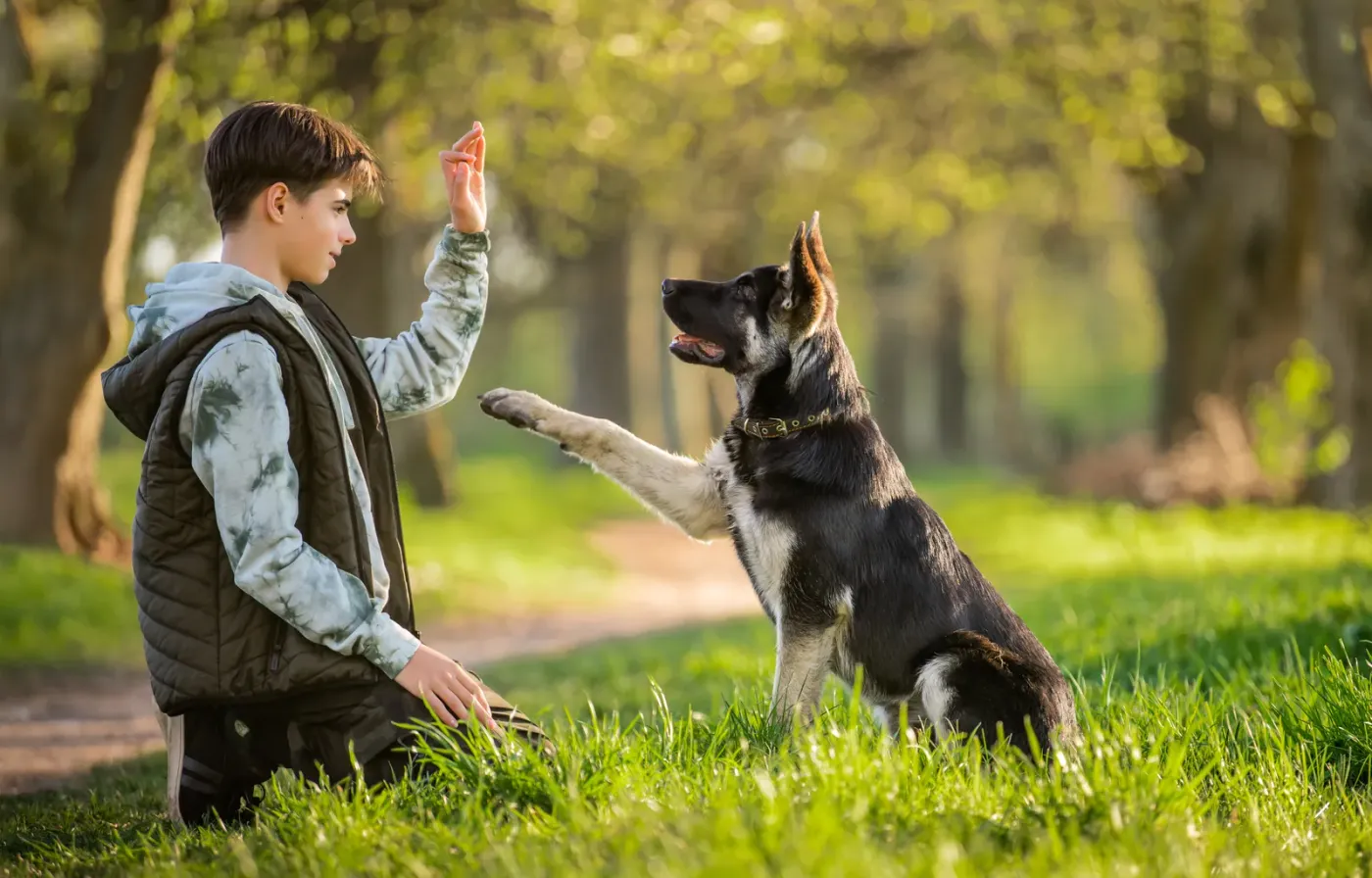
Somewhere around six months, give or take, many puppies start testing what they thought they knew. A sit that was automatic at four months may need a second ask. Interest in smells, other dogs and moving things often climbs, and attention can feel shorter outdoors. This is a normal developmental stretch, not a sign the puppy has forgotten everything or that earlier work was wasted.
What genuinely changes is the cost of habits. A pup who has spent months pulling toward every dog has rehearsed that pattern many times, and rehearsal is learning too. So the priority shifts from teaching brand-new skills to replacing practiced ones. Management helps here: a leash indoors when guests arrive, a gate at the front door, and fewer chances to repeat the habit you are trying to change.
- Name response outdoors, not just inside
- Loose leash on familiar routes
- Place during doorbells and meals
- Greetings with four paws down
Now versus later
What to work on first, and what can wait.
Put foundations ahead of freedom. Leash manners, a reliable name response, settling on a place mat and crate comfort are worth building while your pup is still growing into adult size and strength. These are the skills Puppy Fundamentals is built around, with three weeks of daily one-on-one training and a handover lesson so you can keep the routine going at home.
Long-distance off-leash work and heavy distraction proofing can usually wait until the basics hold up on leash. If you prefer to train yourself, Private Training at $150 per session comes with a written weekly plan. Day Training suits owners who want daily work and their pup home each night. At the consultation we recommend a format, and we will say so when a smaller option covers it.

Asked and answered
The questions people ask us.
Can you still train a 6 month old puppy?
Yes. Many six-month-old pups learn quickly; they simply have more practiced habits to replace. Clear routines and consistent follow-through tend to matter more now than at eight weeks.
Why is my 6 month old puppy ignoring commands he used to know?
Adolescence often brings a dip in focus, especially outdoors. Go back to easier settings, reward generously, and add distractions back gradually. If the change is sudden or comes with signs of discomfort, check with your vet.
Is 6 months too old for puppy board and train?
Not as a rule. Puppy Fundamentals is built for pups in their key learning window, and the consultation is where we look at your pup's age, habits and temperament before recommending a program.
Should I start off-leash training at 6 months?
Start with a dependable name response and recall on a long line in safe, enclosed spaces. Real off-leash freedom usually comes after on-leash basics hold up around everyday distractions.
Keep reading
Start the teenage chapter well
Book a consultation and we will look at your six-month-old's habits and recommend the format that fits.
From real owners
Rated 5.0 on Google.
Real Northline dogs