
Straight answer
Is it too late to train a 2-year-old dog?
Somewhere around the second birthday, a lot of owners quietly decide their dog is who it is. The jumping, the pulling, the selective hearing get filed under personality. We see two-year-olds regularly, and the honest news is that this is one of the best ages to train, not the last one. This page covers what actually changes at two and how long the work realistically takes.
Last reviewed August 26, 2026
Why two is good
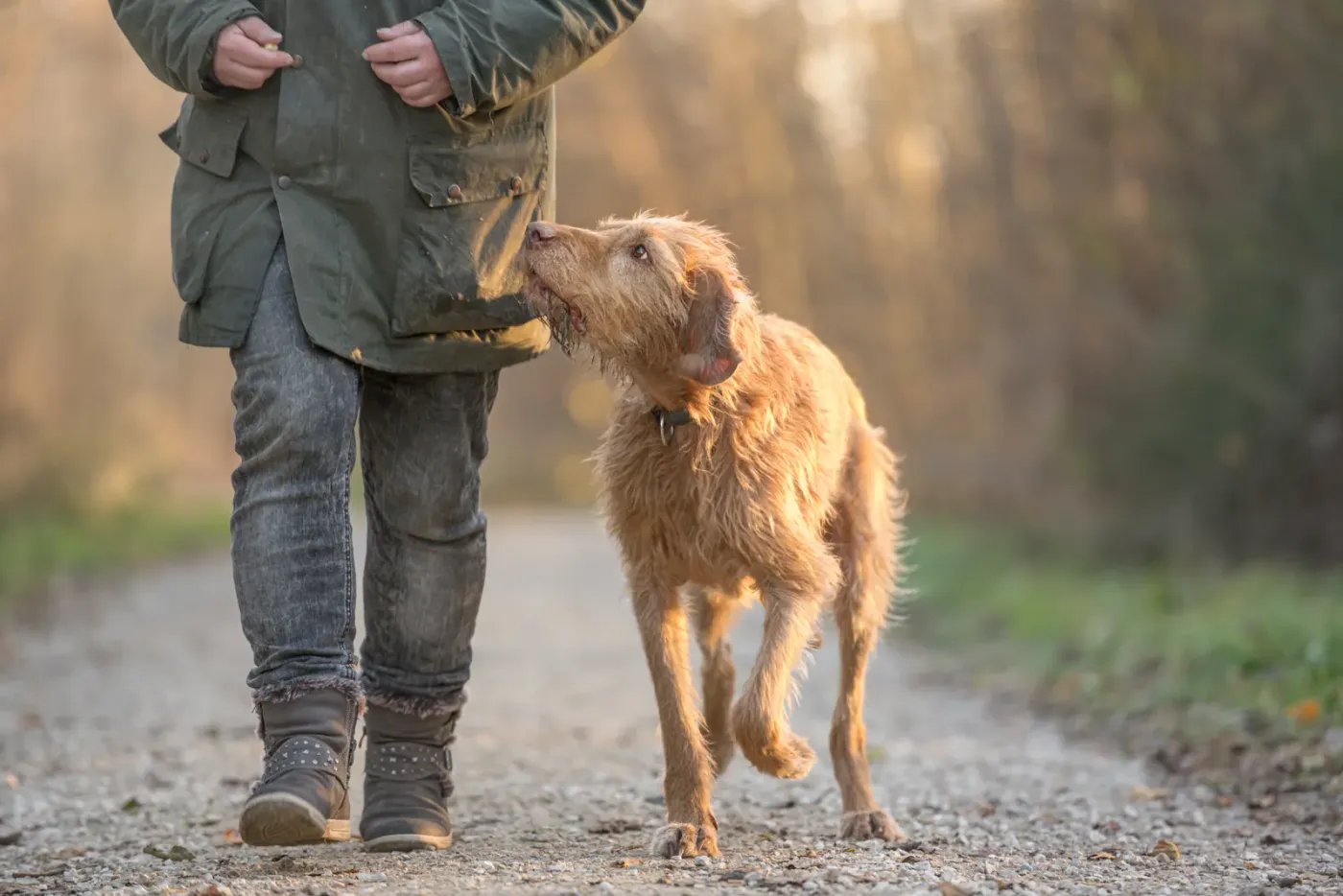
Adolescence has just ended, and that helps you.
Between roughly six months and two years, dogs are teenagers: distractible, hormonal, testing every boundary they can find. By two, most of that has settled. The dog can hold a down-stay for longer than a few seconds, can work for food without spinning off at the first smell, and has a mature nervous system that recovers from a correction or a surprise rather than crumbling. Those are training assets, and a young puppy has none of them.
What a two-year-old also has is history. Every pull that got the dog to the park, every jump that earned a hand on the head, every bark that made the mail carrier leave has been rehearsed hundreds of times. So the work is less about teaching and more about making the old strategy stop paying while a new one starts paying better. That is a different problem from puppyhood, but it is a very solvable one.
- Attention span is finally there
- Old habits have a reward history
- Food and play drive are stable
- Adult dogs generalize faster than puppies
Realistic timeline
What the first month looks like for an adult dog.
For a two-year-old with pulling, jumping and patchy recall but no fear or aggression, the Complete On-Leash Foundations program is usually the right size: a two-week board and train at $1,865 plus GST that covers loose-leash walking, heel, sit, down, stay and place around everyday distractions. Two weeks is enough to install the new picture because the dog already has the focus to work in longer, more productive sessions than a puppy could manage.
If the goal is off-leash reliability, the Functional Off-Leash program runs three weeks at $3,030 plus GST and includes an Educator remote collar introduced properly and taught to you. Expect the dog to come home sharp, then expect the old habit to try creeping back in familiar places. That is normal and it is what the follow-up sessions are for. Adult dogs held to the new standard consistently usually settle into it over the following weeks.
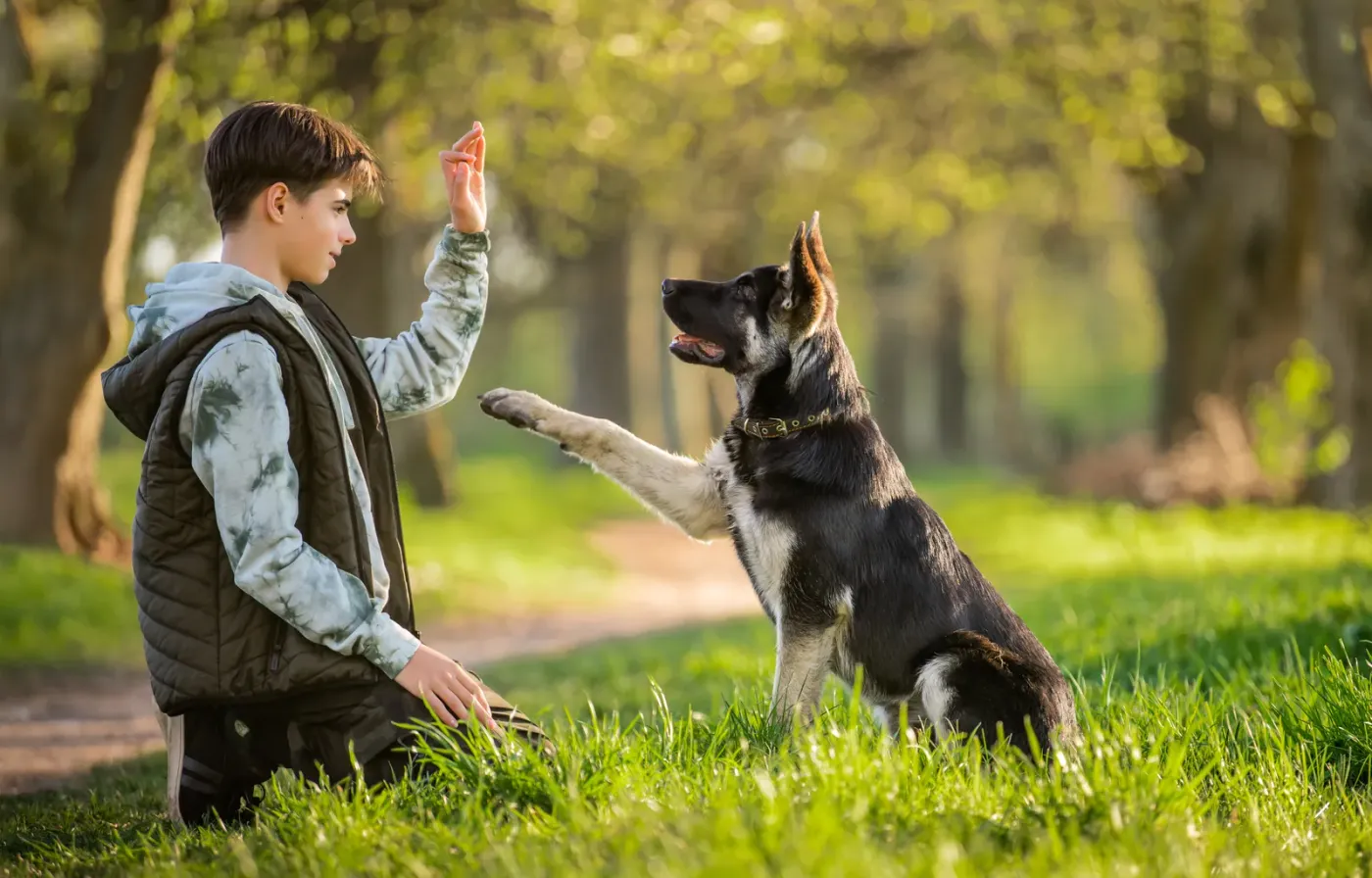
The programs
When teaching it yourself stalls.
The guide above is the real method. These are the faster routes.
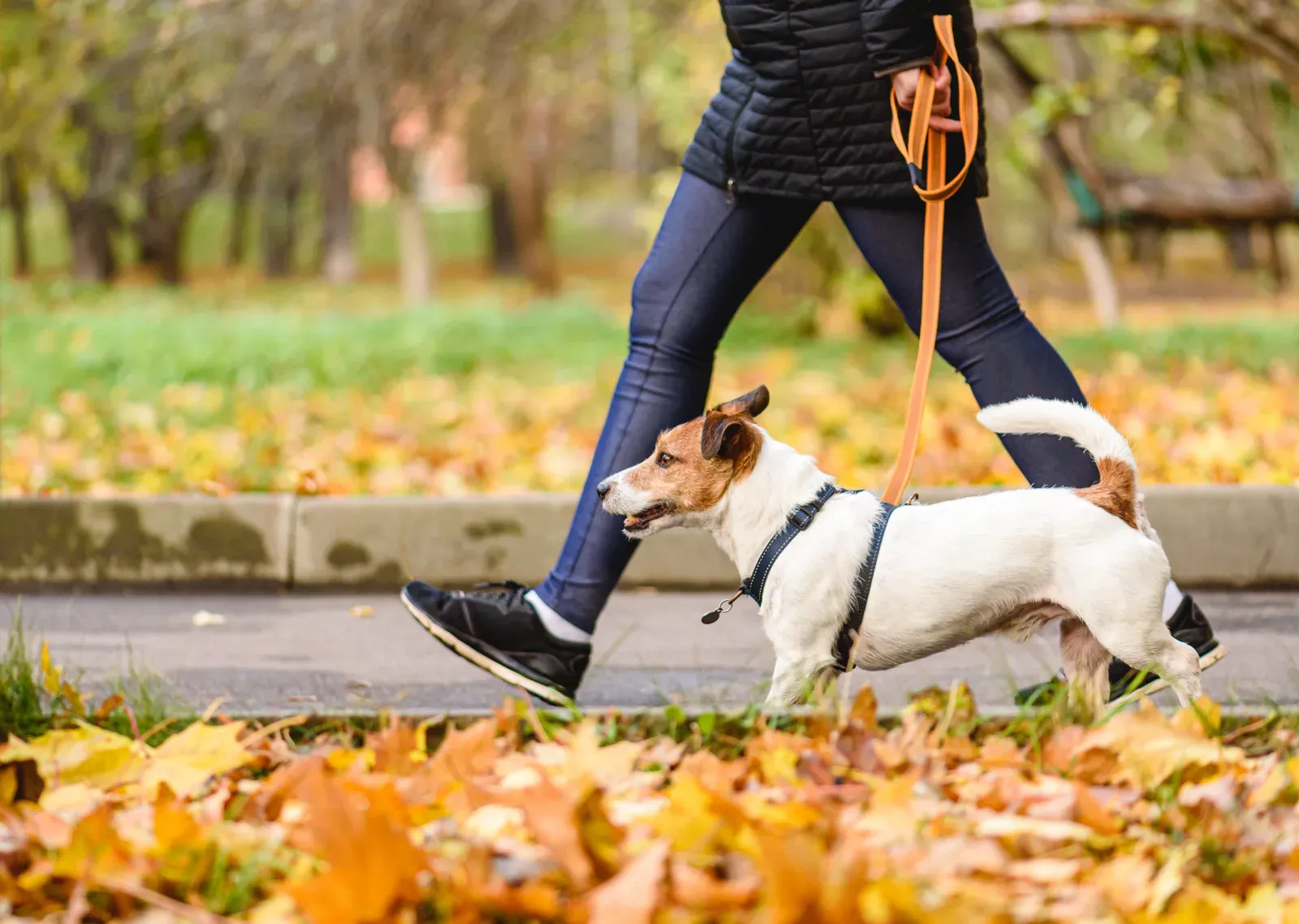
NE · 2-week board & train
On-Leash Foundations
If every walk is a wrestling match, pulling, barking, zig-zagging, this two-week program rebuilds the walk from the ground up with foundational on-leash obedience..
Includes handover lesson, follow-up session, lifetime support, slip lead + collar
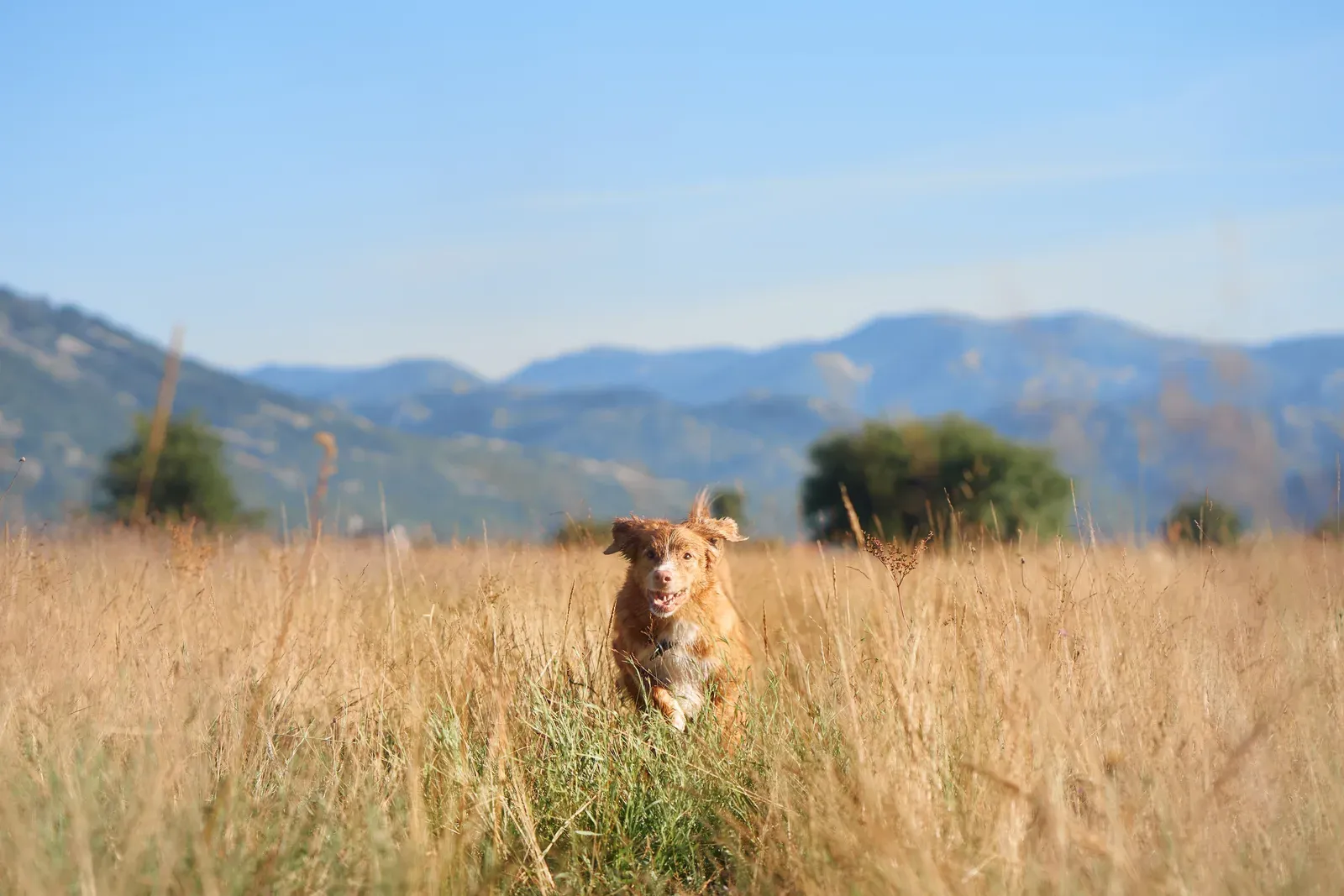
E · 3-week board & train
Functional Off-Leash
Everything in the on-leash program, then the next level: reliable off-leash recall even around distractions.
Includes handover lesson, follow-ups, Educator remote collar
Asked and answered
The questions people ask us.
Is it too late to train a 2 year old dog?
No. Two is when adolescence wraps up, so the dog finally has the focus and steadiness that make training efficient. The only extra work is unwinding habits it has practised for a year or two.
Can you train a 2 year old dog to walk on a leash?
Yes, and it is one of the most common jobs we take on. A two-year-old puller has strength and a long reward history, so we teach loose-leash walking with rewards first and match the tool to the dog. Most adult dogs get the idea within days; making it reliable takes weeks.
Is 2 too old to train a dog off leash?
Not at all. A two-year-old has the maturity to handle the freedom responsibly once recall is proofed around distractions. Our Functional Off-Leash program takes adult dogs regularly, and the age is closer to ideal than to late.
How is training an adult dog different from training a puppy?
A puppy is learning everything for the first time and tires quickly; an adult is unlearning specific habits and can work longer. Adult sessions are more about proofing in real environments than about basic exposure. The tools and the marker method are the same.
Keep reading
Two is not too late.
Tell us what your two-year-old has been rehearsing and we will size the program honestly. Book a consultation.
From real owners
Rated 5.0 on Google.
Real Northline dogs