
Straight answer
How long does it take to train a rescue dog?
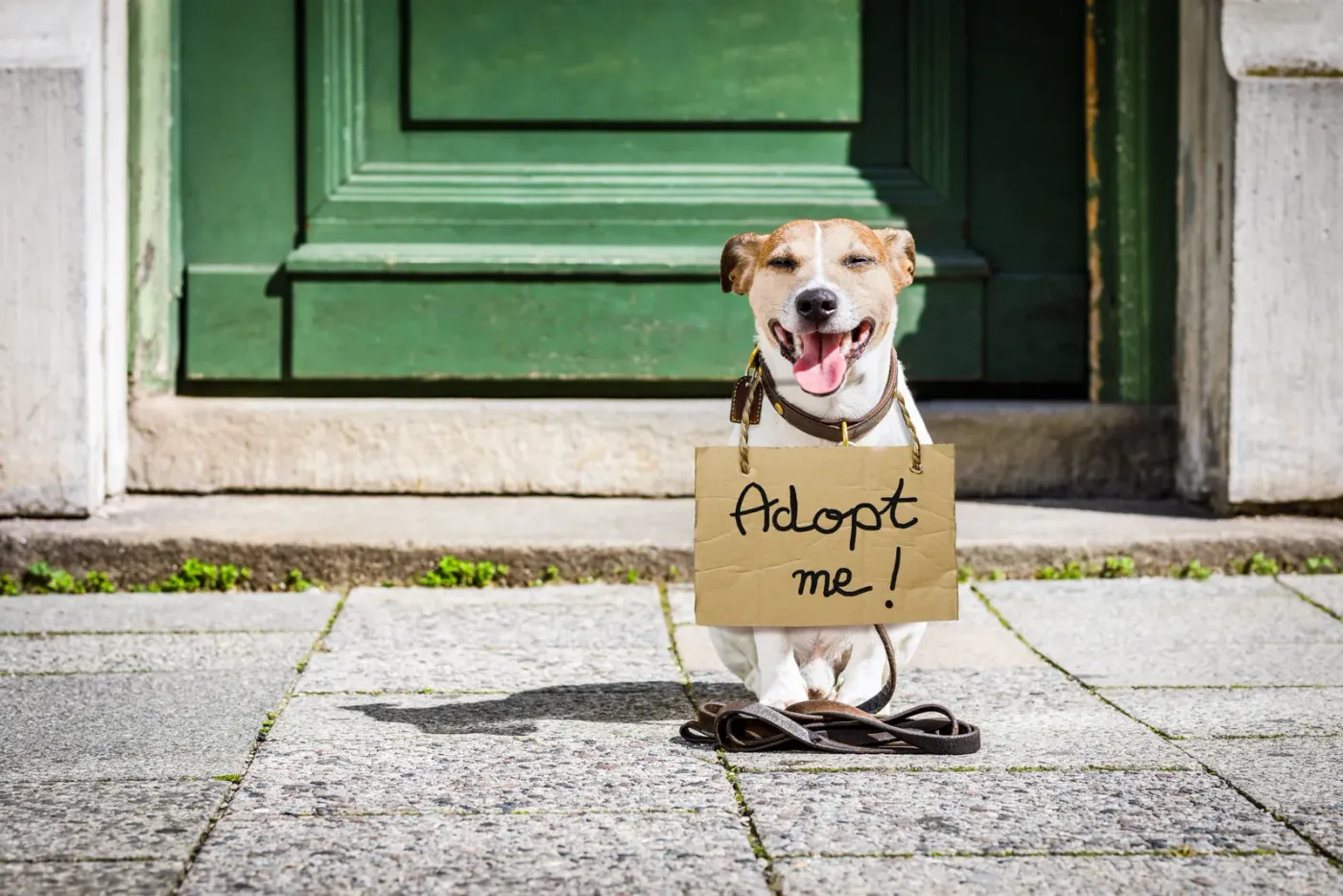
You may have read the 3-3-3 rule: three days to decompress, three weeks to learn the routine, three months to feel at home. It is a useful sketch and a terrible schedule. Some rescues settle in a week. Some are still watching the door at month four. What matters more than the calendar is the order of operations: decompression, then skills, then the slow work of trust.
Last reviewed August 26, 2026
The honest arc
Decompress first, teach second, earn trust last.
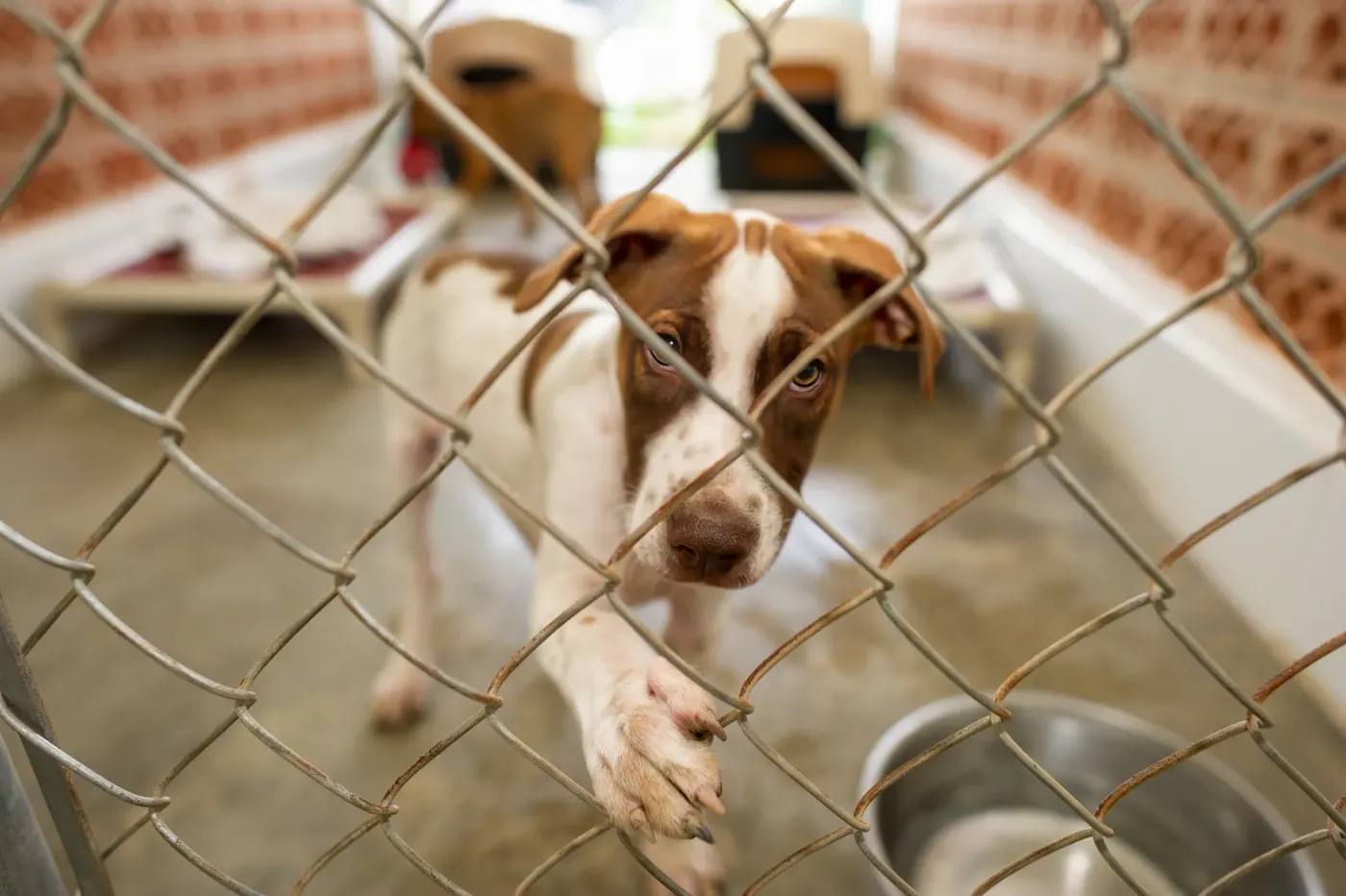
For the first stretch at home, a rescue is not really learning your rules so much as learning whether the ground is stable. New smells, new people, new feeding times, and no idea whether any of it will last. Formal training in this window mostly bounces off. What helps is a boring, predictable routine: crate, meals, walks and rest at the same times, a leash on in the house if the dog is unsure, and little asked of the dog beyond eating and sleeping.
Once the dog is eating normally, sleeping through the night and offering eye contact, skills go in at the ordinary pace. A rescue with no fear history can complete On-Leash Foundations, two weeks of daily one-on-one work, and come home with a loose leash, sit, down, stay and place. The third stage is slower and cannot be scheduled: a dog with a fear history learns that hands, doorways or men in hats are safe one calm repetition at a time, over months.
- Routine before rules
- Eating and sleeping normally first
- Skills at the ordinary pace
- Trust measured in months
Structure versus freedom
Why structure speeds it up and freedom slows it down.
Structure shortens every stage because it removes the questions a rescue is asking. A crate the dog is taught to like, meals from a bowl at fixed times, walks on a slip lead rather than a retractable, and a place command that gives the dog a spot to go when guests arrive: each one replaces guessing with knowing. Owners often feel this is cold after what the dog has been through. The dog usually reads it the opposite way. Predictable is kind.
Freedom too early lengthens all of it. The rescue given the run of the house on day one, couch, bed, off-leash park time in week two, is being asked to make decisions it has no basis for. Some become guarding the couch or bolting from the park. Undoing that adds weeks. When a fear history drives the behaviour, Behaviour Rehab is the honest route: five to six weeks after a full assessment, $4,850 to $5,760 plus GST, with two follow-ups.
The programs
When teaching it yourself stalls.
The guide above is the real method. These are the faster routes.
NE · 2-week board & train
On-Leash Foundations
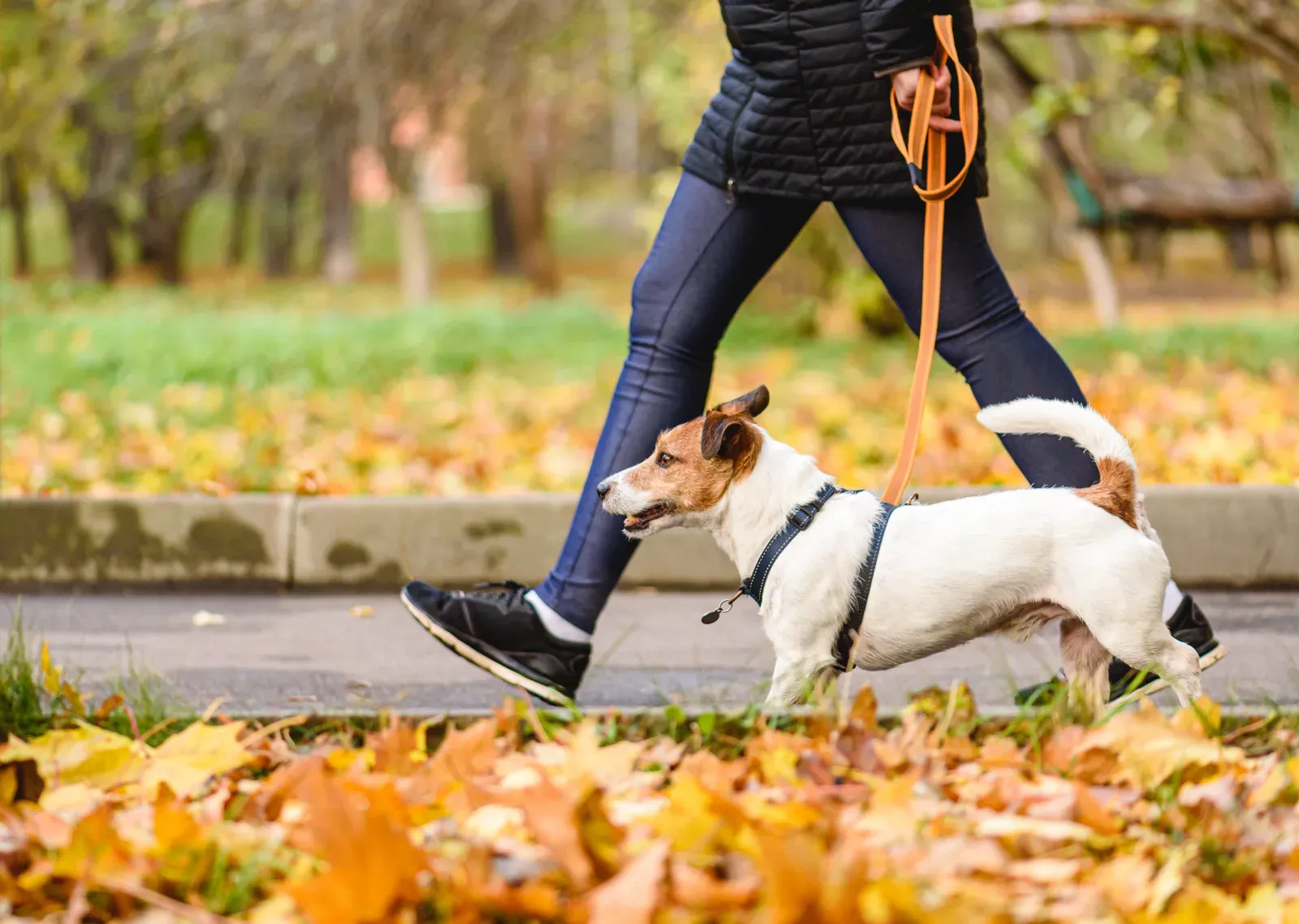
If every walk is a wrestling match, pulling, barking, zig-zagging, this two-week program rebuilds the walk from the ground up with foundational on-leash obedience..
Includes handover lesson, follow-up session, lifetime support, slip lead + collar
S · 5–6 week board & train
Behaviour Rehab
Kaitlin's specialty, and the work she loves most.
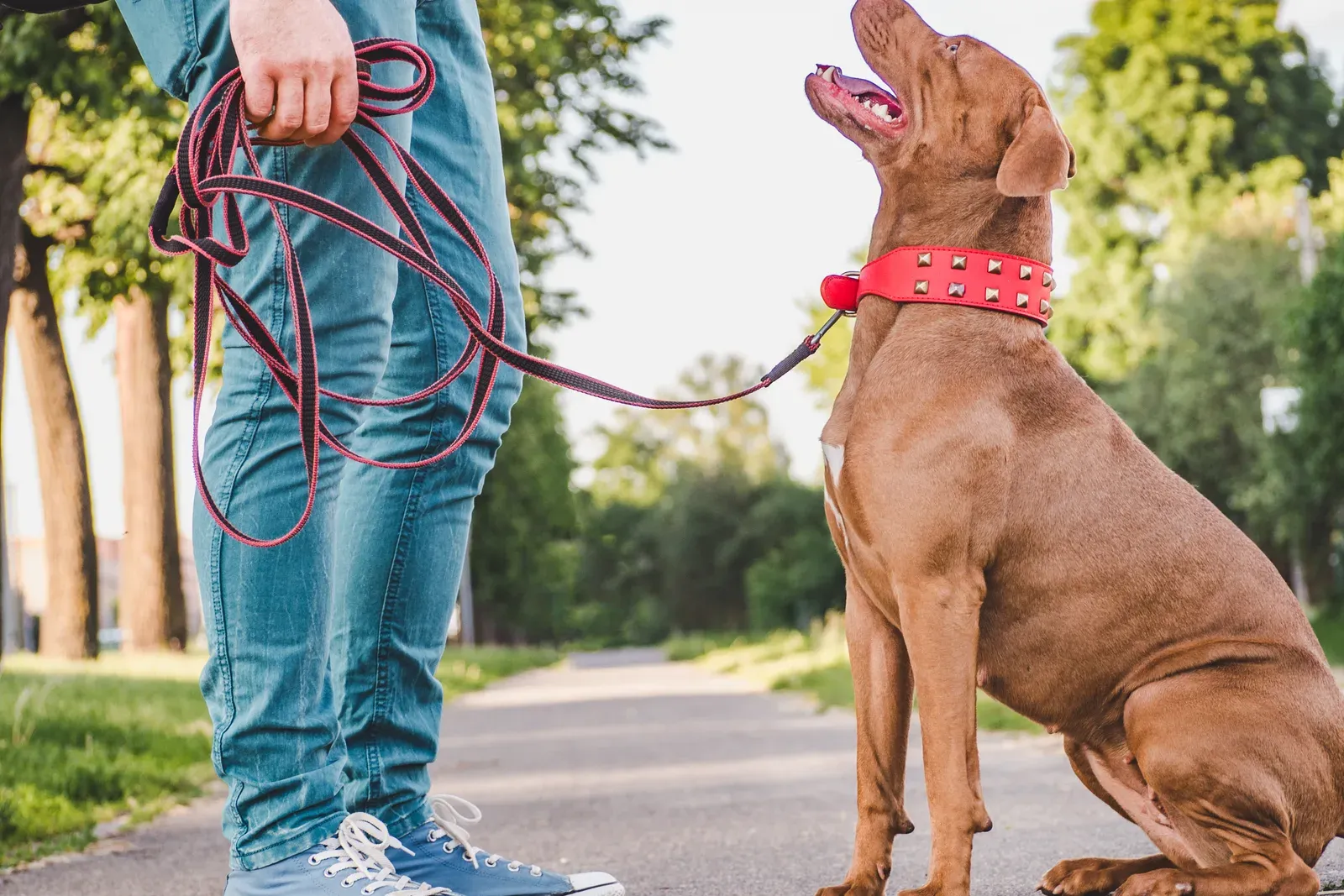
Includes assessment-built plan, 2 follow-ups, deep owner education
Asked and answered
The questions people ask us.
How long does it take to train a rescue dog?
Count on a few weeks of settling before training sticks, then about two weeks of daily one-on-one work for leash manners and household obedience, the same as any adult dog. Trust and any fear history run on their own clock and are measured in months. The full arc is often a season, not a fortnight.
How long to train a rescue dog who came with no history at all?
Treat the unknown as a reason for more structure, not less. Assume nothing about crates, kids, other dogs or being left alone, and let the dog show you over the first few weeks what it already knows. Skills then take the normal two to three weeks; surprises in the history add time.
What does a rescue dog training timeline look like with a board and train?
Let the dog settle with you first; a board and train in the first days home asks a dog to move twice. Once the dog is settled, a two-week On-Leash Foundations stay at $1,865 plus GST builds the skills, and the handover lesson plus free follow-ups carry them back into your house. Private Training at $150 per session suits the settling-in weeks if you want guidance sooner.
How long for a rescue dog to adjust before we start training?
Watch the dog rather than the calendar: normal eating, sleeping through the night, tail up on walks and choosing to come near you are the signs. For many rescues that is two to four weeks, and for some it is longer. Gentle routine during that time is the training.
Keep reading
Start with the routine.
Tell us how long your rescue has been home and what you know of its past. Book a consultation.
From real owners
Rated 5.0 on Google.
Real Northline dogs