
Private training
How to prepare for your first private training session
A first session goes better when the owner has notes and the dog has had an ordinary day. That sounds obvious, and it is, but the hour is short and an easy way to waste part of it is reconstructing what the dog did last Tuesday. Here is what to sort out beforehand, what not to do in the name of preparation, and what to do with the plan afterwards.
Last reviewed September 29, 2026
Before the session
Notes, any footage you already have, the everyday gear and a normal day.
Write down the three behaviours that bug you most and when each happens: time of day, who is home, what came just before. A dog that lunges at cyclists on evening walks is a different puzzle from one that lunges at everything. If you already have video of the behaviour, bring it; footage caught in passing gives useful context. Never stage the behaviour for the camera, and never film while handling a dog that is lunging, frightened or trying to bite.
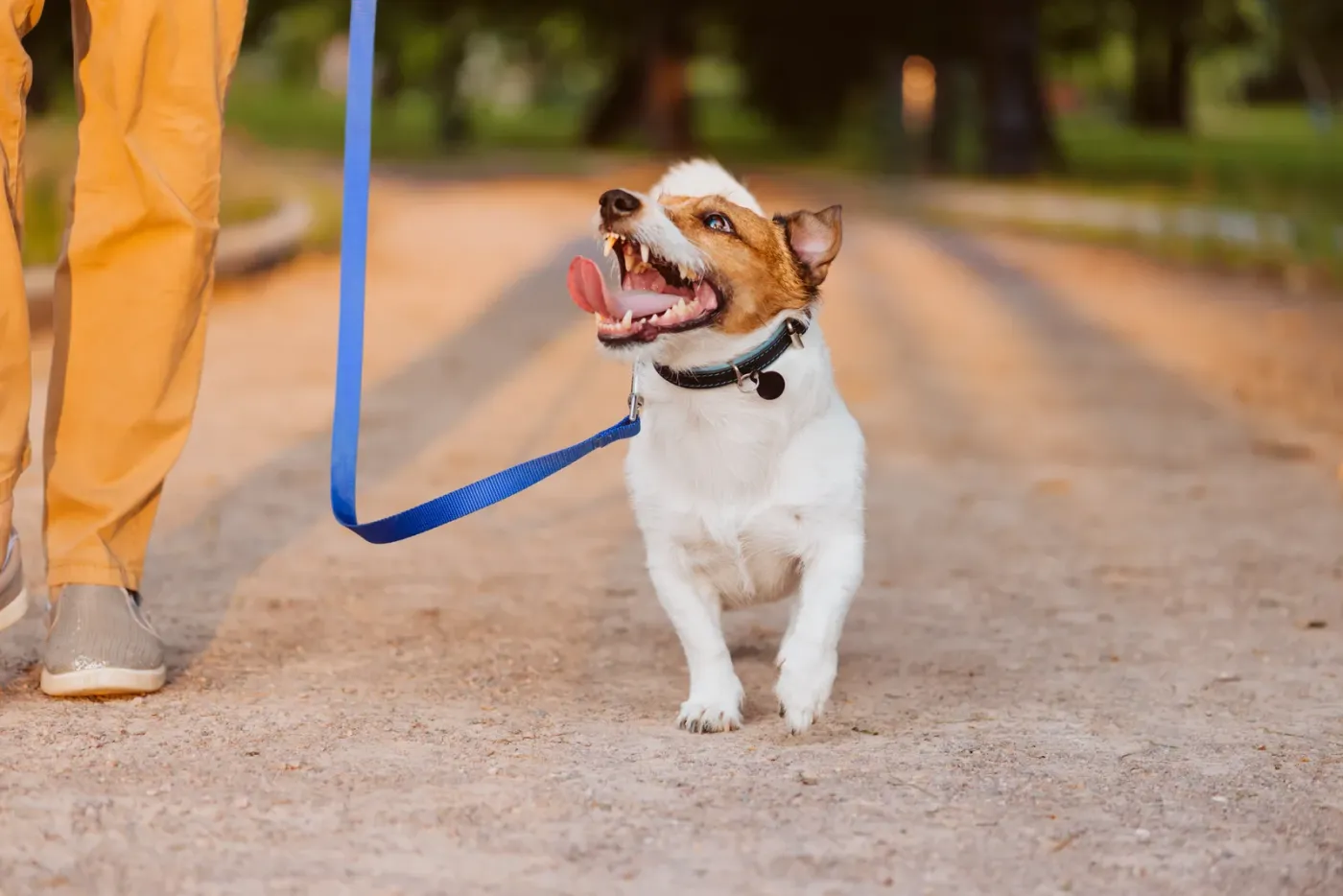
Use the dog's everyday leash and collar, so what we see is how the two of you actually work together, not how new gear feels. Pack treats the dog genuinely wants: soft and smelly, not the dry biscuits it tolerates. Keep meals and the usual walk on their normal schedule; skipping a meal is not preparation, and any change to feeding is a question for your vet. Confirm the details in advance: who is attending, where you are meeting and what to bring.
- Three behaviours, written down
- Existing video only, never staged
- Usual leash, real treats
- Normal meals, details confirmed
The days after
Work the plan in minutes, not marathons.
The session is one-on-one and ends with a written plan for your home and your routine. It is worth reading that evening while the session is fresh, then picking the one exercise that matters most and starting there the next morning. Short, frequent practice beats a single heroic Saturday: a few minutes in the kitchen before the walk, a few in the hallway while dinner cooks, a few on the mat during the evening. The plan is built for the week, so spread it across the week.
Keep notes, and keep them honest. What worked, what fell apart, and where: the dog held the stay in the living room but broke it the moment the front door opened. Those details are what the next session gets built from. If a behaviour escalates rather than settles, write that down too and raise it; escalation is a reason to reassess, not to soldier on. A question written down is one you will not forget to ask.
Asked and answered
The questions people ask us.
How do you prepare for a dog training session?
Write down the behaviours that bother you most and when each one happens, and gather any video you already have of them. Keep the dog's meals and exercise on the normal routine rather than skipping a meal, and confirm who is attending, where you are meeting and what to bring.
What should you bring to a dog training lesson?
The dog's everyday leash and collar, a pouch of treats the dog genuinely likes, your notes on the problem, and any footage you already have. Check beforehand whether anyone else who handles the dog can attend, rather than assuming.
Should I feed my dog before a training session?
Feed as you normally would. Skipping a meal so treats mean more is not preparation, and any change to how or when you feed is a question for your vet. Treats the dog genuinely likes do their job on a normal stomach.
Should a dog be exercised before a training session?
Keep to the normal routine. A dog that has been run hard tends to look settled but often has less focus left for learning, and the session is about learning. A normal morning is fine, and the big run can wait until after.
Keep reading
Notes first, then the leash.
Book a consultation to describe the problem. If a private session is the right fit, you will know exactly what to prepare.
From real owners
Rated 5.0 on Google.
Real Northline dogs