
Gear & equipment
How to choose a crate size
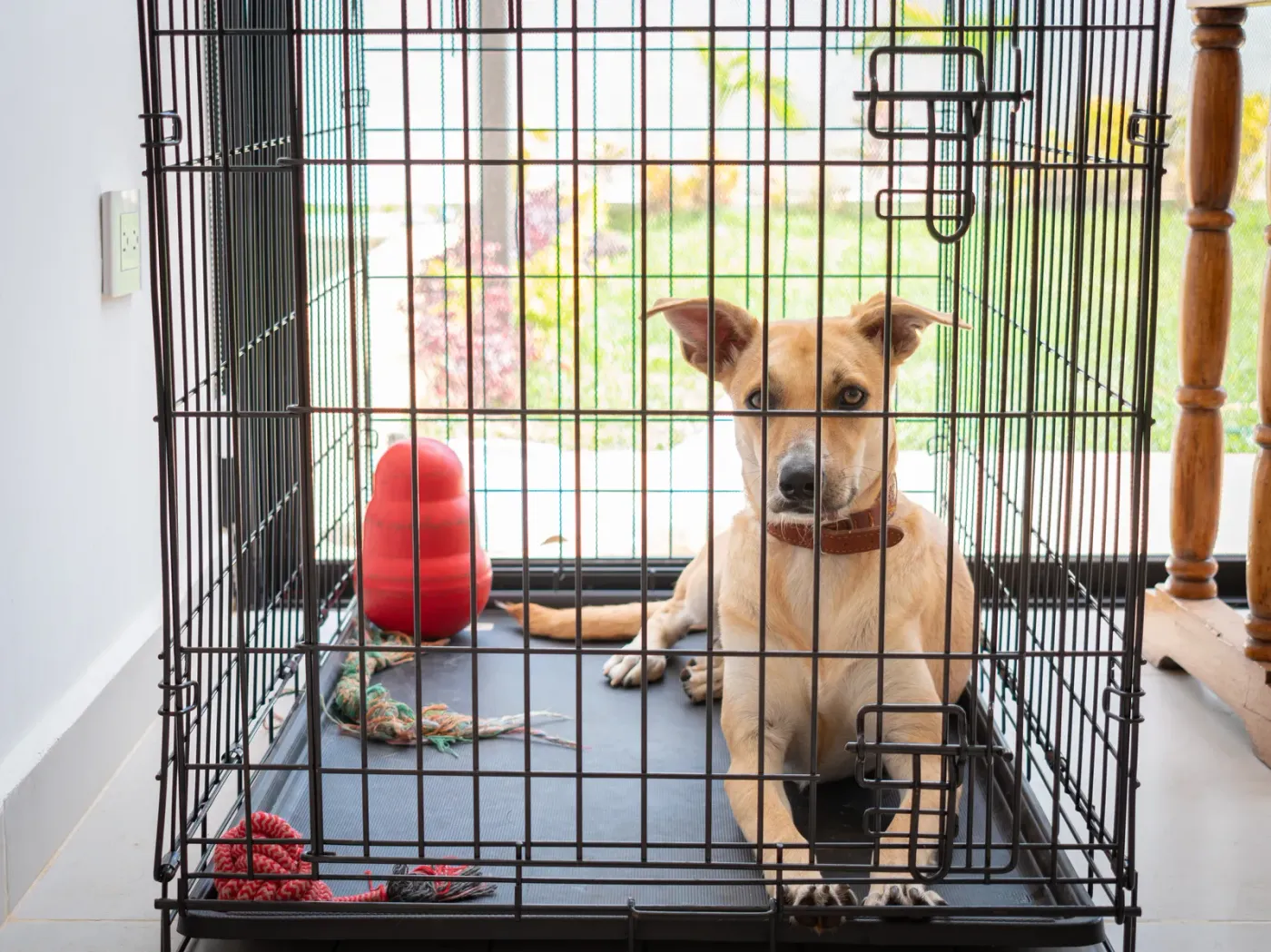
A crate that is too small is uncomfortable, and one that is too big often stops feeling like a den. Getting the size right takes a tape measure, two numbers and an honest estimate of your puppy's adult size. Below: how to measure, how dividers work, where the crate should live, and the sizing mistakes worth avoiding.
Last reviewed October 4, 2026
Two measurements
Measure length and height, then add a little.
With your dog standing, measure from the tip of the nose to the base of the tail, not the tail tip. With your dog sitting, measure from the floor to the top of the head, or to the ear tips if they stand upright. Add about two to four inches to each number. Those two figures are the inside length and height you are shopping for.
Crate labels often list a weight range, but weight is a rough guide. A long, low dog and a tall, deep-chested dog of the same weight need different shapes. Check the interior dimensions, not the outside ones, since bars, doors and plastic walls take up space. If your dog falls between two sizes, a long-legged dog usually needs the larger one.
- Nose to tail base, standing
- Floor to head top, sitting
- Add two to four inches
- Compare interior dimensions, not exterior
Dividers for puppies
Buy for the adult, block off for the puppy.
A puppy in an adult-sized crate has room to sleep at one end and toilet at the other, which works against house training. A divider panel moves the back wall forward so the space matches the puppy today. Slide it back as your puppy grows, always leaving just enough room to stand up, turn around and stretch out fully.
If you are unsure of the adult size, ask your vet for an estimate rather than guessing from paw size. Never leave a puppy crated past the point it needs a toilet break, and let it out promptly when it signals. Crate comfort is part of our Puppy Fundamentals program, and the welcome package includes a crate-training guide.

Where it lives
Placement matters as much as the measurements.
Put the crate where the household actually spends time, such as a corner of the living room, or beside the bed at night. Keep it away from heat vents, drafty doors, direct sun and anything your dog could pull through the bars, like cords or curtains. A stable, level floor stops the crate rattling every time your dog shifts.
Common sizing mistakes include a puppy crate that is outgrown quickly, a giant crate for a small adult, and bedding so thick it eats the headroom. Take off collars and tags before crating, since they can catch. If your dog panics, hurts itself or tries to escape, stop and get a professional assessment rather than buying a stronger crate.
Asked and answered
The questions people ask us.
Should a dog crate be bigger than the dog?
Slightly. Your dog should be able to stand without ducking, turn around easily and lie on its side with legs stretched. Much more space than that, especially for a puppy, can make the crate feel less like a den.
What size crate should I get for a puppy?
Buy the crate that will fit your puppy as an adult and use a divider to shrink the space for now. Move the divider back as your puppy grows so there is always room to stand, turn and stretch out.
How do I know if my dog's crate is too small?
Watch for a dog that ducks its head when standing, bumps the walls when turning, or lies curled because it cannot stretch out. Measure again and compare against the interior dimensions of the next size up.
Where should I put my dog's crate?
Somewhere your household spends time, away from heat vents, drafts, direct sun and chewable cords. Some families move the crate beside the bed at night so a puppy can settle near them.
Keep reading
Make the crate a calm place
Book a consultation and we will talk through crate comfort, routine and which program fits your dog, smaller ones included.
From real owners
Rated 5.0 on Google.
Real Northline dogs