
Compared honestly
E-collar vs prong collar vs slip lead: choosing a training tool
Ask three trainers which tool is best and you will get four answers. The honest one is that the question is wrong. Each tool says something different to the dog, and each is right for some dogs and wrong for others. We use all three, we skip all three for plenty of dogs, and we never hand one over without teaching the person on the other end how it works.
Last reviewed August 26, 2026
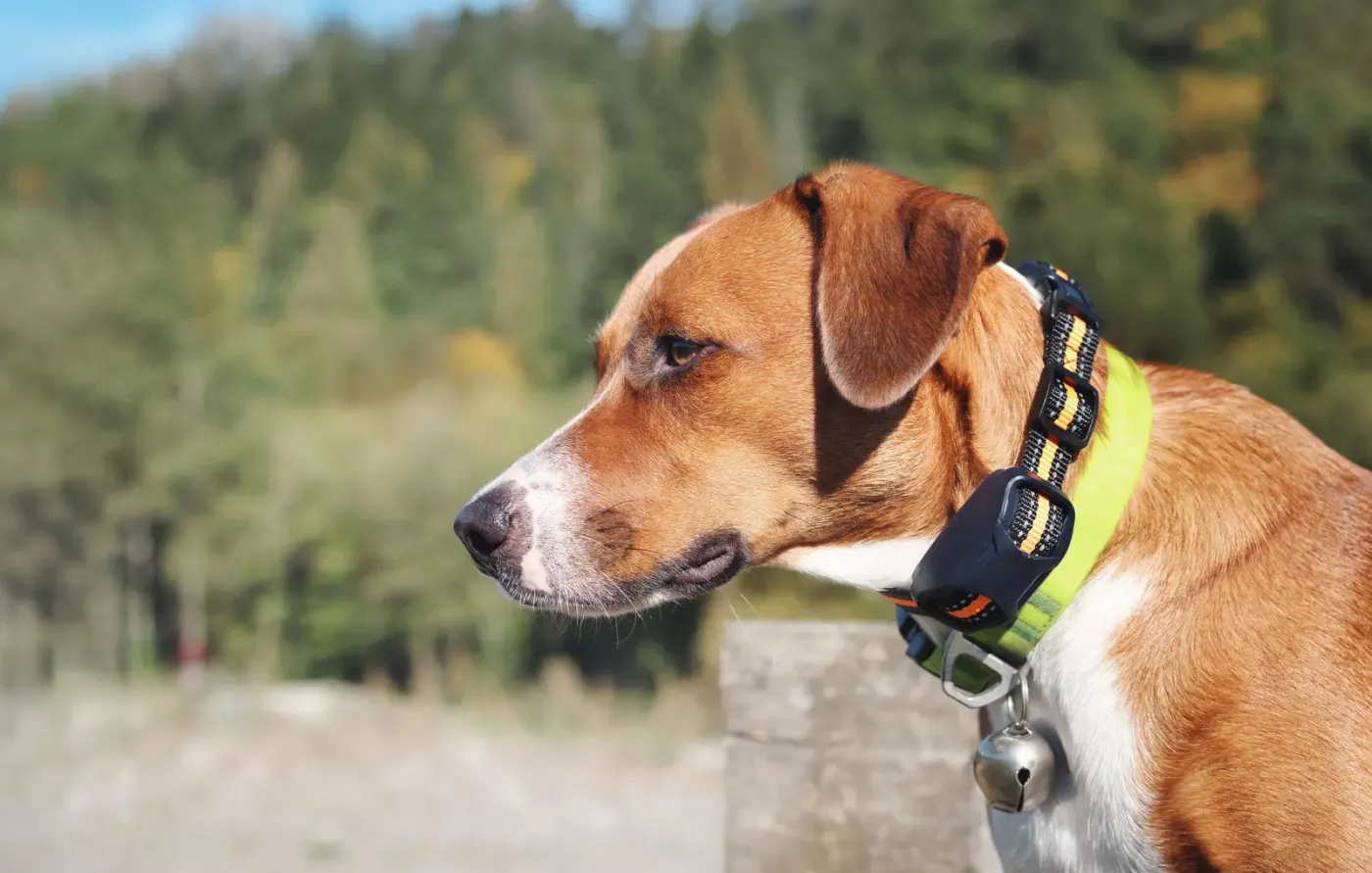
What each says
Three tools, three different conversations with the dog.
A slip lead is a steering wheel. It tightens and releases instantly, so it can show a dog where to be and then go quiet the moment the dog gets there. That makes it the tool for teaching heel position and for everyday walks with a dog that already listens. It is not a brake, and a dog that leans into it all walk long is learning nothing except that tension is normal.
A prong collar spreads pressure evenly around the neck, so a big or powerful dog feels a brief, clear piece of information rather than a slow choke. For a large dog that has blown through flat collars and harnesses, it often makes walks safer for both ends of the leash. An Educator e-collar does a different job entirely: it lets you reach a dog at distance, which is why it comes included with Functional Off-Leash and only after the on-leash work is done.
- Slip lead steers and releases
- Prong gives even, brief pressure
- E-collar reaches a dog at distance
- Tool matched to the dog
Fair use rules
The introduction decides whether a tool is kind or cruel.
Any tool is humane when the dog already understands the skill, learned it with markers and rewards, and meets the tool at the lowest level that gets a response. The tool then reminds; it does not teach. Fit matters: a slip lead sits high behind the ears, a prong is snug and not sliding, an e-collar has a working level found in a calm room before it is ever used outside. The owner learns the tool in their own hand before the dog wears it.
Any tool is cruel when it replaces teaching. Cranking a prong on a dog that was never shown what heel means, holding a slip lead tight all walk, or pressing a button for fear or for a recall the dog never learned: each turns a signal into noise and then into dread. Our board and trains teach the skill first and match the tool second, and the handover lesson exists so the tool goes home with a person who knows how to use it.
| Tool | Communicates | Best for | Never for |
|---|---|---|---|
| Slip lead | Direction and guidance | Everyday walks, teaching position | Constant tension |
| Prong collar | Brief, even information | Powerful pullers, big dogs | Punishing fear |
| Educator e-collar | Communication at distance | Off-leash reliability after foundations | Skipping the foundations |
The programs
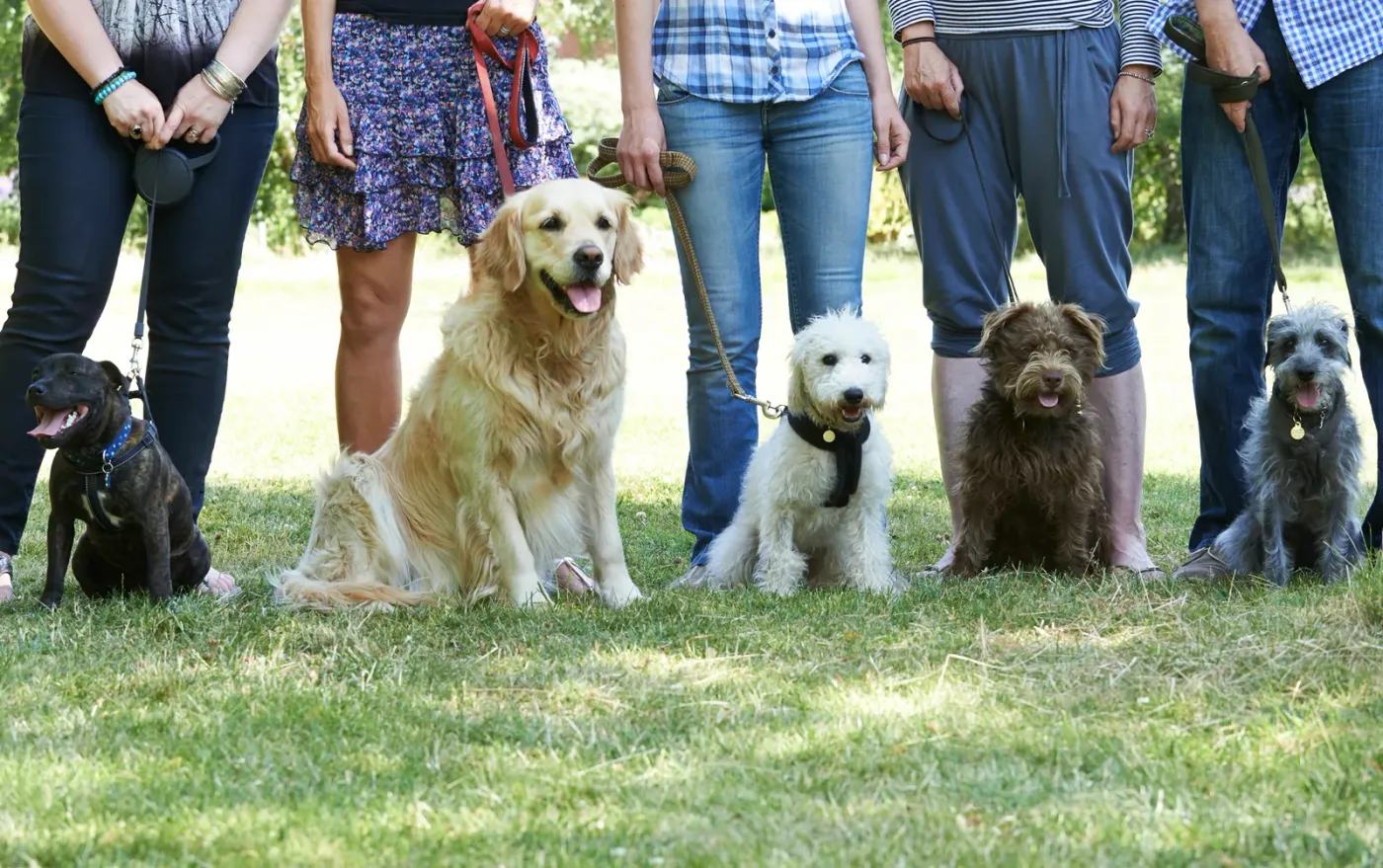
The options, side by side.
Every format we offer is priced publicly; the comparison above is how we would choose for our own dogs.

NE · 2-week board & train
On-Leash Foundations
If every walk is a wrestling match, pulling, barking, zig-zagging, this two-week program rebuilds the walk from the ground up with foundational on-leash obedience..
Includes handover lesson, follow-up session, lifetime support, slip lead + collar

E · 3-week board & train
Functional Off-Leash
Everything in the on-leash program, then the next level: reliable off-leash recall even around distractions.
Includes handover lesson, follow-ups, Educator remote collar
Asked and answered
The questions people ask us.
E collar vs prong collar: which one should a puller wear?
The prong, if the dog is on a leash and the problem is pulling. It gives clear information right where the pulling happens. An e-collar is for distance and off-leash reliability, and it should not be the first tool a pulling dog meets.
Prong collar vs slip lead: is the slip lead the gentler choice?
Not automatically. A slip lead held tight on a lunging dog concentrates pressure on one spot, while a fitted prong spreads it evenly. Gentleness comes from how the tool is used, and a slip lead suits a dog that already understands leash pressure.
Which training collar is best?
There is no best collar, only the best match for one dog's size, sensitivity and training stage. We recommend the smallest tool that gets a clear response, and sometimes that is no collar change at all. The right tool is always taught to the owner, never just sold.
Should a reactive dog get an e collar or prong?
Neither, until the dog has an assessment and a foundation of skills. Tools on a fearful dog without teaching tend to add stress to the trigger. In Behaviour Rehab the tool, if any, is chosen after we have watched the dog and built engagement first.
Keep reading
Match the tool, not the trend
Book a consultation and we will tell you which tool your dog needs, and whether it needs one at all.
From real owners
Rated 5.0 on Google.
Real Northline dogs