
Gear & equipment
Harness vs collar for walking
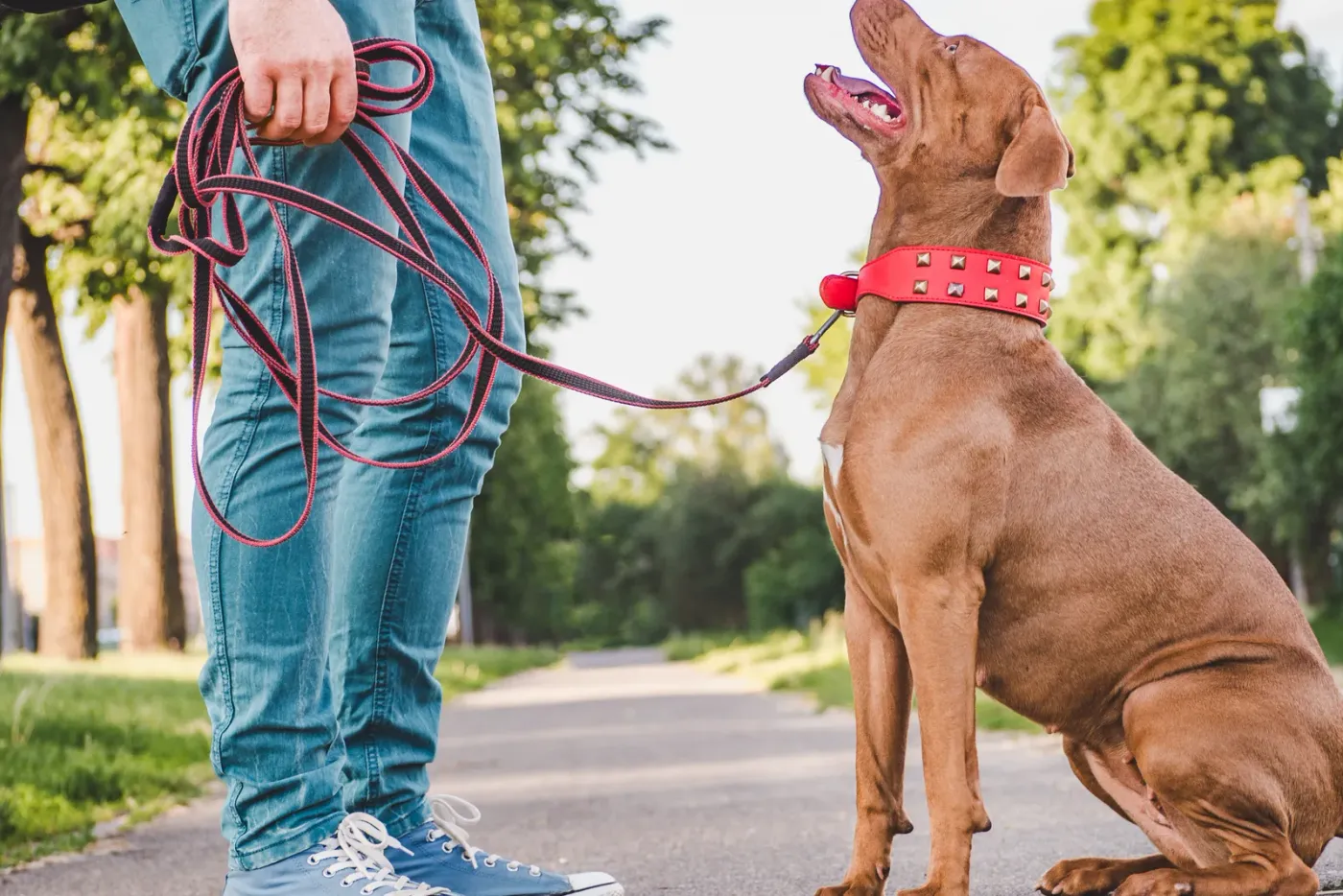
Walk any busy pathway and you will see both: the harnessed dog leaning into the chest strap like it is towing a cart, and the collared dog coughing at the end of a tight leash. Both look like gear problems on the surface and are often training problems underneath. Here is what each tool actually does, how it should fit, and where owners go wrong.
Last reviewed October 4, 2026

How each one works
Pressure on the chest or pressure on the neck.
A harness sits around the ribcage and spreads force over a wide area. That is comfortable, which is the catch: many dogs lean into it and pull harder, because pulling costs very little. It is a sensible choice for small dogs, dogs whose vet has advised avoiding neck pressure, and dogs who wear a car restraint or need a lift handle.
A collar concentrates pressure at the neck, so a small leash signal is felt clearly and quickly. Flat buckle collars hold ID tags; training collars such as slip leads and prong collars give more precise communication when introduced properly. Any collar on a dog who hits the end of the leash again and again is a reason to stop and teach leash manners, not to pull back harder.
- Harness cannot slip over shoulders
- Flat collar fits two fingers
- Recheck fit as coats change
- Never leave training collars unattended
Mistakes and teaching
Why the tool matters less than the teaching.
The common mistakes are predictable. A harness loose enough to back out of. A collar so loose it slides over the head on a startled lunge. A retractable leash on either, which rewards pulling with more line. And a very frequent one: switching gear every month hoping the next item fixes the walk, when the dog has never been shown what a loose leash means.
That is why every tool in our programs is taught to the owner, not just fitted and handed over. On-Leash Foundations works on loose-leash walking and heel, and the slip lead and training collar go home with you along with the handling that makes them fair. Skills are taught with markers and rewards first, and the tool is matched to the individual dog.
Asked and answered
The questions people ask us.
Is a harness or collar better for a dog that pulls?
A standard harness often makes pulling more comfortable, so many dogs pull more in one. A properly introduced training collar gives clearer feedback, but either works best alongside loose-leash training.
Can a collar hurt my dog's neck?
Any gear can cause problems when a dog pulls hard and constantly against it. If your dog coughs, gags or has a known neck or airway concern, ask your vet whether a harness is the better choice.
Should my dog wear a collar and a harness at the same time?
Many owners keep a flat collar on for ID tags and clip the leash to the harness or training collar for walks. Make sure both fit correctly and nothing can snag.
How should a dog harness fit?
It should be snug enough that your dog cannot reverse out of it, with room for a couple of fingers under the straps. Watch your dog walk and trot to make sure the straps do not rub or restrict movement.
Keep reading
Make the walk the easy part
Book a consultation and we will look at your dog's walk, the gear you use, and how to handle it fairly.
From real owners
Rated 5.0 on Google.
Real Northline dogs