
Gear & equipment
Front-clip vs back-clip harness
The only real difference between these two harnesses is where the ring sits, and that ring changes the physics of every walk. One turns a pulling dog back toward you. The other gives a pulling dog something comfortable to lean against. Knowing the mechanics, the fitting points and the usual errors saves a lot of trial and error in the gear aisle.
Last reviewed October 4, 2026
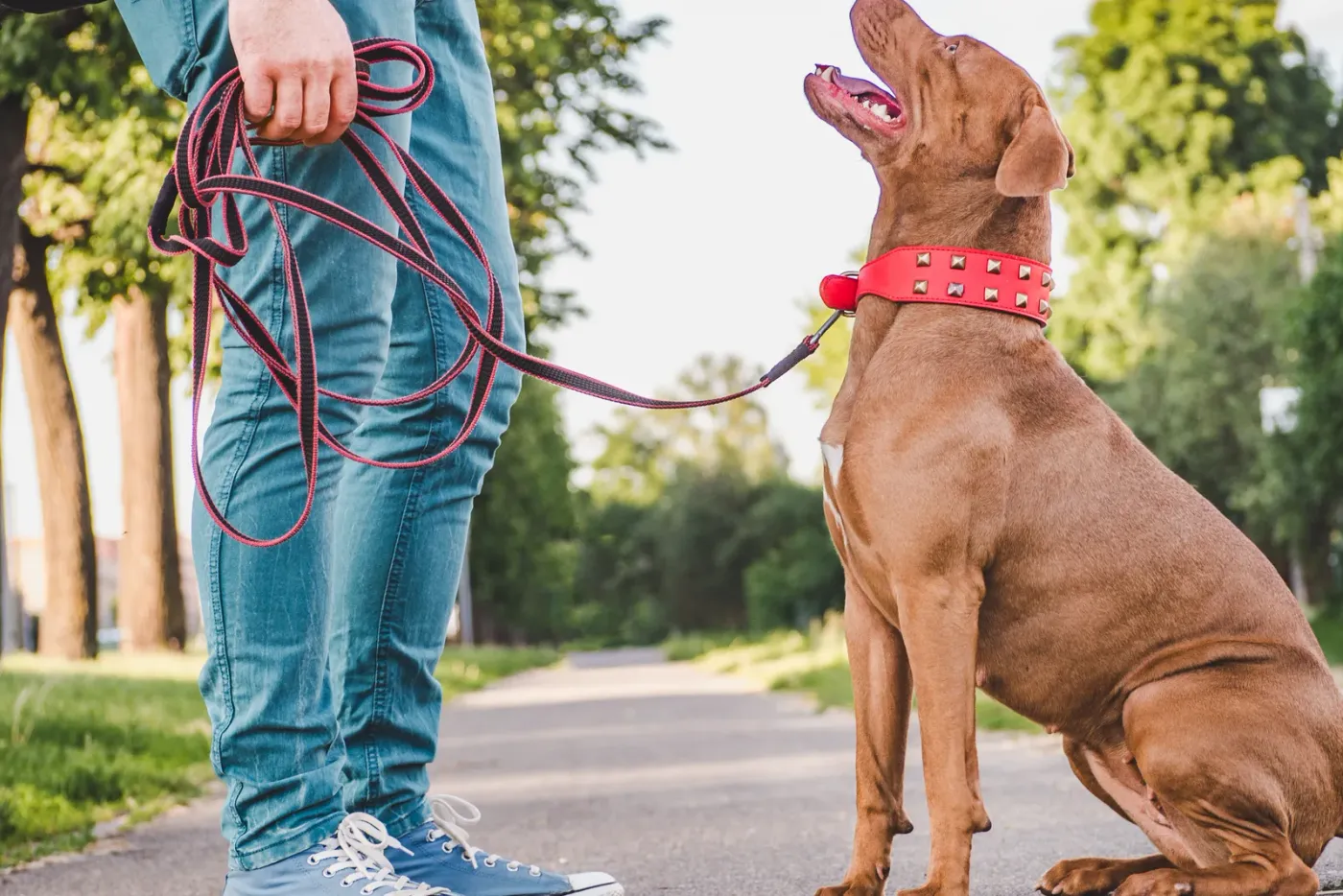
The leverage question
Where the ring sits changes how pulling feels.
On a back-clip harness, the leash pulls from above the shoulders, roughly along the dog's line of travel. A dog can drop its chest and drive forward, the way sled dogs are harnessed to do. For a calm walker, a small dog or a dog doing scent or sport work, that comfort is a fair trade. For a determined puller, it often makes pulling easier.
On a front-clip harness, the ring sits on the chest strap. When the dog surges ahead, leash tension swings the front end around toward the handler, so forward momentum is redirected rather than resisted. Many dogs ease off simply because pulling stops getting them anywhere fast. It reduces leverage; it does not teach a loose leash, and some dogs learn to pull in a crab-like sideways walk.
- Chest ring centred on breastbone
- Chest strap snug, not rotating
- Shoulders free at a trot
- Fixed-length leash, not retractable
Fit, misuse, teaching
Common fitting errors with each attachment point.
Front-clip harnesses tend to rotate if the chest strap is loose, sliding the ring off to one side and rubbing under the front leg. Some designs cross the front of the shoulders and may shorten a dog's natural stride, so watch how your dog moves at a trot. Back-clip harnesses most often fail by being loose enough for a startled dog to reverse out of, which is worth testing at home first.
Neither attachment replaces leash skills, which is why every tool used in our programs is taught to the owner. On-Leash Foundations works on loose-leash walking, heel and everyday distractions, with tools matched to each dog once the skill has been taught through rewards. If you would rather learn the handling yourself, a Private Training session includes a written plan to practise all week.
Asked and answered
The questions people ask us.
Does a front-clip harness stop pulling?
It reduces a dog's forward leverage by turning them toward you, so many dogs pull less in one. It manages pulling rather than teaching a loose leash, so pair it with training.
Is a back-clip harness bad for dogs that pull?
It is not harmful in itself, but it lets a pulling dog lean in comfortably, which can make pulling more rewarding. It suits dogs who already walk on a loose leash.
Can I clip a leash to both rings on a harness?
Some harnesses have both rings, and a double-ended leash attached to each gives two points of contact. It takes some handling practice, so try it somewhere quiet before a busy walk.
Why does my front-clip harness rub under my dog's leg?
Usually the chest strap is too loose, letting the harness twist so the ring slides sideways. Tighten it until the ring stays centred, and check whether a different cut suits your dog's shape.
Keep reading
Get help with the pulling
Book a consultation to talk through your dog's pulling, the gear in your cupboard, and what to teach first.
From real owners
Rated 5.0 on Google.
Real Northline dogs