
Gear & equipment
Dog life jackets and water safety gear
Water gear is one of the few dog purchases where fit is a safety question rather than a comfort one. A loose jacket can ride up over the head; a jacket without a solid handle leaves you grabbing fur from a canoe. Here is what the gear is for, how to fit it at home first, and the habits that make it useful on the day.
Last reviewed October 4, 2026
Fit and function
What a good canine flotation vest actually does.
A canine life jacket has three main jobs. Foam panels along the back and chest keep the dog level so it spends less energy staying up. A sturdy handle on the spine lets you lift the dog from the water with one hand. Bright colour and reflective trim help you spot a dark head in chop or low light. A chin or neck float, where present, helps keep the muzzle above small waves.
To fit one, measure around the widest part of the ribcage and along the back from the base of the neck to the base of the tail, then check the maker's chart. Once buckled, you should slide two fingers under each strap and no more. Lift the dog slightly by the handle on dry land: the jacket should stay put, not slide toward the ears or twist under the belly.
- Snug behind the front legs
- Two fingers under each strap
- Handle sits mid-back, stitched solid
- Bright colour with reflective trim
Strong swimmers too
Why a confident paddler can still get into trouble.
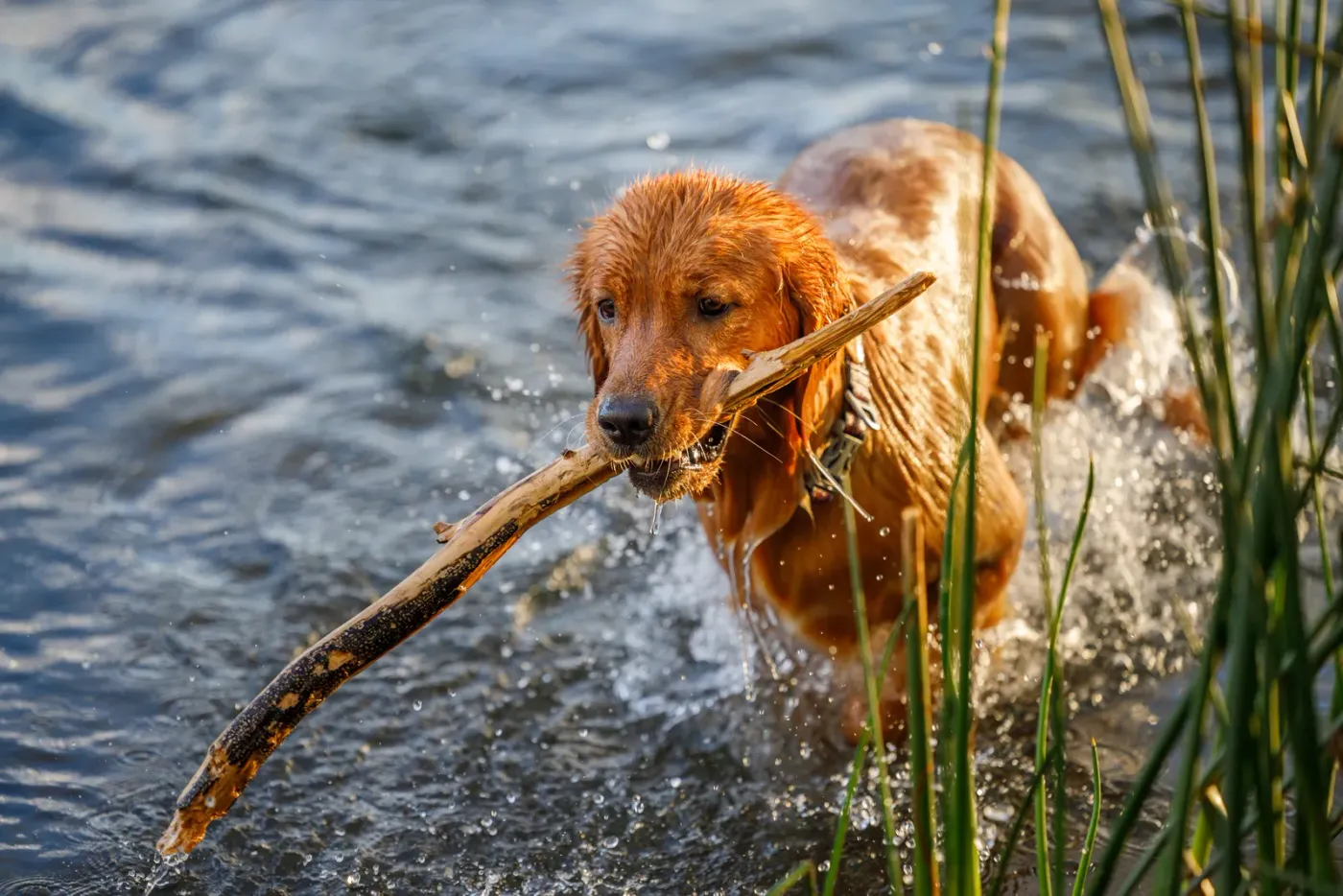
Swimming ability is rarely the whole picture. Cold water tires muscles quickly, currents can carry a dog past the spot where it went in, and steep or undercut banks can leave even a keen retriever with nowhere to climb out. A jacket buys time and gives you the handle. We would also put one on any dog on a boat or paddleboard, any senior dog, and many flat-faced or heavy-chested breeds.
The jacket is not a substitute for a recall. A dog who chases a duck downstream, or ignores you at the water's edge, is a dog you cannot help from shore. Reliable recall around distractions is exactly what Functional Off-Leash works on, with the river path and the campsite in mind, and its owner education covers using every tool properly. If your dog seems distressed, exhausted or coughs after a swim, call your vet.
Asked and answered
The questions people ask us.
Do dogs who can swim need a life jacket?
Often, yes. Cold water, current, waves and steep banks can tire a capable swimmer, and a jacket buys time while giving you a handle to lift with. Boats, paddleboards, senior dogs and heavy-chested breeds are the clearest cases.
How should a dog life jacket fit?
Snug, with two fingers' room under each strap, and with the handle sitting mid-back. Lift gently by the handle on land: if the jacket slides toward the ears or twists, try the next size or a different cut.
What mistakes do people make with dog water gear?
Common ones are buying a size up so the dog can grow into it, skipping the dry-land trial, and clipping a leash to the jacket handle in the water, where it can snag. Another is trusting the jacket instead of building a recall that works at the water's edge.
How do you get a dog used to wearing a life jacket?
Put it on at home for short spells, paired with food and something fun, then take it off before your dog starts fussing. Wear it on a few dry walks before the first swim, and start in shallow, calm water you can wade into.
Keep reading
Want a recall near water?
Book a consultation and we will look at your dog's recall, the gear you own, and which program, if any, fits.
From real owners
Rated 5.0 on Google.
Real Northline dogs