Board & train
Does board and train help with pulling toward other dogs?
Two dogs can hit the end of the leash the same way for opposite reasons. One wants the other dog badly; one wants it gone. From behind, the pull looks identical, which is why guessing is a poor way to choose a program. Here is how the published curricula split the problem, what a live-in stay can and cannot change about a dog on your street, and the questions that make the consultation useful.
Last reviewed October 4, 2026
Two different pulls
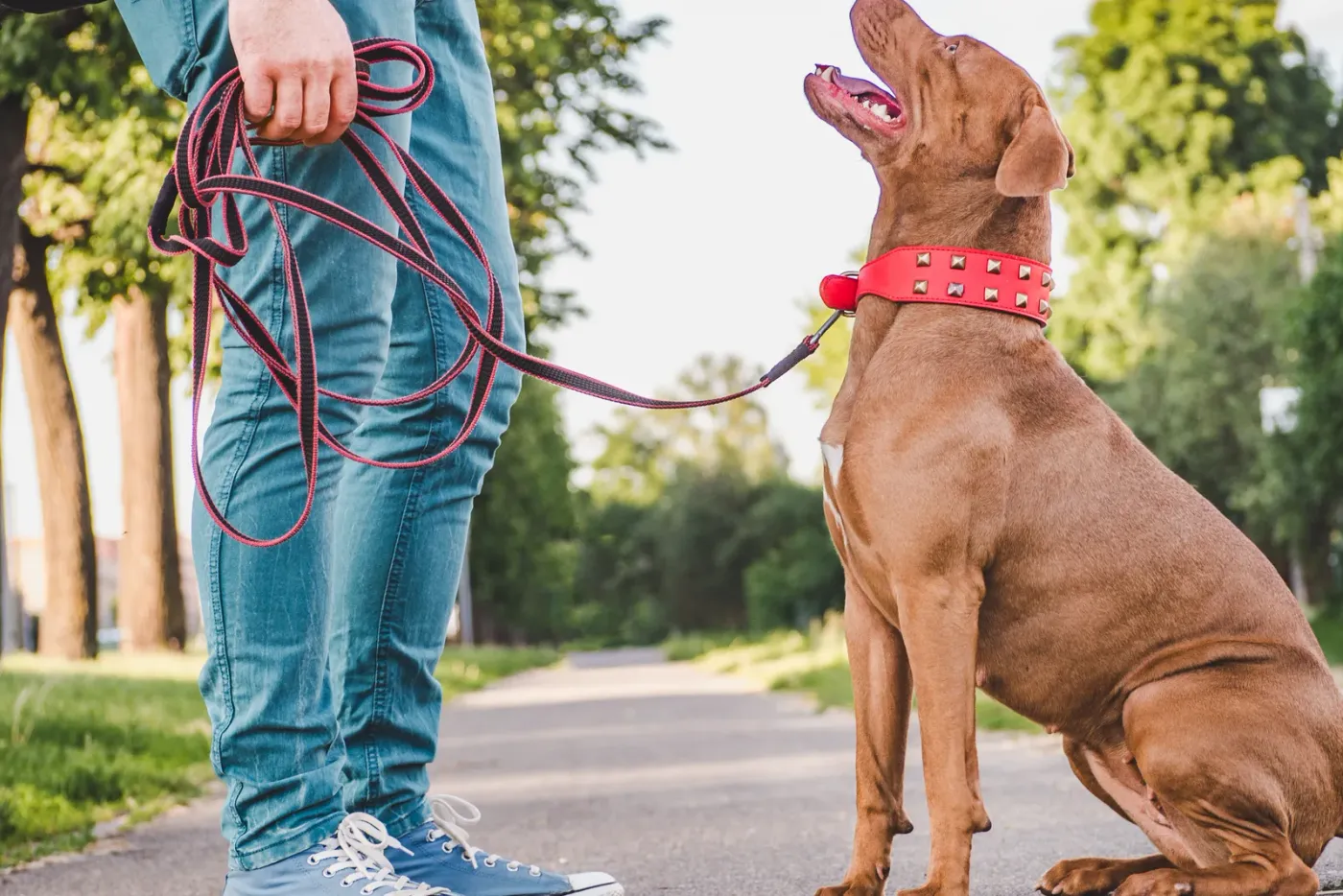
Frustration goes one way, reactivity goes another.
On-Leash Foundations, two weeks at $1,865 plus GST, lists loose-leash walking, heel, sit, stay and down, place, and working around everyday distractions. It is built for dogs who drag and lunge, and on a city sidewalk other dogs are the everyday distraction that matters most. For a dog whose pulling is excitement, a loose body, whining, a wagging tail, that curriculum covers the work: staying with the handler while another dog passes, and a slip lead and training collar come home with it.
Behaviour Rehab, five to six weeks at $4,850 to $5,760 plus GST, opens with a full assessment and lists reactivity work at the dog's pace, confidence building and structured socialization. It is built for a dog whose pull often comes with a stiff body, a hard stare or barking, and dogs with a bite history are accepted after assessment. Neither program can change your route: the loose dog in the alley, the neighbour's fence-runner. The handover prepares you for those; it does not remove them.
- Loose-leash and heel listed
- Dogs are the everyday distraction
- Reactivity work after assessment
- Bite histories assessed first
Taking it home
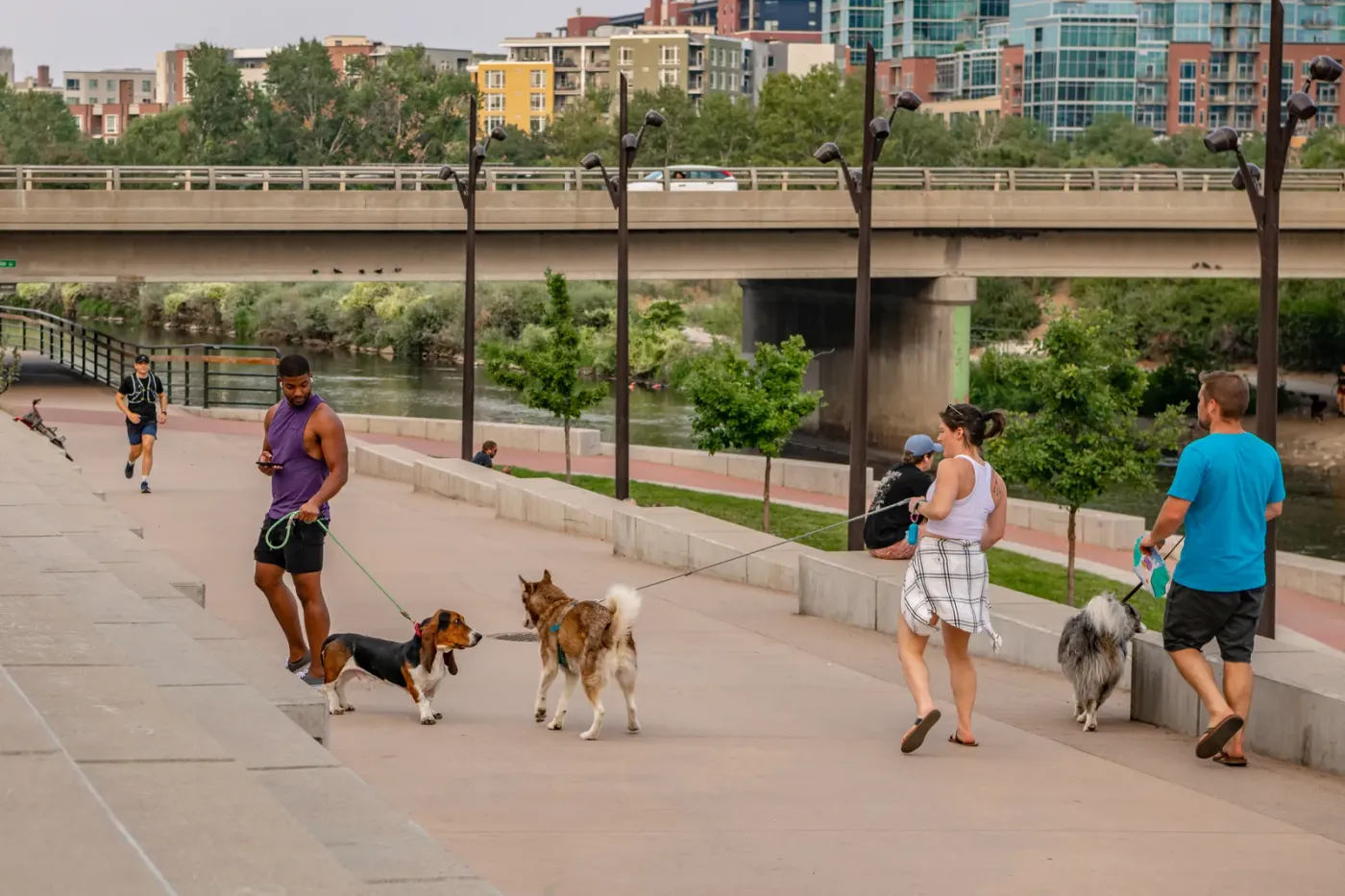
The pass happens on your street, with your hands on the leash.
Every board and train ends with a handover lesson, and for this problem the version worth asking for is a real pass: another dog, a sidewalk, you holding the leash while the trainer coaches. On-Leash Foundations includes lifetime phone and email support, so the first awkward pass on your own block has someone to call. Behaviour Rehab includes two follow-up sessions and in-depth owner education, because a reactive dog's progress tends to move at the speed of the person on the other end.
At the consultation, ask how we would tell frustration from reactivity in your dog. Ask which distractions the dog will practise around, how distance is used when another dog appears, and what the handover will show you on a live pass. The recommendation comes out of that conversation, and when the two-week program covers what the consultation finds, that is the one you will hear about. The method is in our how-to guide on stopping a dog pulling toward other dogs.
Asked and answered
The questions people ask us.
Does board and train fix pulling toward other dogs?
It works on what sits underneath it: loose-leash walking and heel around everyday distractions for an excited puller, or reactivity work at the dog's pace for a dog who is not excited at all. Whether that holds on your street depends on the handover and the passes you do afterwards. We promise the work, not the outcome.
Which board and train program is for pulling toward other dogs?
On-Leash Foundations, two weeks at $1,865 plus GST, for a dog pulling out of excitement or frustration. Behaviour Rehab, five to six weeks at $4,850 to $5,760 plus GST after a full assessment, for a dog whose pulling is reactivity or aggression. The consultation recommends between them, and the two-week program whenever it will do the job.
How does a pulling toward other dogs training program tell frustration from reactivity?
Not from a description of the leash. The assessment looks at the dog's body, what happens as the other dog gets closer and when it leaves, and the dog's history with dogs. A loose, whining dog and a stiff, silent one often need different work, and that is settled in person before a program is recommended.
Will my dog still pull toward other dogs after board and train?
Many dogs test the standard once they are back on a familiar route. That is a reason to use the follow-up sessions and the phone and email support, not a sign the program failed. If the pulling escalates, or a dog who was excited starts to look worried, reassess with us rather than push through.
Keep reading
Why is the leash tight?
Describe the pull, the body and the other dog. Book a consultation and we will say which curriculum fits your dog.
From real owners
Rated 5.0 on Google.
Real Northline dogs