
Board & train
Does board and train help with fear of strangers?
A dog who hides behind your legs, backs away from an outstretched hand or barks at anyone who crosses the threshold is telling you people feel like a threat. A live-in program gives that dog weeks of predictable days and set-up people at a distance it chooses. The limit is that your guests, your doorbell and your hallway are not part of the training setting, so a good chunk of the work is yours.
Last reviewed October 4, 2026
What changes
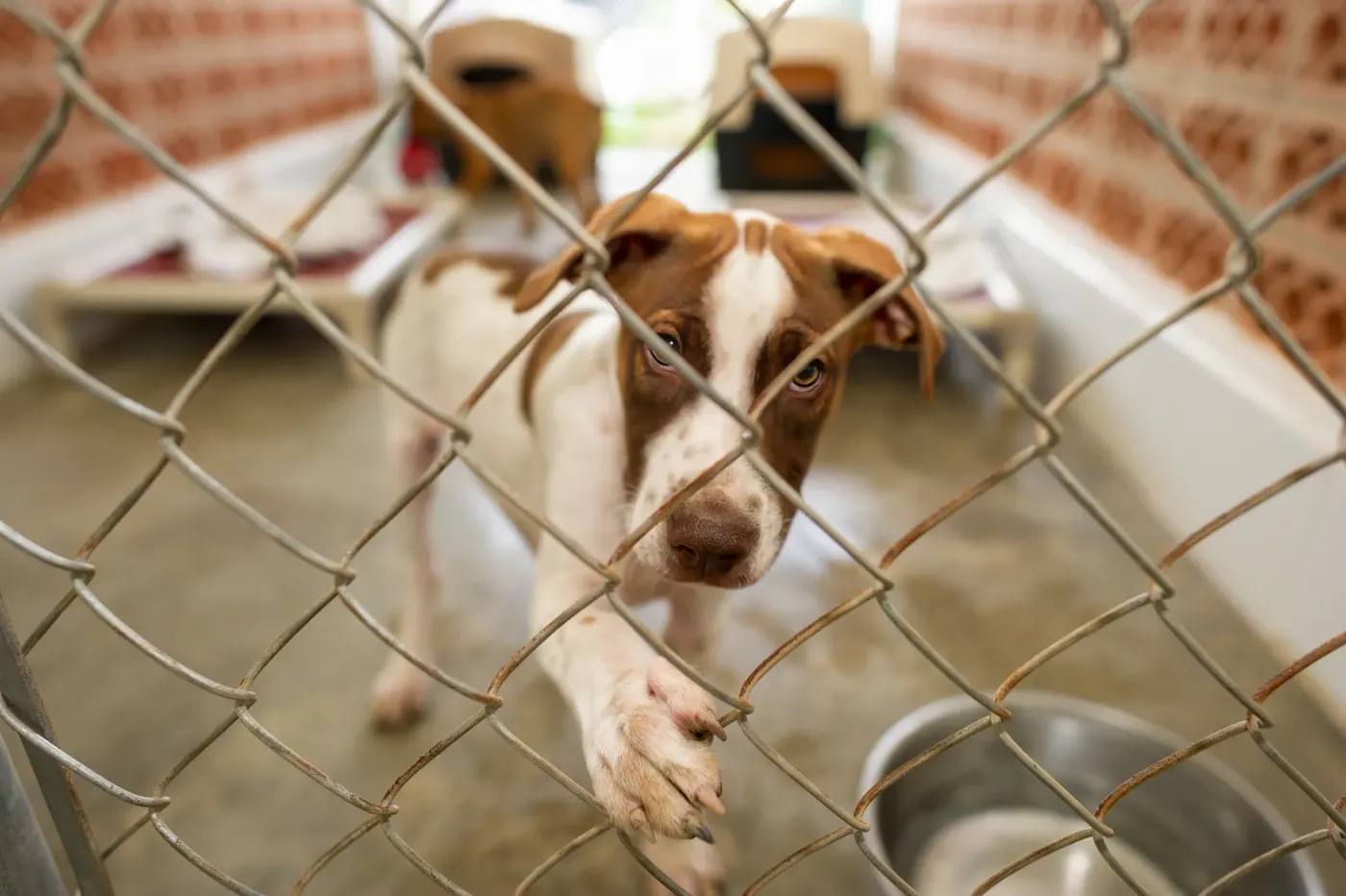
A frightened dog learns distance before it learns people.
Behaviour Rehab is the only published program whose curriculum names fear-based behaviour work, anxiety rehabilitation and confidence building, and it starts with a full behaviour assessment so the plan is built around this dog's distance, this dog's triggers and this dog's recovery. Puppy Fundamentals lists new sights and sounds, calmly, which suits a young pup who is wary rather than afraid. The obedience programs are built for leash and recall work, not for fear.
What weeks of structured routine can change is the dog's baseline. Days run the same way, people appear at distances the dog can watch from, nobody reaches for it, and the dog gets repeated chances to learn that strangers predict nothing bad. What a live-in program cannot do is meet your in-laws, your neighbour or the courier, and it cannot make a shy dog gregarious. Tolerating a guest in the room is a fair target. Being everybody's friend is not.
- Assessment sets the starting distance
- Nobody reaches for the dog
- Confidence building in the curriculum
- Tolerance is the target, not affection
Your visitor protocol
Guests at your door are the next classroom.
The handover gives you the dog's distance and a plan for guests: where the dog goes before the door opens, how it is secured, where the guest sits, and the rule that no one approaches, reaches or coaxes the dog closer. The dog decides the distance; the guest ignores it; you reward the dog for choosing to look. Behaviour Rehab includes two free follow-up sessions and in-depth owner education, so you can run that protocol with a stranger the trainer has never met.
Before the consultation, note what the fear looks like: freezing, hiding, barking from behind you, or a growl when someone reaches. A growl is information, never something to correct, and if the dog has ever snapped, say so. Ask what the assessment covers and how guests get rehearsed at handover. A dog who is unsure rather than frightened may be better served by private sessions, and the recommendation will say that if it is true. The method lives in our fear of strangers guide.
Asked and answered
The questions people ask us.
Does board and train fix fear of strangers?
No program switches fear off. What a live-in program does is give the dog weeks of predictable days and set-up exposures at a distance it can cope with. Whether that carries into your home depends on the visitor protocol you keep running afterward.
What does a fear of strangers training program actually work on?
Behaviour Rehab works on fear-based behaviour, anxiety rehabilitation, confidence building and structured socialization, all at the dog's pace after a full assessment. The owner education covers why the dog does what it does, so the plan makes sense when a new person turns up.
Should a dog meet lots of people during board and train for fear of strangers?
Not in the way people usually mean. A frightened dog is never lured toward a person or passed around to be petted. People appear at a distance the dog can handle, nobody reaches, and the dog's choice to look and relax is what gets rewarded.
Is board and train or private training better for fear of strangers?
It depends on how deep the fear runs, which is what the consultation sorts out. Private Training at $150 plus GST per one-hour session suits a dog who is uncertain and an owner who wants to do the work with coaching. Behaviour Rehab is built for the dog who hides, shakes or growls when people come near.
Keep reading
A plan for the doorbell.
Walk us through how your dog reacts when someone new comes in. Book a consultation and we will recommend what fits.
From real owners
Rated 5.0 on Google.
Real Northline dogs