
Board & train
Does board and train help with anxiety when left alone in a new home?
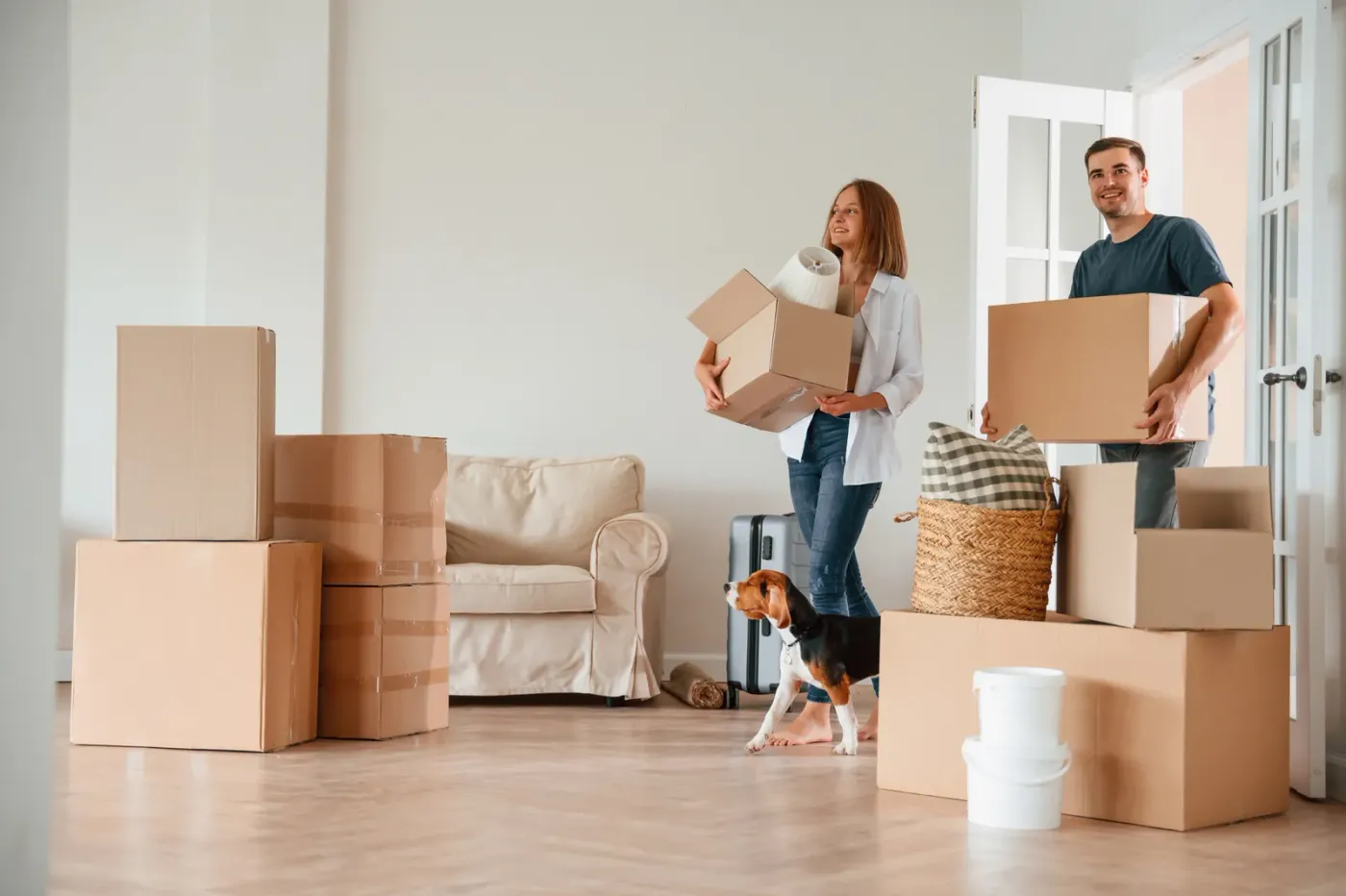
A move scrambles everything a dog uses to feel settled: the smell of the rooms, the sounds through the walls, where the bed sits, when you leave and when you come back. Many dogs who were fine alone in the old place struggle in the new one. Owners often ask whether sending the dog away to train is the answer. Here is what a live-in program contributes, and what stays yours.
Last reviewed October 4, 2026
What the stay changes
The parts a live-in program can build, and the one it cannot.
Three published curricula touch this problem from different sides. Puppy Fundamentals works on crate comfort and meeting new sights and sounds calmly. On-Leash Foundations teaches the place command, a spot where the dog settles while life goes on around it. Behaviour Rehab, five to six weeks after a full assessment, works on anxiety rehabilitation and confidence building at the dog's pace. Every board and train also runs a structured daily routine, and routine is often the first casualty of a move.
The limit is this: a dog learns a house is safe to be alone in by being alone in it, calmly. A live-in program is a third location, not your new one, so that part cannot be outsourced. Its job is the groundwork: settling on a bed, resting in a crate, following a routine, then a handover lesson so you can keep each piece alive. Heavy drooling, a bent crate door or scraped paws point to panic, and panic starts with your vet.
- Crate comfort and place command
- A structured daily routine
- Confidence building at the dog's pace
- Alone-time in your house stays yours
Your side of it
What you take over, and what to ask before you book.
After pick-up, the alone-time work is yours, in the new rooms, at the new door. The handover lesson shows you the routine the dog has been living so you can run the same one in your house. The step-by-step method, from the first brief absences onward, lives in our how-to guide on anxiety when left alone in a new home. The follow-up sessions included with every program are where you bring whatever went sideways once real life started.
At the consultation, describe the move: how long you have been in, what the dog does right after you leave, whether a camera shows pacing or settling, and what else changed, like a new schedule or a lost housemate. Ask which curriculum fits those details and what you will be doing at home. Private Training, $150 plus GST per hour with a written plan for your home, may be the right size. When it is, that is the recommendation, not a stay.
Asked and answered
The questions people ask us.
How does board and train approach anxiety when left alone in a new home?
It works on the pieces the dog will lean on later: crate comfort, the place command, a steady daily routine, and in Behaviour Rehab, confidence building after a full assessment. You get updates during the stay, and the handover lesson walks you through running the same routine in your new house.
Does board and train fix anxiety when left alone in a new home?
Not on its own. A stay works on crate comfort, place, routine and confidence, which are the foundations, but the dog still has to learn that your specific house is safe to be alone in, and that happens with you after pick-up. Think of the program as the framing and the owner work as the finish.
Which training program covers anxiety when left alone in a new home?
It depends on what the dog actually does. Behaviour Rehab, five to six weeks at $4,850 to $5,760 plus GST after a full assessment, is built for anxiety, fear and confidence work; Private Training is built for owners who want a written weekly plan and to do the work themselves. The consultation sorts out which, and it points to the smaller one when that is enough.
Should I see a vet before booking board and train for anxiety when left alone?
If the dog is drooling heavily, injuring itself, breaking out of a crate or soiling despite being house trained, yes, start with your vet. Those signs can point to panic rather than a habit, and a trainer cannot rule out a medical cause. Bring the vet's notes to the consultation.
Keep reading
Tell us about the move
Book a consultation. Bring what the dog does after you leave, and we will say which program fits, or whether a smaller one does.
From real owners
Rated 5.0 on Google.
Real Northline dogs