
After the program
Boarding a trained dog: what to look for
A trained dog does not forget everything at a boarding facility, but a stay can quietly reward the habits you worked to replace: barging through gates, pulling toward other dogs, barking for attention at feeding time. This page covers why that happens, the questions worth asking any boarding provider, how to hand over your dog's rules, and the graduate boarding we offer our own graduates.
Last reviewed October 4, 2026
Before you book
Why a boarding stay can loosen standards.
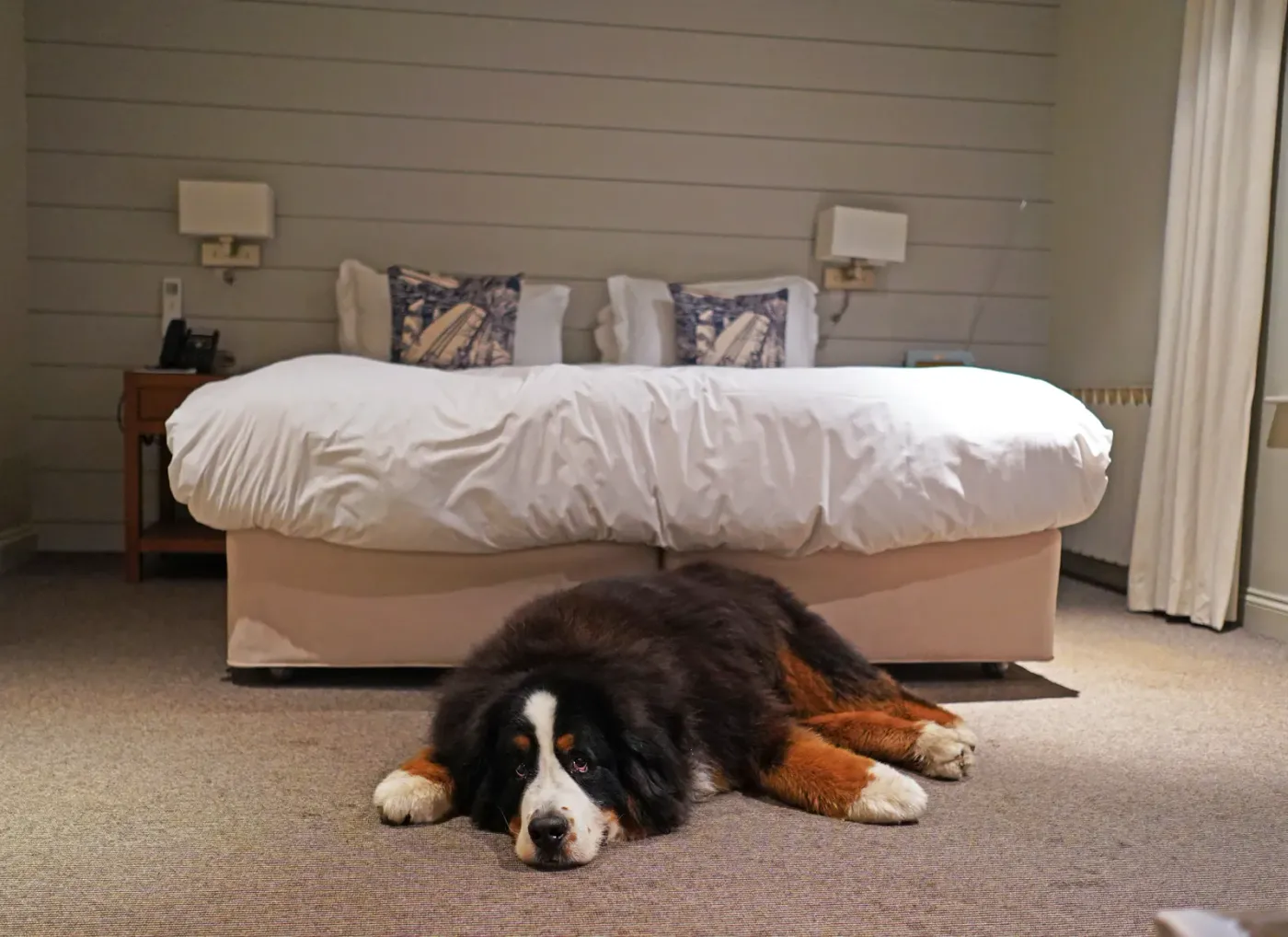
Many boarding environments are set up to keep a lot of dogs safe and fed rather than to hold each dog to its own rules. A dog who learned to wait at a threshold may find gates opened in a rush. A dog who learned loose-leash walking may be clipped to a retractable lead or turned into a yard with a group. None of this is unkind. It is a different set of rules, and dogs often practise whatever the setting pays for.
So the useful questions are concrete. Ask how dogs move from indoors to the yard, whether they wait at doors, who handles leashes and what equipment they use, how feeding is managed, and whether group play is optional or assumed. Ask whether they will follow a short written list of your cues. A provider who answers plainly, without irritation, is showing you how they are likely to treat that list.
- Calm, unhurried door and gate handling
- Your leash equipment respected
- Group play optional, not assumed
- Willing to follow written cues
Getting ready
Preparing your dog, and when a sitter suits better.
Before the stay, write one page: your release word, the place cue, how meals are given, what equipment your dog wears and what it should never wear, plus any known triggers. Pack the slip lead and collar from the program rather than a harness your dog leans into. A familiar mat gives the place cue somewhere to live. Keep the drop-off short and quiet, since long goodbyes tend to wind a dog up.
For some dogs a house sitter is the better fit. A dog with a reactivity history, a senior who struggles with change, or a dog freshly home from a program may do better holding its routine in its own house. Our graduate boarding is another route: $65 + GST per night, for graduates and existing clients only, with optional refresher work. If a sitter at home suits your dog better, we will say so.
Asked and answered
The questions people ask us.
Will boarding undo my dog's training?
A stay is unlikely to erase what your dog knows, but it can loosen habits if the rules change. Choosing a provider who handles doors and leashes calmly, and returning to your normal routine at home, helps the standards hold.
What should I ask a dog boarding facility?
Ask how dogs move between areas, whether they wait at doors, what leash equipment is used, and whether group play is optional. Ask too whether they will follow a written list of your cues.
Do you board dogs that did not train with you?
Graduate boarding is for graduates and existing clients only. It is $65 + GST per night, and refresher work can be added if you want it.
Should I send my dog's training collar to boarding?
Send training equipment only if the provider knows how to use it properly, and write down how it is used. If they do not, a plain collar and leash with clear instructions is safer than a tool used wrongly.
Keep reading
Planning time away?
Book a consultation and we can talk through graduate boarding, refresher work or a sitter plan that suits your dog.
From real owners
Rated 5.0 on Google.
Real Northline dogs