
Breed trainability
Are Chihuahuas easy to train?
A Chihuahua is one of the smallest dog breeds, and that scale changes everything about how it meets the world. A friendly hand comes down from a great height. A Labrador's greeting is a face the size of its whole body. A January sidewalk is cold at every step. We think the honest answer to whether Chihuahuas are easy to train starts with that view from ankle height, not with the breed's reputation.
Last reviewed September 24, 2026
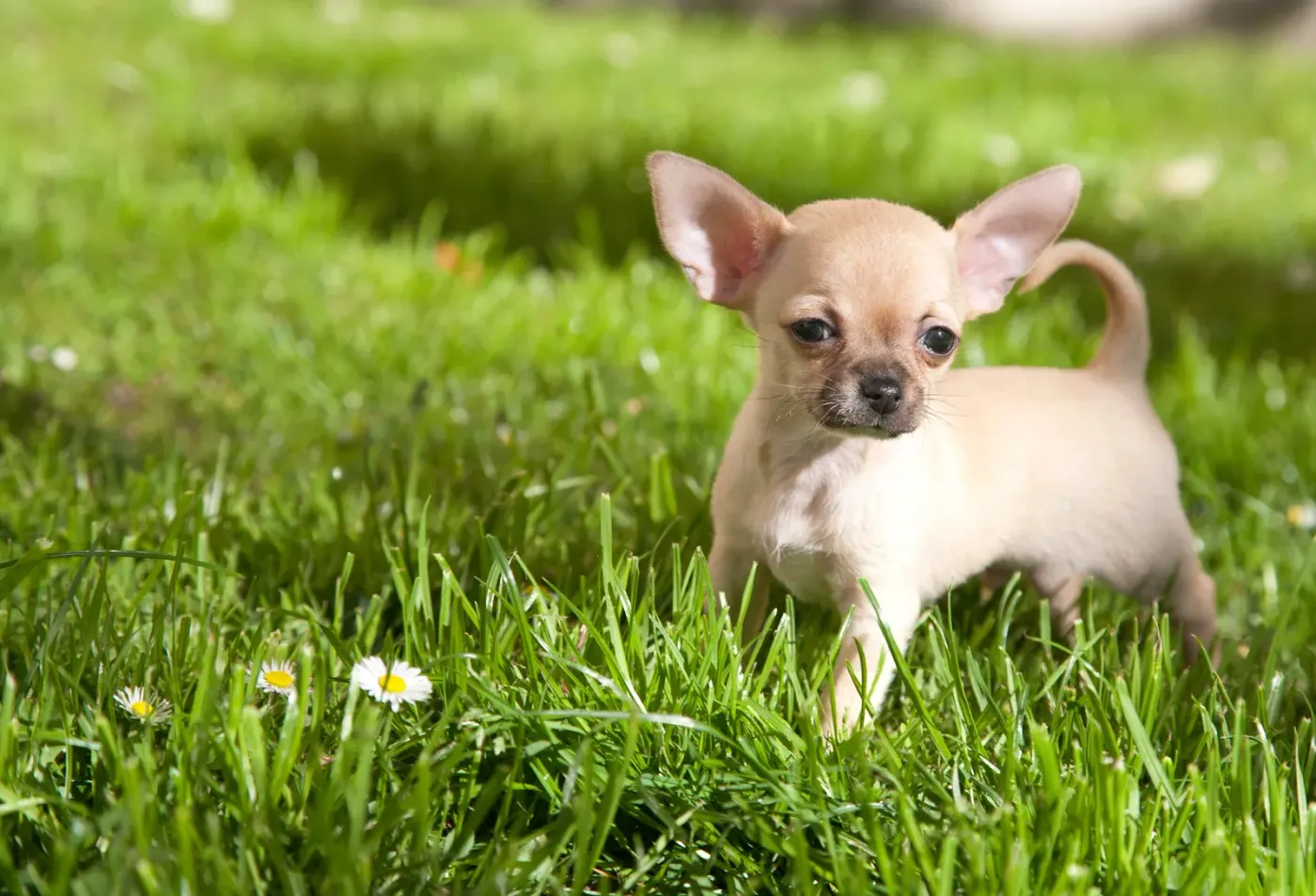
View from ankle height
Size changes the situation more than the dog.
Many Chihuahuas are alert, quick and closely tuned to their person, and a marker and a small reward often get a fast response. Size does not shrink the mind, but it does change the situation. A dog that stiffens when a hand reaches down may be frightened, may be sore, or may simply never have been shown a gentler approach, and we would not guess which from the breed name. For a dog like that, a vet check comes first.
Carrying is the second thing we think about, and we do not tell owners to stop. Picking up a Chihuahua is sometimes the right call: a loose dog, an icy crossing, a busy patio. What we try to add is distance the dog can handle on its own four feet, with a reward for coping, so carrying is one option rather than the only one. Not every encounter is safe for a dog this size, and we would rather skip one than force it.
- Often quick and food-motivated
- Hands arrive from above
- Carrying is one option, not the only
- Vet check before training plan
Winter, windows, laps
Three Chihuahua-shaped problems and how we think about each.
Toilet training in a Calgary winter asks a lot of a dog whose chest is not far above the snow. We would shovel a short path to one spot, add a coat for a thin-coated dog, and walk out on a leash rather than opening the door and hoping. Window and door barking carries a lot of voice through a condo wall, and we look at what sets it off and what it earns the dog before changing anything.
Lap guarding is the third: a growl from a lap at whoever approaches. Some Chihuahuas bond hard to one person, and we treat that growl as information rather than something to punish. Puppy Fundamentals, three weeks at $2,775 plus GST, works on crate comfort and structured socialization. Private Training, $150 plus GST per one-hour session with a weekly plan, is built for hands-on owners. Where guarding has already produced a bite, Behaviour Rehab after a full assessment is the honest route.

Asked and answered
The questions people ask us.
Are Chihuahuas hard to train?
Not as a breed, in our experience, though individuals vary as much as in any other breed. Where a Chihuahua is struggling, the causes can include fear, limited early exposure, pain or a habit that has been paying off for years, and we would want to see the dog before deciding which. Size changes the practicalities; the individual dog decides the rest.
Are Chihuahuas hard to potty train?
Calgary winters make it harder than it would be somewhere milder, because a dog this small meets the cold from the first step. A tighter schedule, a coat, a shovelled path to the same spot and a leash walk to it tend to help. A very small dog may also need more frequent trips, and a vet can advise if accidents seem physical rather than a training gap.
Can Chihuahuas be trained?
Yes. Loose-leash walking, sit and down, a place cue, quieter windows and polite greetings are all reasonable goals for a Chihuahua, with the pace set by the individual dog. Tools are matched to the individual dog, as they are for every dog we work with.
Are Chihuahuas smart?
Many are sharp, observant and quick to spot a pattern, especially one that involves their person. That same quickness is why a Chihuahua that has learned barking gets a reaction can hold on to the habit. When the rewards change, the pattern often changes with them, though how fast depends on the dog.
Why do Chihuahuas shake?
Trembling can be cold, excitement or stress, and sometimes more than one at once, so we would not read it as fear by default. If shaking is new, constant or paired with other changes, a vet visit comes first. Once health is ruled out, a coat for the cold and a calmer routine around whatever sets it off are where we would start.
Do Chihuahuas do well with big dogs?
Some do, and some have every reason to be cautious, since a well-meaning larger dog can hurt a Chihuahua by accident. We would choose calm, known dogs for socialization rather than a free-for-all, and keep the first meetings short. Structured socialization is part of every board and train, including for the smallest dogs.
Keep reading
Small dog, honest read.
Book a consultation for the barking, the lap, the winter routine or the worry. A plan sized to the individual dog comes next.
From real owners
Rated 5.0 on Google.
Real Northline dogs