
Breed guide
How to train a Chihuahua
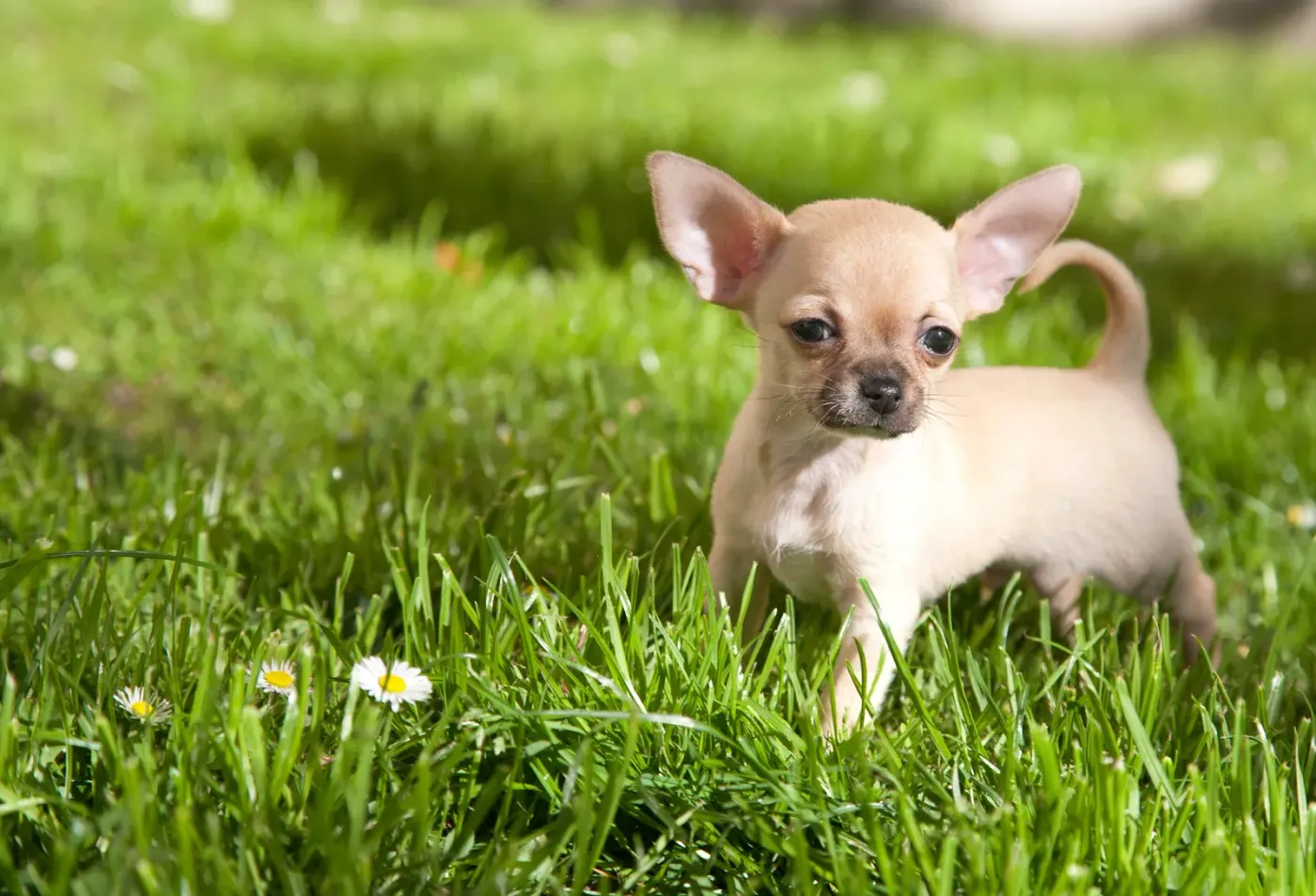
A Chihuahua is not a difficult dog. A Chihuahua is a tiny dog whose fear gets rewarded, whose growling gets laughed at, and whose house training gets forgiven until it becomes a habit. This guide covers what the breed is actually like to live with, why so many turn snappy, and how we train them: confidence first, obedience second, size respected throughout.
Last reviewed August 26, 2026
Life with one
A watchdog brain in a very small body.
Chihuahuas are sharp, watchful and fiercely loyal, usually to exactly one person. That loyalty tips into guarding: the dog claims a lap, a couch, a human, and warns off anyone who approaches. Add a body small enough to be stepped on, grabbed and carried without consent, and you get a dog with genuine reasons to feel defensive. The snapping most owners worry about is nearly always fear, not dominance.
Barking is the other tax. A Chihuahua treats every doorbell, hallway noise and passing dog as a headline, and each bark that makes the scary thing leave gets reinforced. House training runs slower than owners expect: small bladders, small accidents that go unnoticed, and a strong dislike of cold ground all work against you. Adolescence is when a bold puppy often turns suspicious of strangers, and how you handle those months decides the adult dog.
- Fear-based snapping at hands
- Guarding one favourite person
- Alarm barking at every noise
- House training that drags on
Confidence first
Train the fear before you train the sit.
We start with markers and rewards, on the floor, at the dog's level. A Chihuahua learns sit, down, place and recall as fast as any big dog once it stops scanning for threats, so early sessions are about food, calm handling and predictable routine. Confidence is built deliberately: new surfaces, new rooms, new people at a distance the dog can handle. Nobody gets snatched off the ground mid-lesson.
The classic owner mistakes: carrying the dog everywhere, laughing at growls until one becomes a bite, and skipping walks because the dog is small. Calgary adds its own wrinkle, because a tiny dog that refuses to potty at minus twenty needs an ironclad indoor-outdoor routine through winter. Most Chihuahuas do best in Private Training at $150 per session or Day Training at $650 per week; a snapping, guarding dog belongs in Behaviour Rehab.
The programs
Where this breed usually lands.
The programs below are the ones this breed most often needs; the consultation confirms it for your dog.
Asked and answered
The questions people ask us.
Are Chihuahuas easy to train?
They learn quickly when they feel safe, and slowly when they feel threatened. The obedience itself is easy; the confidence underneath it is the real project. Expect quick progress once the dog decides you are safe.
What are the most useful Chihuahua training tips?
Work at floor level with tiny rewards, and never punish a growl; it is the warning light you want to keep. Walk your Chihuahua on the ground daily instead of carrying it. A dog that navigates the world on its own paws grows braver.
How should Chihuahua puppy training start?
Start with house training on a strict routine, crate comfort and gentle handling of paws, ears and mouth. Add sit, down and name response with markers and rewards. Puppy Fundamentals, a 3-week board and train at $2,775, covers all of it one-on-one.
What are the most common Chihuahua behaviour problems?
Fear-based snapping, guarding one person, alarm barking and slow house training top the list. All four trace back to a small dog that feels unsafe or under-managed. Structured confidence work resolves most of it, and Behaviour Rehab exists for the serious cases.
Keep reading
Ready to steady your Chihuahua?
Tell us what your Chihuahua is doing and we will recommend the right program honestly. Book a consultation.
From real owners
Rated 5.0 on Google.
Real Northline dogs