
Straight answer
Are Rottweilers hard to train?
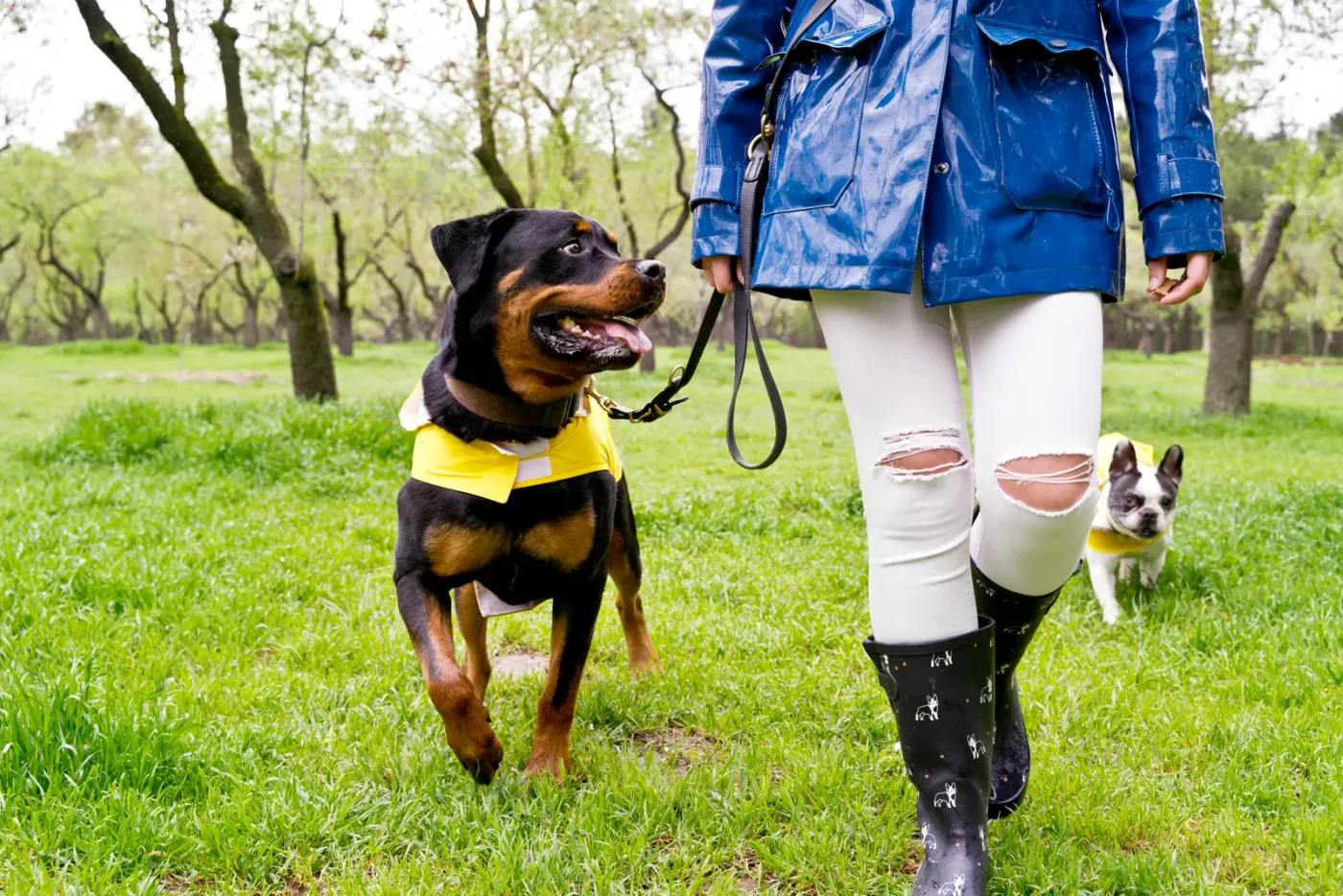
The Rottweiler standard describes a calm, confident dog with a self-assured aloofness and a wait-and-see attitude, an inherent desire to protect home and family, and a strong willingness to work. Nothing there is hard by itself. Some of it is easy to misread. A reserved dog gets called stubborn, a strong dog gets called dominant, and a watchful dog gets called a guard when it is mostly waiting to see what happens.
Last reviewed September 25, 2026
Four separate questions
Learning, motivation, strength and strangers are not one question.
Learning first. In our experience many Rottweilers take to marker-and-reward work well, and the standard's strong willingness to work matches what we see: a dog that often seems to like having an assignment. That is not the same as motivation on a given day. A Rottweiler that has learned place may still weigh whether cheese beats a visitor at the window, so we choose rewards for the individual dog and practise in the settings that matter rather than assuming willingness carries over.
Strength is a handling question. The standard's compact, substantial build denotes great strength, and many Rottweiler owners describe a dog that leans, pushes through doorways and pulls low rather than high. Loose-leash walking, waiting at doors and equipment matched to the dog are the work there. Strangers are the fourth question. The standard calls an aloof or reserved dog the accepted character of the breed, so we aim for a neutral default, standing quietly beside the handler while a person passes, not a greeting.
- Willingness to work, per the standard
- Motivation checked dog by dog
- Strength handled with fitted equipment
- Reserved is not a failure
Choosing support
Support is chosen by need, not by breed.
Support is an option, sized to need. Some Rottweiler households do the work themselves with a plan; some want a fortnight of daily one-on-one training and a handover lesson. Many owners of the breed describe a change in adolescence, often a new hesitation with strangers, and that is a reasonable time to ask for a second set of eyes. It is not proof of a problem. When a change is sudden or the dog seems sore, the vet comes before the trainer.
For a puppy, Puppy Fundamentals runs three weeks at $2,775 plus GST as a board and train, covering crate comfort, leash manners and socialization. For hands-on owners, Private Training is an hour with a written plan for the week. Behaviour Rehab is for anxiety, reactivity and aggression: five to six weeks of daily individualized work, $4,850 to $5,760 plus GST, priced and customized only after a full assessment. We recommend by need, and when a smaller program covers it, we say that.
Asked and answered
The questions people ask us.
Are Rottweilers hard to train?
Not inherently, in our experience: many take to marker-and-reward work well, and the standard lists a strong willingness to work. What some owners find demanding is separate from learning, namely holding a strong dog on a leash and managing a reserved dog around visitors. We assess both on the individual dog.
Are Rottweilers easy to train?
Often, on the learning side. The standard's wait-and-see attitude can also make a Rottweiler slower to offer behaviour in a new place, which is not the same as being hard to teach. We would call the breed trainable and the individual dog the deciding factor.
Are Rottweilers stubborn?
We rarely see it that way. A Rottweiler that pauses before responding may be doing what the standard describes, responding quietly and waiting to see, and a dog that has never practised a cue outside the kitchen may not know it applies elsewhere. We would look at clarity and practice history before reaching for that word.
Are Rottweilers good for first time owners?
They can be, in our experience, for a first-time owner willing to learn handling skills for a strong dog and to keep rules consistent. The help available scales with what the household wants: a written weekly plan for someone doing it themselves, or a board and train with a handover lesson for someone who wants the foundation built first. We decide that once we have met the dog.
Do Rottweilers need a job?
The standard describes a strong willingness to work, and in our experience many Rottweilers seem steadier with a routine and clear tasks. That does not have to mean sport or protection work; place, a structured walk and waiting at doors count. Every board and train runs on a structured routine, which suits that.
Keep reading
Four questions, one dog.
Describe the Rottweiler on the leash and at the door, and we will match the support to it. Book a consultation.
From real owners
Rated 5.0 on Google.
Real Northline dogs