
Training myths
"A tired dog is a good dog": the half-truth
Every frustrated owner has heard it: just run him harder. Sometimes it works for an evening. Then the dog gets fitter, the runs get longer, and the house is still chaos at nine at night. The saying is not wrong about exercise. It is wrong about what kind, and it skips the part that matters most: a dog who knows how to do nothing.
Last reviewed October 4, 2026
Why it half works
Exhausted and calm are not the same state.
The saying caught on because it is partly true. Many dogs, especially working and sporting breeds, really do need daily outlets for running, sniffing and problem solving, and a dog with nothing to do will often invent a job, usually involving the couch. Owners add a long run, see one quiet evening, and conclude that more is better. The trouble shows up later, when the same run no longer buys any quiet at all.
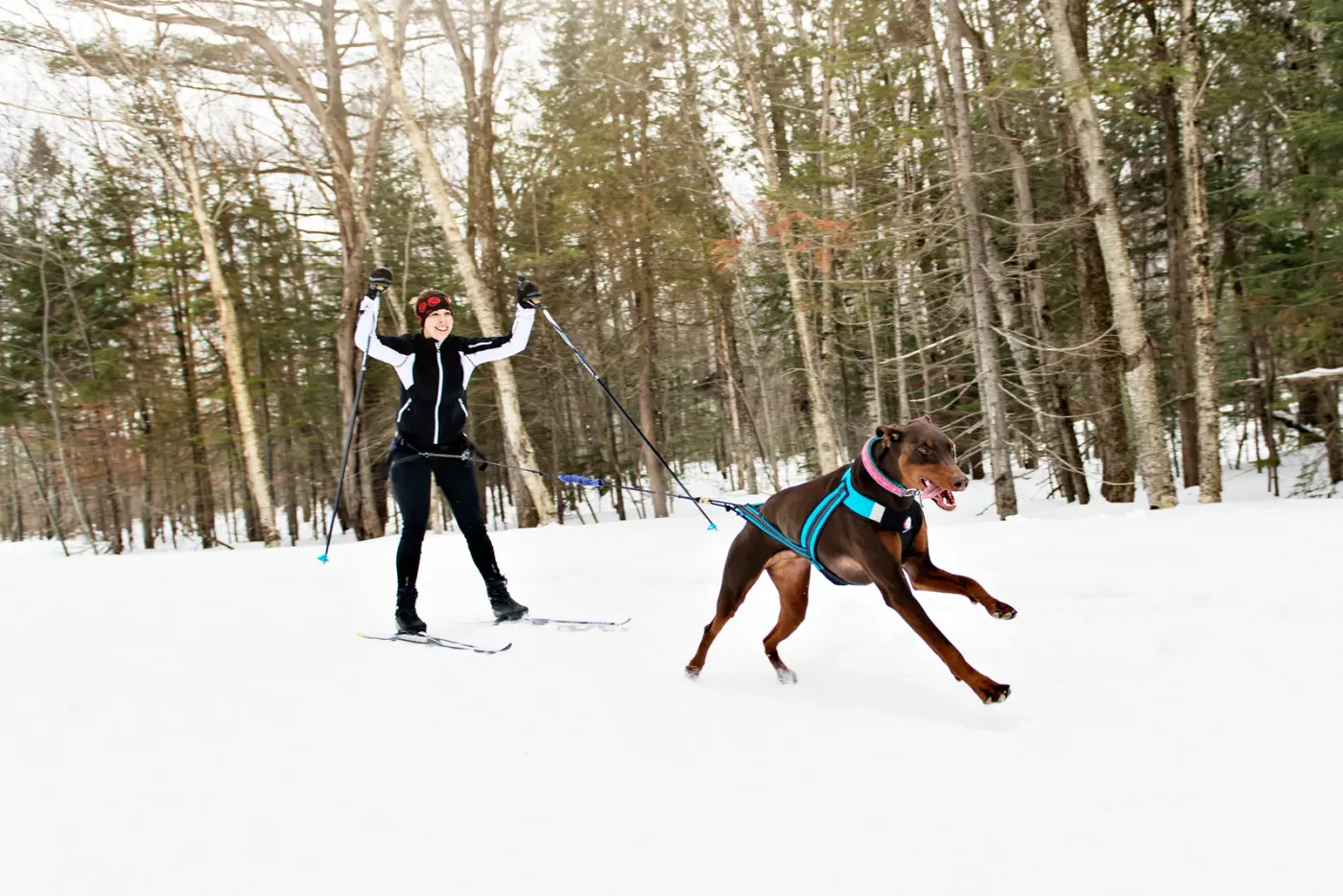
High-arousal exercise, like chasing a ball for half an hour or wrestling at the dog park, tends to pump a dog up rather than wind him down. Many dogs come home overstimulated, mouthy or unable to settle. Repeat it daily and you are conditioning an athlete with more stamina all the time. Meanwhile the dog never practises settling, so the only off switch he knows is collapse.
- Pacing after a long run
- Zoomies right at bedtime
- Mouthiness after rough play
- Cannot settle after outings
Building the off switch
Pair the right outlet with a taught settle.
We balance the outlet before we cut anything back. Sniffing walks, slow exploration and short training games tend to tire the brain without revving the body, and they leave many dogs calmer than a sprint does. Rest is built into the day too: puppies and adolescents in particular need real downtime, and a crate the dog is comfortable in makes that downtime easy to protect. Any sudden drop in energy or tolerance for exercise is a vet question first.
Then we teach the switch itself. Place is the tool we lean on: a bed the dog goes to on cue and stays on, calmly, while life carries on around it. It is taught with markers and rewards first, then proofed around doorbells, dinner and visitors. Every board and train runs on a structured routine that alternates work, play, enrichment and rest, so the dog lives the pattern rather than just hearing about it.
Asked and answered
The questions people ask us.
How much exercise does a dog need a day?
It depends on age, breed, health and the kind of exercise. Your vet is the right person to set physical limits, especially for puppies and older dogs. Beyond that, mix physical work with sniffing and training rather than chasing a fixed number.
Why is a dog more hyper after the dog park?
Rough play and constant chasing often leave a dog overaroused rather than tired. The body is spent but the excitement has not come down. A calm walk home and a settle on a bed tend to help more than another round.
Is mental stimulation as tiring as physical exercise?
Many dogs find sniffing, food puzzles and short training sessions surprisingly tiring. They work the brain without building the same stamina a sprint does. They are a good partner to exercise, not a replacement for it.
How do you teach a dog to settle?
Start with a place bed and reward the dog for lying there quietly, building duration in small steps. Practise at calm times first, then around busier moments. If your dog cannot settle at all, even after rest, a vet check and a professional assessment are worth booking.
Keep reading
Teach your dog to switch off
We will look at your dog's day, outlets and rest, then recommend the plan that fits. Book a consultation.
From real owners
Rated 5.0 on Google.
Real Northline dogs