
Acreage dogs
Visitors, deliveries and gates on a rural property
In town, the doorbell gives you a few seconds. On an acreage, the dog hears the truck turn in at the end of the drive and is at the driver's window before you know anyone has arrived. The visitor meets your dog alone, in the yard, with no fence between them. This page is about changing who gets to the vehicle first, and what to do when the dog's greeting is not a greeting.
Last reviewed October 4, 2026
Who meets the truck
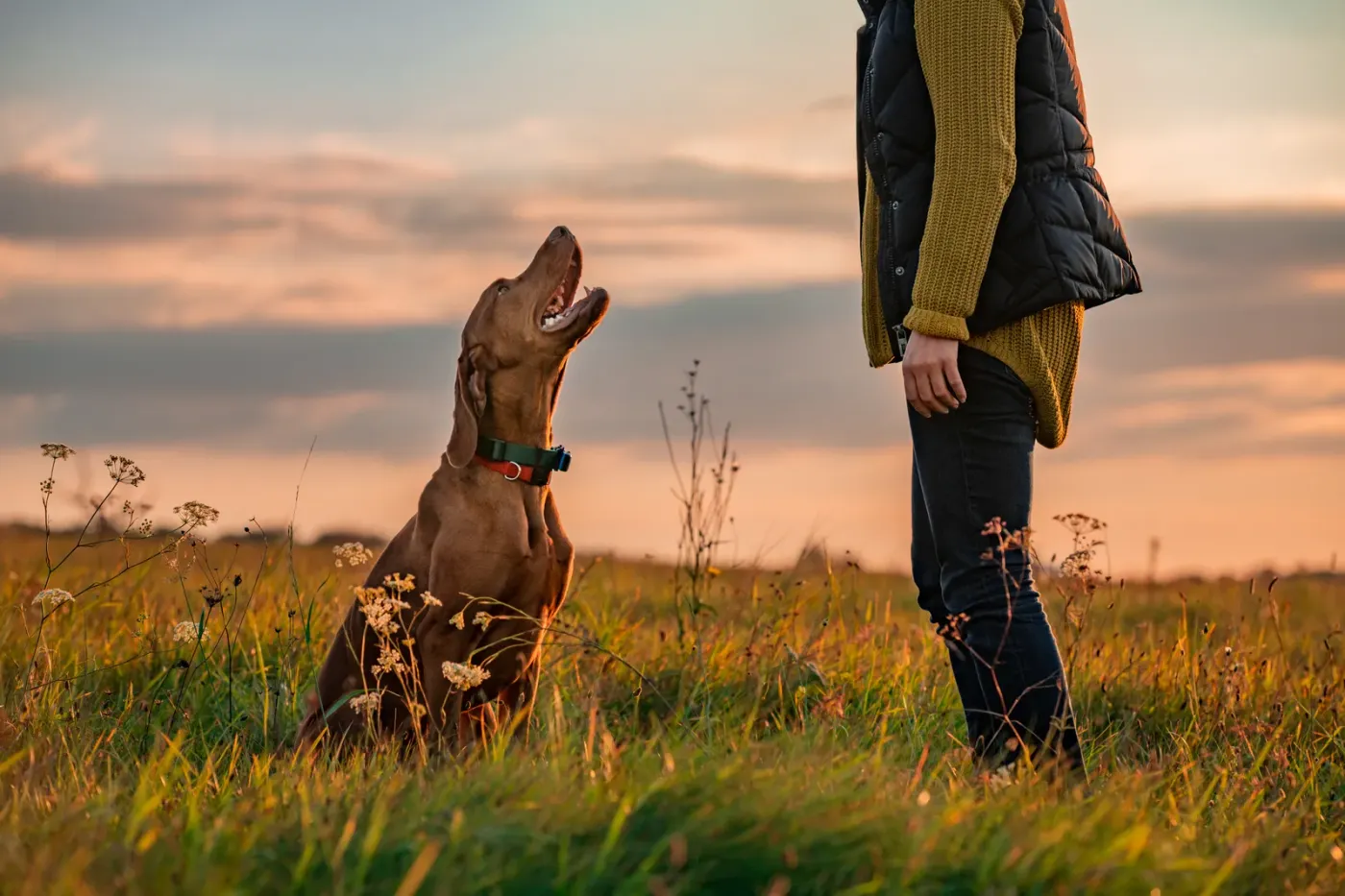
A down at the gate or a place inside, taught with your own vehicle first.
Management comes first. Until the dog has a trained alternative, it is on a leash held by an adult or behind a closed door before any vehicle pulls in, and a sign at the gate asking visitors to stay in the vehicle until you come out helps. The dog is not greeting; it is intercepting. A stranger stepping out of a truck into a yard with a loose dog is an awkward spot for everyone, so remove it before you train anything.
Pick the behaviour you want and teach it with a vehicle you control. Have an adult in the household drive in while you hold the dog on leash at the chosen spot: a mat inside the porch door or a down at the gatepost. Pay the dog for staying put while the engine idles and the door opens. Add a recall off the driveway on a long line, called the moment the dog orients to the vehicle, not once it is at the window.
- Leashed before wheels touch gravel
- Mat inside or down at gatepost
- Your own vehicle first
- Recall at the first glance
Drivers, friends, guarding
Nobody who comes up your drive is there to train your dog.
The delivery driver is the hardest case because the pattern repeats and you are rarely there. The truck arrives, the dog charges and barks, the driver leaves, and the dog may learn that barking made the truck go. Many rural dogs rehearse this often. The answer is not a training session with the driver; it is a dog that is inside or in a run during delivery hours, and a drop box at the gate so the truck never reaches the house.
Kids' friends arrive without warning, and children are never the test of a dog's manners. An adult holds the leash, the dog is on its mat before the friends are through the gate, and it is released only once it is calm, if at all. If your dog stiffens, growls or puts itself between you and a visitor, that may be guarding, and a growl is information, not disobedience. Do not correct it. Book a professional assessment, and let that assessment decide what comes next.
Asked and answered
The questions people ask us.
Why does my dog rush vehicles in the driveway?
For many rural dogs the driveway is the only place anything new arrives, and a moving vehicle is often the most exciting thing on the property. Rushing it is often a mix of excitement, chase and the fact that it has always worked. Keep the dog leashed or inside when vehicles come in, then teach a recall off the driveway with your own car before you expect it to hold for a stranger's truck.
How do I stop my rural dog barking at visitors?
Start by deciding where the dog should be when someone arrives, because a dog with no job will often invent one. A mat inside the porch or a down at the gate gives it something to hold, and you pay that instead of shouting over the barking. If the barking comes with a stiff body, a hard stare or a growl, treat it as possible guarding and get a professional assessment rather than more repetitions.
How should a farm dog greet visitors?
From a down or a mat, released by you, after the visitor has stepped out and the dog has settled. The visitor does not call the dog over, and nobody lures a worried dog toward a stranger with food. A calm greeting is something the dog is released into, not something it takes.
What do I do about a dog that guards the yard against strangers?
Manage it first: the dog is secured before anyone arrives, and visitors are told to stay in the vehicle until you have hold of it. Never punish the growl; it is the warning that keeps everyone safe. A full assessment works out whether this is fear, territory or something else, and the program is recommended from there; Behaviour Rehab is the one built for anxiety, reactivity and aggression, and dogs with bite histories are accepted after assessment.
Keep reading
Change who meets the truck
Visitors meeting your dog before they meet you? Book a consultation and we will sort out the gate first.
From real owners
Rated 5.0 on Google.
Real Northline dogs