
Acreage dogs
Two dogs on an acreage
One dog on a property keeps half an eye on the house. Add a second and the house loses. The two of them have each other, which is wonderful until a deer crosses the back fence and both are gone. This page covers the pair problem: why it happens, how to train each dog alone before you train them together, and how to keep the peace at the food bowls and the gate.
Last reviewed October 4, 2026
Pair dynamics
Train the instigator and the follower as two different dogs.
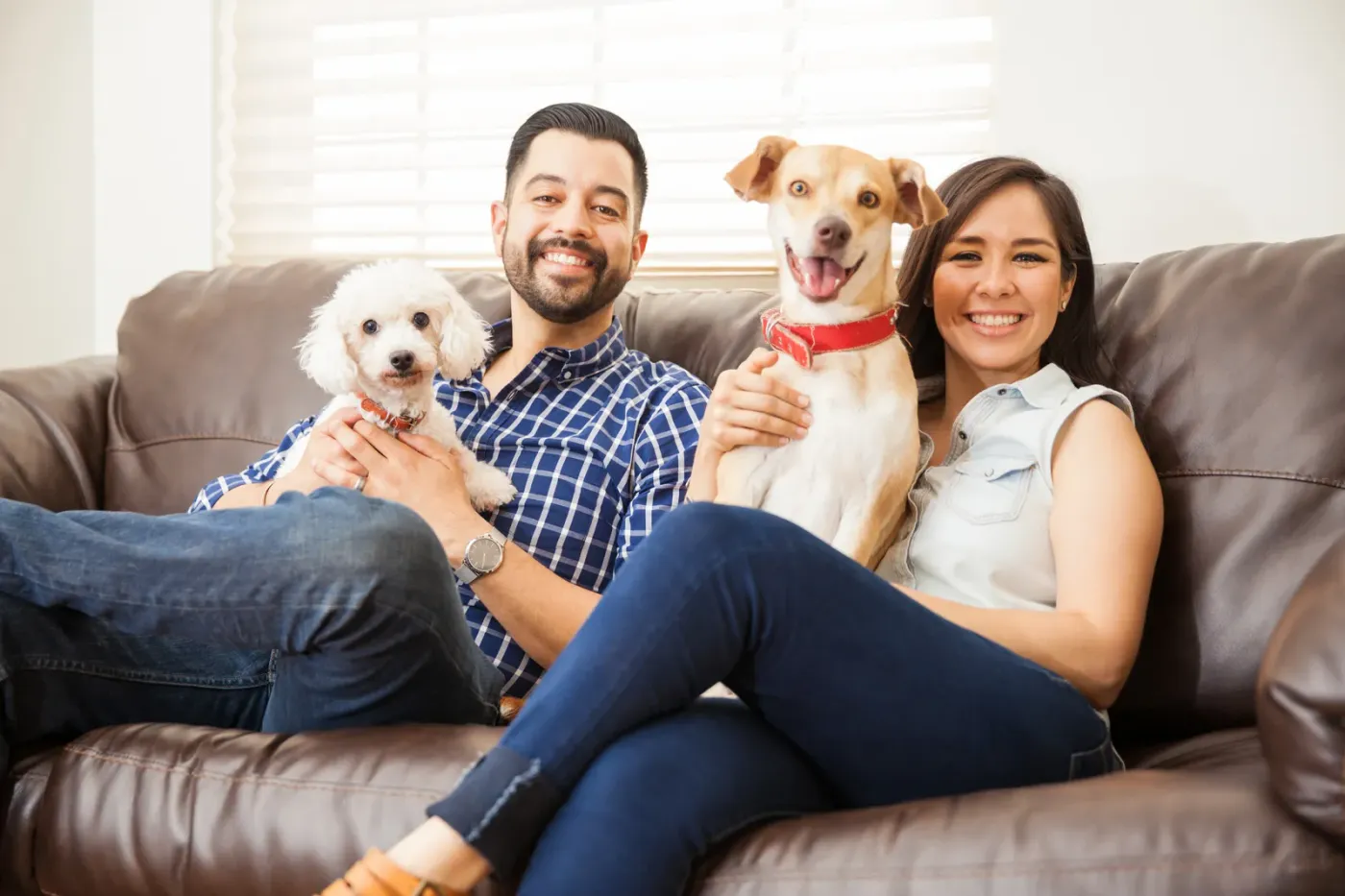
Watch your two dogs for a week and a pattern tends to appear. One dog spots the hare, the quad or the neighbour's cat and launches. The other did not see any of it; it saw its partner run and went too. That second dog is the follower, and alone it often has the better recall of the pair. Together, it borrows the first dog's judgement, which is usually the worse of the two.
So separate them for training. Take one dog out on a long line while the other stays inside, and work its name, its recall and a down that holds while you walk away. Swap dogs. Each one has to learn that your voice means something without a partner to look at. The joint recall comes last: call both from a short distance, pay both, and only stretch the distance once each dog is coming back on its own, every time.
- One dog out, one dog in
- Long line until recall is real
- Reward the follower for choosing you
- Joint recall only after solo recall
Food, gates and visitors
Two bowls, two spots, and one dog on a leash when company comes.
Feed the dogs in separate places, out of each other's sight if one of them hovers or stiffens over a bowl, and pick both bowls up when they are done. Chews and bones follow the same rule: one dog, one room, one chew, then put them away. Many fights between housemates start over something one dog thought was theirs, and a hard stare over a bowl is the warning, not the fight. Do not punish the stare. Remove the reason for it.
At the gate, two dogs feed off each other's arousal, and a visitor who was greeted by one dog is suddenly being circled by two. Leash one dog before anyone gets out of a vehicle and send the other to its place inside. If the dogs have fought and either has been hurt, that is a job for a professional assessment, not a tip. Every dog here trains one-on-one, and the consultation recommends a program for each, a smaller one when that covers it.
Asked and answered
The questions people ask us.
Should I train my two acreage dogs together or separately?
Separately, until each one has a recall and a down that hold without the other dog in view. A partner is a bigger distraction than any hare, and the dog that looks to its friend before it looks to you is not learning. Everything we run is one-on-one, so if a program is the right call, each dog is assessed and trained as an individual.
Why does my pack of dogs roam the farm further than one dog ever did?
Two dogs lend each other nerve: one hesitates at the tree line, the other does not, and the hesitant one follows. They also hunt as a team, so a scent one dog would have dropped turns into a chase. Keep them on long lines or inside a fence until the joint recall holds, and call them back before they reach the edge, not after.
How do I stop two farm dogs fighting over food?
Feed them in separate rooms or at opposite ends of the yard and lift the bowls the moment both have finished. Hand out chews one dog at a time, behind a door. If a fight has already drawn blood, book a professional assessment before you try anything at home.
Which of my two dogs should go to training first?
Often the one who starts the trouble, since the follower is reacting to its partner more than to the hare. A dog who only misbehaves beside its friend may still need the work, though, because the pair is the problem. The consultation looks at both dogs and recommends what each one needs, which may be less than you expect.
Keep reading
Two dogs, one honest plan
Tell us who starts it and who follows. Book a consultation and we will recommend a program for each dog, nothing more.
From real owners
Rated 5.0 on Google.
Real Northline dogs