
Dog-to-dog & household
Training when one dog is reactive and the other is not
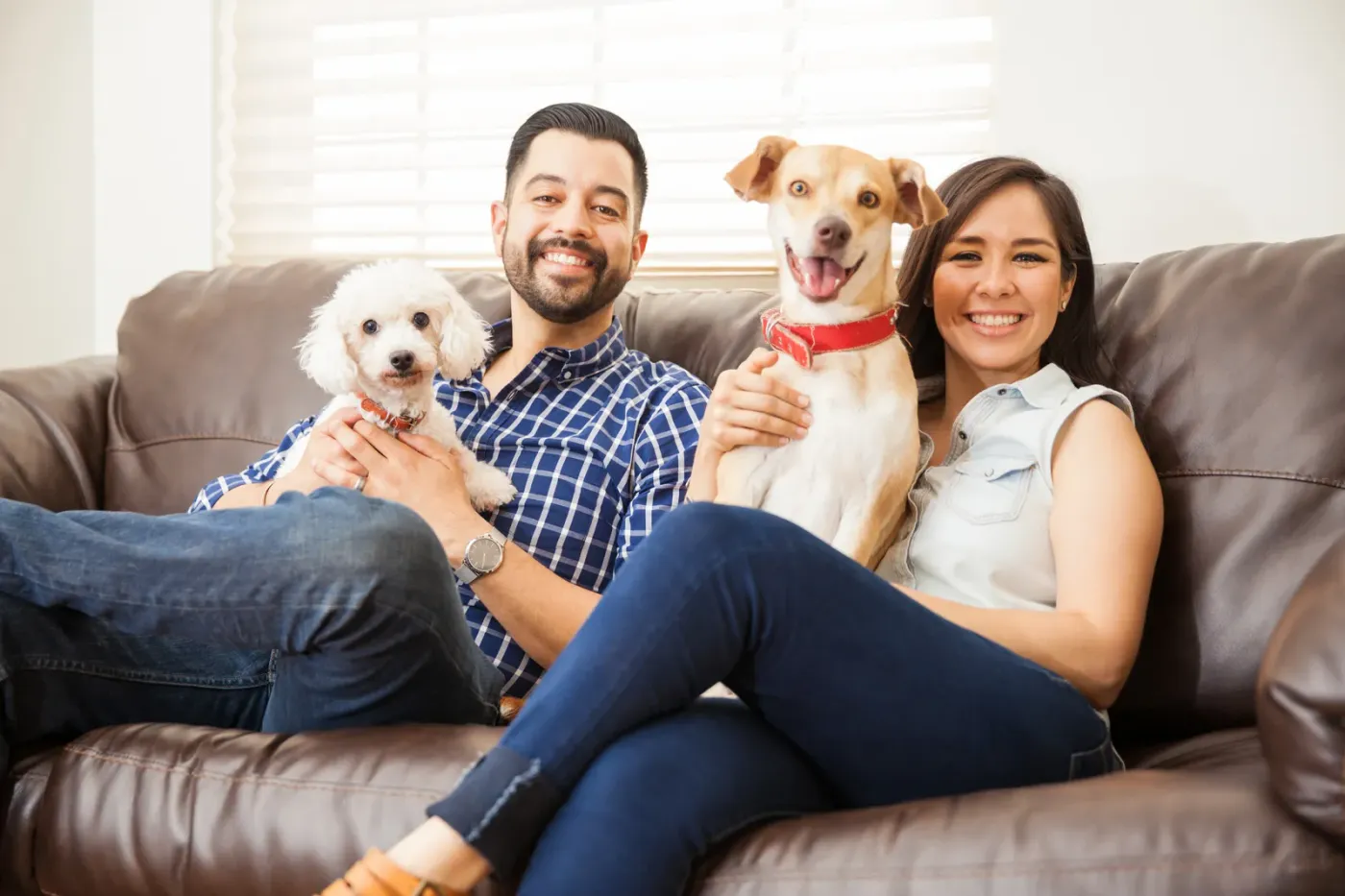
Two dogs, one leash in each hand, and a third dog appears across the street. One lunges, the other gets yanked, spun or frightened. Over time the calm dog may start scanning the street too. Splitting walks feels like double the work, and it is, but it is often the kindest change you can make for both. Here is how to separate the work and protect the easy dog.
Last reviewed October 4, 2026
Separate the routine
Two leashes, two schedules, one quieter street.
Walk the reactive dog alone, at quieter times and on routes with room to turn away, so you can keep distance from triggers and leave early. Walk the calm dog separately, somewhere livelier if it enjoys that. Joint walks can wait until the reactive dog has real skills. Until then, a joint walk puts two dogs' safety in one pair of hands.
Some reactive dogs redirect frustration onto whatever is closest, and on a two-dog walk that is often the housemate. Watch for stiff posture, snapping or a growl between the two right after a trigger. If you see it, stop joint walks and arrange a professional assessment. At home, frosted film on the lower panes where barking starts can block the view that sets it off, and gates keep the two apart during doorbell moments. Never punish a growl; it signals too much pressure.
- Separate walks at different times
- Routes with space to turn
- Frosted film where barking starts
- Gates during doorbell moments
Protect the easy dog
Keeping the calm dog calm while the other learns.
Calm dogs are often overlooked because they are easy. Give yours its own walks, its own training time and its own wins, so it is not just the passenger in someone else's rehab. Keep it out of the room during reactive episodes at the window or door. Many dogs pick up excitement from a housemate, and separation can limit how often that happens.
Training follows the same split, and each dog is looked at on its own. Behaviour Rehab is the program built for anxiety, reactivity and aggression, planned and priced after a full assessment. On-Leash Foundations is built for dogs who drag or lunge at squirrels, and the calm dog may need no program at all. Two-dog pricing and joint scheduling are not published. The consultation recommends the program for each dog, including a smaller one when it is enough.
Asked and answered
The questions people ask us.
Can I walk my reactive dog with my calm dog?
It is safer to walk them separately while the reactive dog is learning. Joint walks split your attention, and some reactive dogs redirect onto the nearest dog when a trigger appears.
Will my calm dog become reactive too?
It can happen, since many dogs pick up excitement and tension from a housemate. Keeping the calm dog away from reactive episodes and giving it its own positive outings reduces that exposure.
Should both dogs go to board and train?
Not necessarily. Each dog's needs are looked at separately, and the calm dog may not need a program at all. Whether two dogs can attend at once and how that is priced are not published, so ask at the consultation.
My reactive dog went after my other dog during a walk. What now?
Separate the dogs at home with gates or crates for now, and have a vet check both for injuries. Then arrange a professional assessment before any joint walks resume, since redirected aggression is a safety issue first.
Keep reading
Two dogs, two plans.
Book a consultation and we will look at both dogs, then recommend a plan for each, including a smaller one when it is enough.
From real owners
Rated 5.0 on Google.
Real Northline dogs