
Puppy raising
Senior dog and a new puppy
A puppy sees an older dog as a climbing frame, a chew toy and the most interesting thing in the house. The senior may see the puppy as a sharp-toothed problem who never stops. The introduction is covered elsewhere; this page is about daily life after it, keeping an older body safe and rested while a young one learns the rules.
Last reviewed October 4, 2026
Guard the senior
Give the older dog a puppy-free retreat.
Set up the house so the senior can always walk away. A baby gate across a bedroom or the senior's favourite corner gives a retreat the puppy cannot follow. Feed the two dogs in separate rooms, pick up chews and toys the older dog values, and keep the senior's bed off-limits. Stairs and slippery floors deserve attention too, since a puppy barrelling past can knock a stiff senior off balance.
Watch the older dog's signals closely: lip licking, turning away, freezing, leaving the room, or a low growl. A growl is useful information, so never punish it; interrupt the puppy and give the senior space instead. If the senior seems sore, sleeps far more, or snaps repeatedly, see the vet first, because pain often lowers patience. Any injury to either dog is a reason for a professional assessment.
- Gate a puppy-free retreat
- Feed the dogs apart
- Never punish the senior's growl
- Vet check if patience shrinks
Manage the puppy
Teach the puppy to leave the old dog alone.
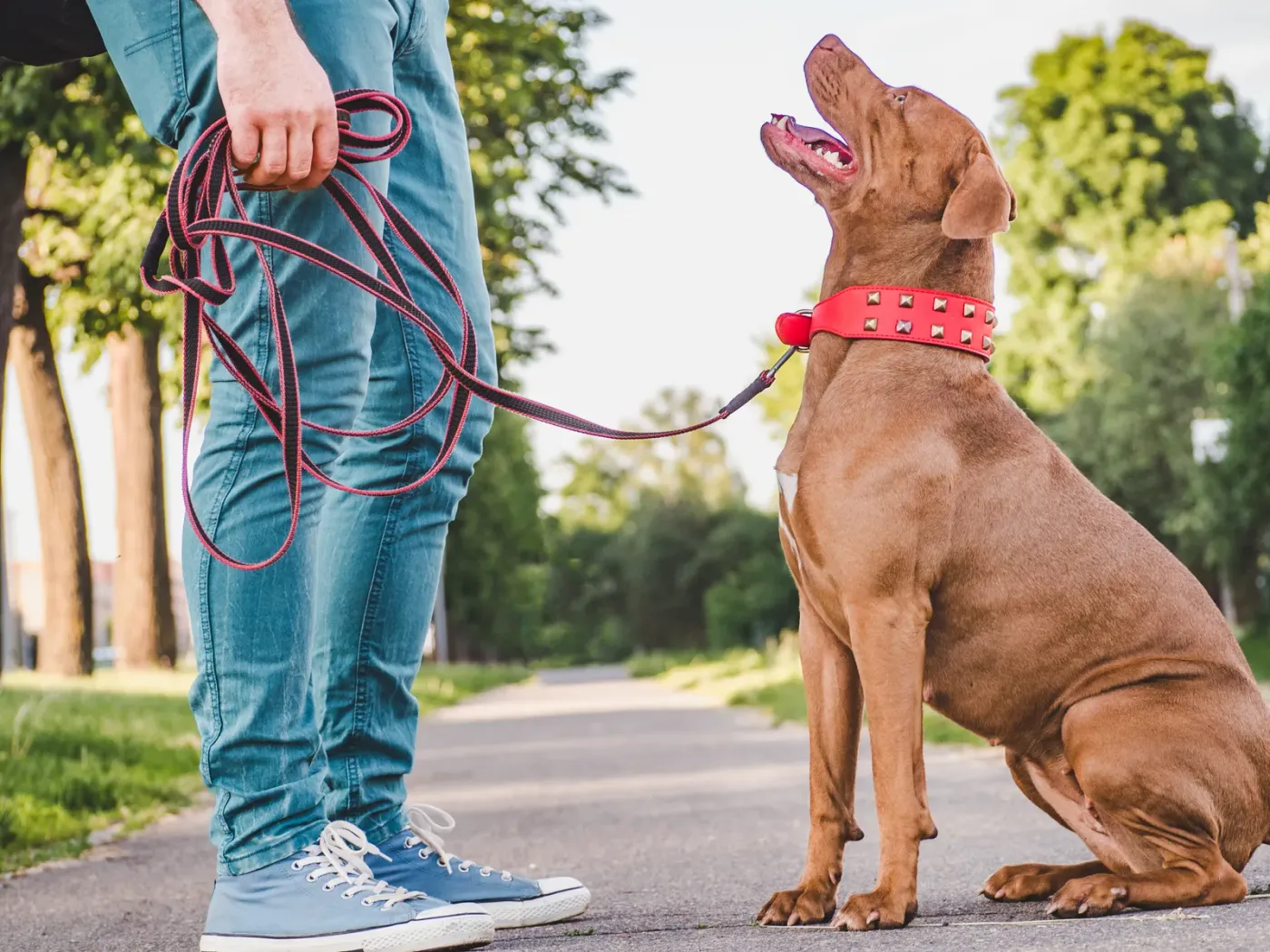
Much of the work lands on the puppy, not the senior. Use a pen, crate or leash during shared time so you control the distance. Teach name recognition and a place cue with markers and rewards, then reward the puppy generously for choosing the mat while the older dog rests nearby. Short, supervised overlaps teach more than long stretches of free play.
Give the puppy plenty of outlets that do not involve the senior: training games, chew time, and play with people. Then give the senior one-on-one time without the puppy, such as a slow sniff walk. Puppy Fundamentals is a 3-week board and train that works on crate comfort, place and calm manners; the consultation will point to a smaller option if home coaching covers it.
Asked and answered
The questions people ask us.
How do I stop my puppy from bothering my older dog?
Control access with gates, a pen or a leash, and reward the puppy for settling on a mat instead of pestering. Interrupt early, before the senior has to tell the puppy off.
Is it normal for my old dog to growl at the new puppy?
A brief growl is often an older dog setting a reasonable boundary, and it should never be punished. Repeated snapping, injury, or a senior who seems constantly stressed are reasons to see a vet and book a professional assessment.
Will a puppy make my senior dog more active?
Sometimes, but a puppy can also exhaust an older dog with sore joints. Protect the senior's rest and let any play happen on the older dog's terms.
Should my senior dog and puppy sleep together?
Not at first. Separate sleeping spots let the senior rest properly and help the puppy learn crate comfort, and you can revisit the question once the household has settled.
Keep reading
Keep the peace at home
Book a consultation and we will plan a household setup that protects your senior and gives your puppy clear rules.
From real owners
Rated 5.0 on Google.
Real Northline dogs