
Reactive & behaviour
Reactive dog with a muzzle in public
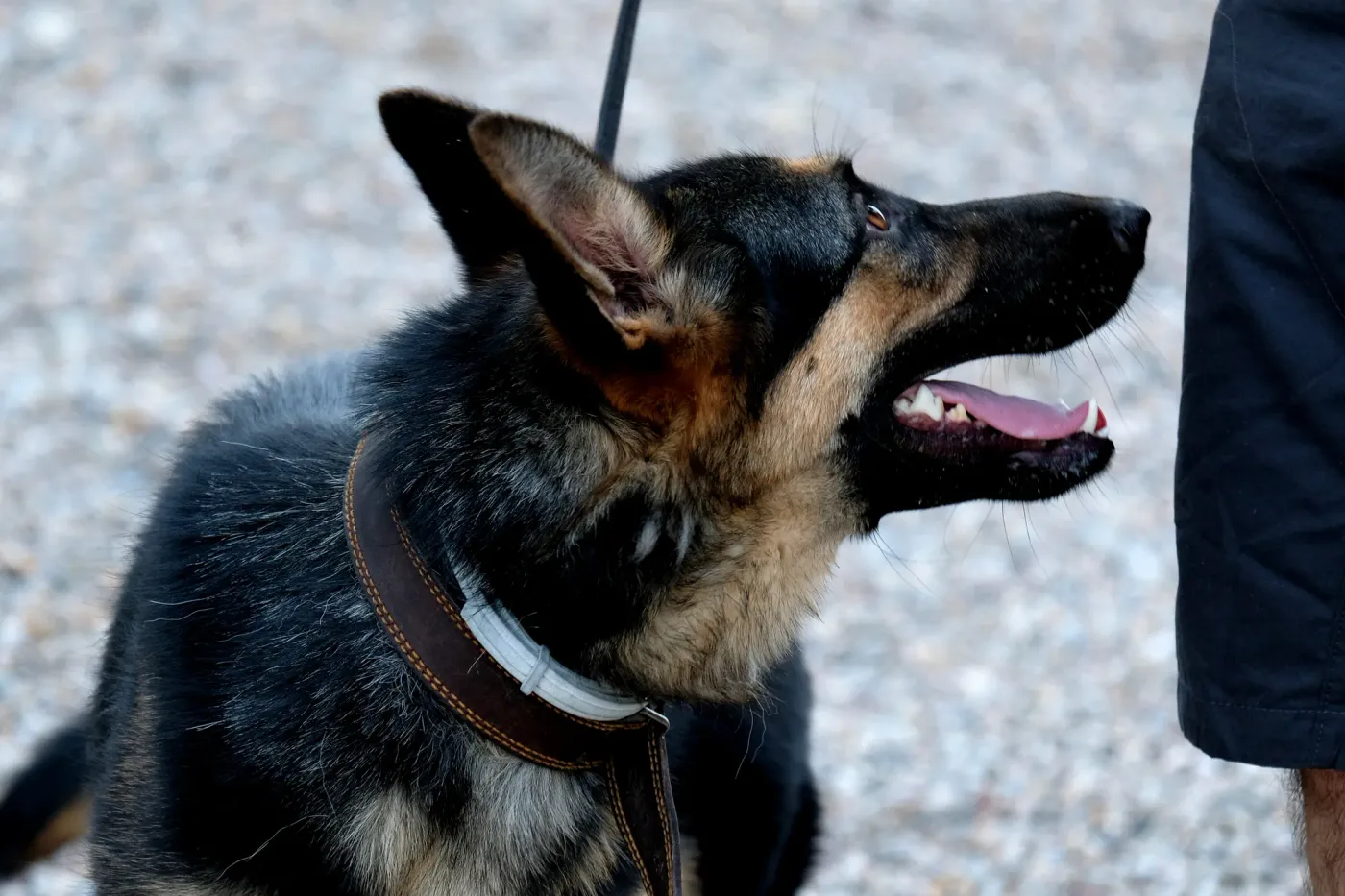
Muzzles carry a stigma they do not deserve. For a reactive dog, a well-fitted basket muzzle can make vet visits, busy sidewalks and new trails possible with a layer of safety and less tension at your end of the leash. It is not a training plan on its own. This guide covers fit, conditioning, what to say to people who stare or ask, and when an assessment matters.
Last reviewed October 4, 2026
Fit and conditioning
Teach your dog to like the muzzle first.
Choose a basket-style muzzle your dog can pant, drink and take treats through, and get professional help with fit; a muzzle that rubs or slips can create a new problem. Never put it on for the first time during a stressful outing. A dog whose first experience is a muzzle followed by a scary trigger often learns to dread it, and that is hard to undo.
Condition it at home in short sessions. Show the muzzle, then treat. Hold it out and treat when your dog sniffs it. Smear something soft inside so your dog pushes their nose in by choice. Gradually add a brief fastening, then a few seconds, then wearing it around the house and yard. Go at your dog's pace; pawing or backing away means step back.
- Basket style, room to pant
- Professional fitting before use
- Nose goes in by choice
- Worn at home before outings
Out in public
What to tell people, and what a muzzle buys you.
People will look, and some will ask. Keep a short, friendly line ready: "She's working on her manners, please give us some room." You do not owe anyone your dog's history. If someone approaches anyway, step between them and your dog, keep walking, and reward your dog for staying with you. A muzzle reduces bite risk; it does not mean your dog wants to be touched.
The real gift is freedom with a margin of safety. A muzzled dog can join more errands, wait in a vet's lobby or try a busier route while you keep working at a comfortable distance. Keep the leash short and the same exits ready you would use without it. Never use the muzzle as permission to push a dog closer to a trigger than they can handle.
Asked and answered
The questions people ask us.
Is it okay to muzzle a reactive dog in public?
Yes, a properly fitted and conditioned muzzle is a responsible safety layer. It does not replace distance, leash handling or training, and it should never be used to force a dog into situations it cannot cope with.
How do you get a dog used to a muzzle?
Pair it with food in small steps at home: look, sniff, nose in, brief fastening, then longer wear. Move on only when your dog is eager at each step, and have the fit checked by a professional.
Can a dog drink and pant in a muzzle?
In a well-fitted basket muzzle, a dog can usually pant, drink and take treats, which matters on warm days and for training. Snug fabric muzzles that hold the mouth closed are not meant for walks.
When should a muzzled dog see a professional?
If your dog has bitten, tries to bite through the muzzle, or reacts more intensely than before, book a professional assessment, and see a vet if anything changed suddenly. Behaviour Rehab accepts dogs with bite histories after a full assessment and includes in-depth owner education.
Keep reading
Muzzle on, plan in place
Book a consultation to talk through fit, conditioning and a plan for your reactive dog, sized to what your dog actually needs.
From real owners
Rated 5.0 on Google.
Real Northline dogs