
Reactive & behaviour
Reactive dog when kids visit
Children are the guests that matter most when a dog is reactive. They run, hug, drop food and reach for faces, and they cannot read a stiffening dog. The safest plan is rarely a training exercise. It is separation, solid management, and a clear-eyed look at whether your dog needs an assessment. Here is how to plan visits so nobody is set up to fail.
Last reviewed October 4, 2026
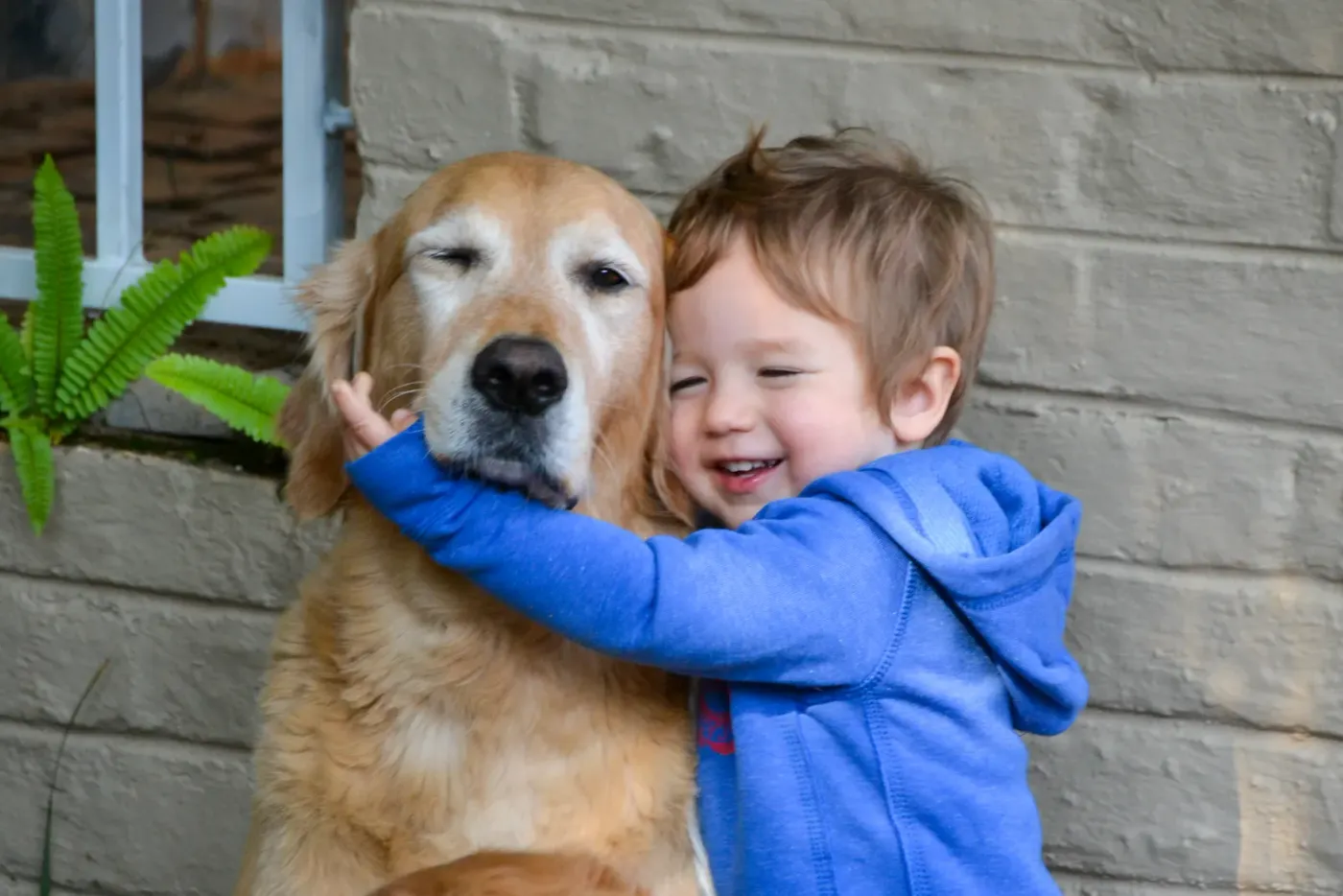
Separation first
Set up the house before the doorbell rings.
Decide where your dog will be before anyone arrives. A closed room with a crate, water, a chew and some background music, or a sturdy barrier the kids cannot open, works better than hoping your dog settles. Put a lock or a sign on the door if young children are around, since children open doors. If a calm adult can take your dog out for the visit, that is simpler still.
Give your dog something to do in the quiet room, like a stuffed food toy or a long chew, and settle them there before the children arrive, not in the middle of the noise. Check on your dog during the visit without letting excited children follow you in. Leave your dog where they are until every child has gone home and the house is quiet again.
- Dog settled before arrival
- Lockable door or sturdy barrier
- Long chew or food toy
- Adult supervision every moment
Rules and warning signs
Children never take part, and warning signs count.
Even with a dog who seems fine, children should not feed, pet, train or test the dog during a visit. Tell parents the plan in advance so nobody is surprised by a closed door. Brief the kids simply: the dog is resting and that room is off-limits. If a meeting ever happens later, a professional should plan it, not an adult trying it on the spot.
Watch for the quiet signals: freezing, a hard stare, lip licking, turning away, a growl. Never punish a growl; it is your dog saying the situation is too much, and removing it only removes the warning. Move your dog further from the children instead. Any growl, snap or bite toward a child, or a sudden change in behaviour, means a vet check and a professional assessment before the next visit.
Asked and answered
The questions people ask us.
How do you keep a reactive dog safe around visiting kids?
Separate your dog completely for the visit, in a closed room or crate with a chew, or out of the home with a trusted adult. Management is the plan here, not training.
What should happen after a reactive dog growls at a child?
Calmly move your dog away and keep them separated from children from then on. Do not punish the growl, which is a warning you want to keep. Book a vet check and a professional assessment before any further contact.
Can a reactive dog be trained to be okay with kids?
Children should never take part in training. A professional can assess your dog and build a plan around adults and distance, and Behaviour Rehab is built for reactivity, fear and aggression after a full assessment, including dogs with bite histories.
Can a dog stay in a crate when children visit?
Yes, if your dog is already comfortable in a crate and it sits in a quiet room the kids cannot reach. A crate in the middle of a busy living room puts a stressed dog on display, so the location matters as much as the crate.
Keep reading
Plan the next visit safely
Book a consultation and we will assess your dog and lay out a safe plan for family visits, from management to a full program.
From real owners
Rated 5.0 on Google.
Real Northline dogs