
Behaviour
Reactive dog walking equipment
Reactive dog walking equipment is a short list, and the value is in fit, hardware condition and knowing which failure each piece covers. We recommend choosing every item for one job: keeping the dog attached, keeping the leash manageable in one hand, or keeping teeth away from people and dogs where there is bite risk. Here is how we choose, and the line between managing a walk and training the dog.
Last reviewed September 25, 2026
Choosing the kit
Each piece covers one failure, so choose it for that.
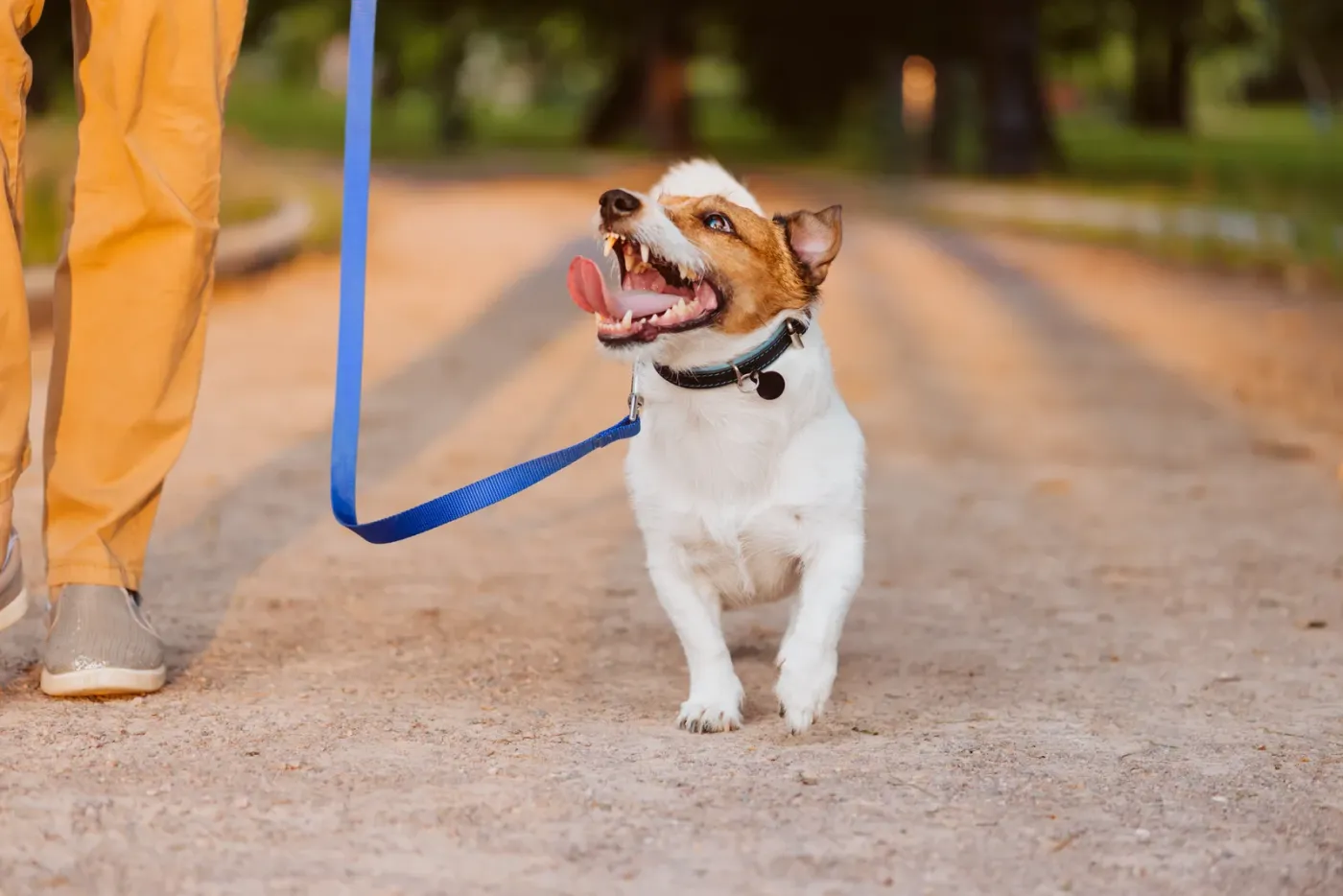
For the collar or harness, we recommend following the manufacturer's fit guide and checking it on a calm dog: snug under each strap without rubbing, and a leash ring that sits where you can hold it close. No fit feature makes a harness impossible to back out of, so we recommend rechecking the fit before each walk. For the leash, the criteria are controllable length, a handle you can grip and hardware you can inspect; a fixed-length leash with a solid clip meets all three.
Retractable leashes have limits here: the length sits behind a button, the cord is hard to gather quickly, and the dog is usually out in front. Where there is bite risk, a basket muzzle goes on before the walk, and only once the dog is conditioned to it; our muzzle training guide, linked under Sources, covers that process. A backup attachment covers one failure, a clip opening or a harness slipping, and only when it runs to a separate point on the dog.
- Fit checked against the manufacturer's guide
- Leash length controlled by hand
- Muzzle conditioned before it goes outside
- Backup attached to a separate point
Introduced, then trusted
Nothing goes on for the first time mid-reaction.
We recommend introducing every item at home, on a calm dog, before it comes on a walk. The harness is fitted, checked and worn around the house; a new leash is walked in the yard; the muzzle follows the gradual conditioning in our guide before a strap is done up outside. We also recommend a hardware check before each walk: clip springs, stitching at the handle and ring, buckles that click fully, and stretched straps. A strange thing appearing mid-reaction does not help.
In Behaviour Rehab, our board and train for reactivity, the tool question is answered per dog. Markers and rewards come first; whether a slip lead, prong collar or Educator e-collar joins the kit depends on that dog, and it is introduced properly, then taught to you at handover. Bite histories are accepted after a full assessment, and the program runs 5 to 6 weeks at $4,850 to $5,760 plus GST. The kit manages the walk; the program works on reactivity at the dog's pace.
Asked and answered
The questions people ask us.
What is the best harness for a reactive dog?
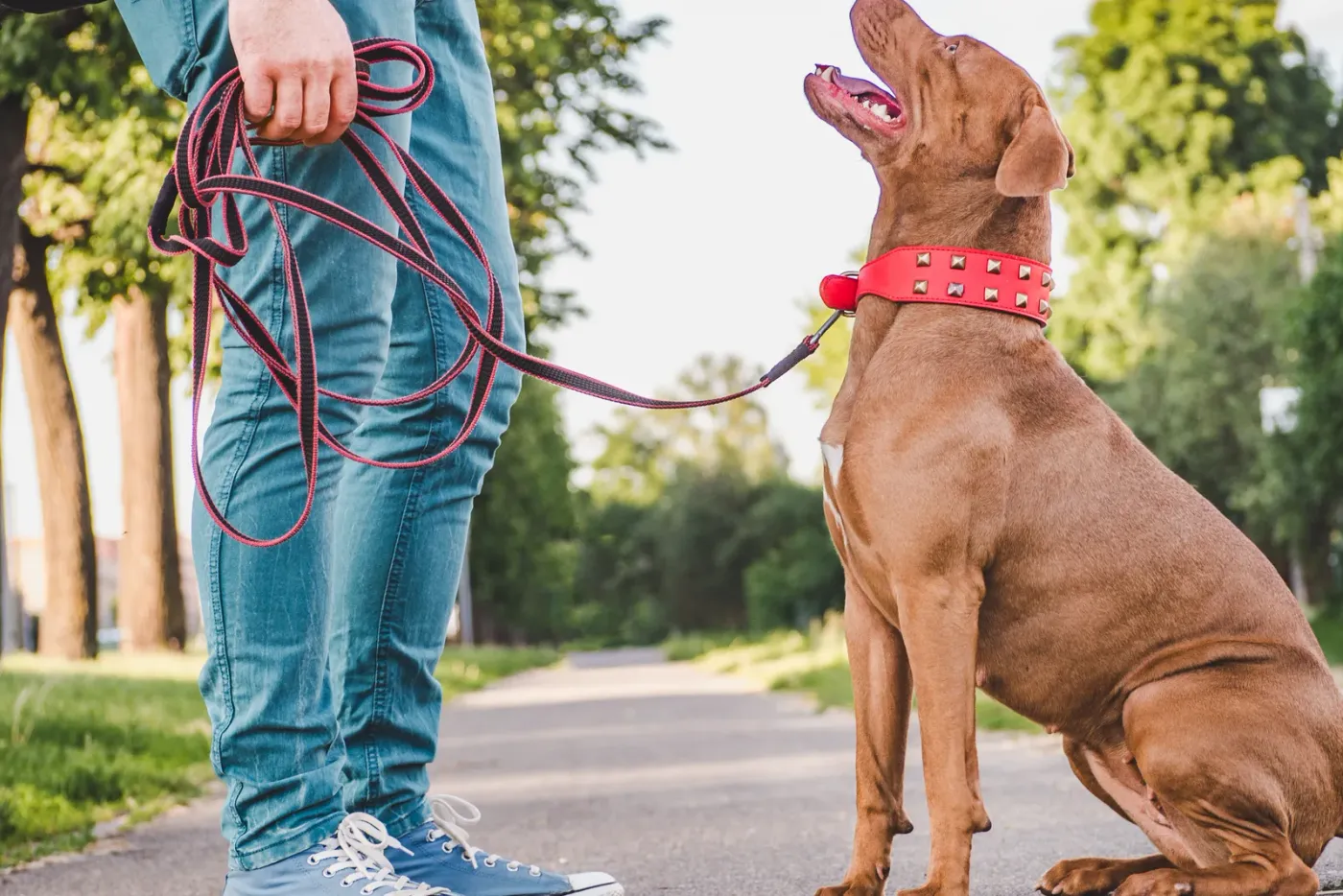
We recommend fit over brand: a harness adjusted to the manufacturer's guide, checked on a calm dog, with a leash ring you can hold close to the body. No harness stops a reaction on its own, and no fit feature makes backing out impossible, so we recommend rechecking the fit before every walk. Whether a backup attachment makes sense depends on the dog and the attachment points available.
What leash is best for a reactive dog?
We recommend a fixed-length leash with a solid handle and a clip you can inspect, short enough to keep the dog beside you on a busy path. That is a handling preference, separate from the law: Calgary's bylaw requires dogs to be on leash in public places other than designated off-leash areas, and the City's page, linked under Sources, has the details. A retractable puts the length behind a button, which is the part we find hard to manage in a hurry.
Does my reactive dog need a muzzle for walks?
If your dog has bitten or snapped, or you are not sure what he would do on reaching the trigger, we recommend a basket muzzle for walks. It needs conditioning at home first, which our muzzle training guide walks through, and a basket style still lets the dog pant, drink and take treats. A muzzle manages the risk; it does not change what the dog does at the end of the leash.
What equipment do I need for a reactive dog?
A collar or harness fitted to the manufacturer's checks, a fixed-length leash, a treat pouch within reach, a basket muzzle where there is bite risk, and a backup attachment if the dog and the hardware call for one. We recommend inspecting the hardware before every walk. Any training tool beyond that list is something we would want matched to the individual dog and taught to you, rather than chosen by category.
Keep reading
Gear up, then train.
Book a consultation. We will fit the kit to your dog, introduce each piece properly, and map the training behind it.
From real owners
Rated 5.0 on Google.
Real Northline dogs