
Straight answer
What is dog reactivity?
Reactivity is the word for the dog who is lovely at home and a different animal the moment another dog appears at the end of the block. It looks alarming, it feels embarrassing, and it sends a lot of people looking for a trainer. It is also, in most cases, a dog that is overwhelmed rather than dangerous, and that distinction changes everything about how it gets fixed.
Last reviewed August 26, 2026
Forms and causes
The forms it takes and why cities breed it.
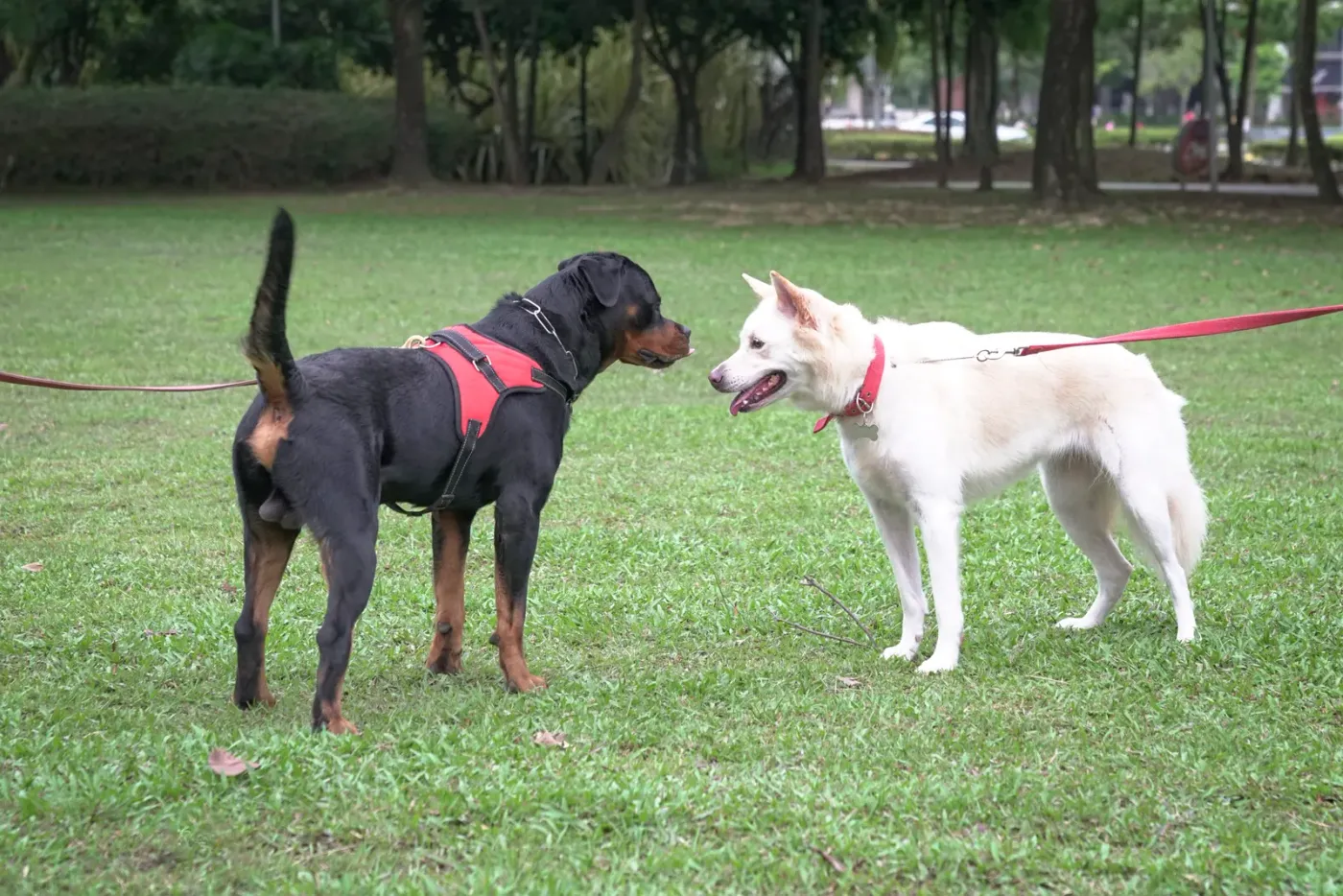
Reactivity wears several faces. Leash reactivity is the classic: a dog that is fine off leash but erupts when restrained. Barrier reactivity is the same eruption behind a fence, a window or a car door. Underneath, the fuel is usually one of three things: fear, where the dog wants the trigger gone; frustration, where the dog wants to reach it and cannot; or excitement, where the dog simply cannot contain itself. The barking looks identical from across the street. The fix is not.
Aggression is different in intent. An aggressive dog means to make contact and follows through when it can; a reactive dog is making noise to change distance and usually has no plan beyond that. City life manufactures reactivity because it removes choice. On a sidewalk or a shared pathway a dog cannot arc away, slow down or sniff a polite hello; it is walked straight at the thing that worries it, on a short line, over and over, until the eruption becomes the habit.
- Leash and barrier are the settings
- Fear, frustration or excitement underneath
- Noise to change distance, not harm
- Sidewalks remove the dog's options
The way out
The training path, and the pathway problem.
Training starts with distance and a dog that can think. We find the point where your dog notices the trigger but can still take food and answer its name, then teach a handful of skills there with markers and rewards: a heel with real engagement, a turn away on cue, a place command that means settle. Only when those hold do we shrink the distance. Tools are matched to the dog and taught to you before anything goes home.
Then there is the Calgary reality. The pathway network is shared with cyclists, runners, strollers and other dogs, and there is rarely room to give a nervous dog space. A reactive dog cannot be trained only in a quiet yard and then walked there. That is why real-world proofing is built into the work, and why Behaviour Rehab, our 5 to 6 week board and train at $4,850 to $5,760 after assessment, ends with owner education aimed at the walk you actually take.
The programs
The behaviour-first formats.
Assessment before plan, thresholds before pressure. These programs run that way.
W · One-hour session
Private Training
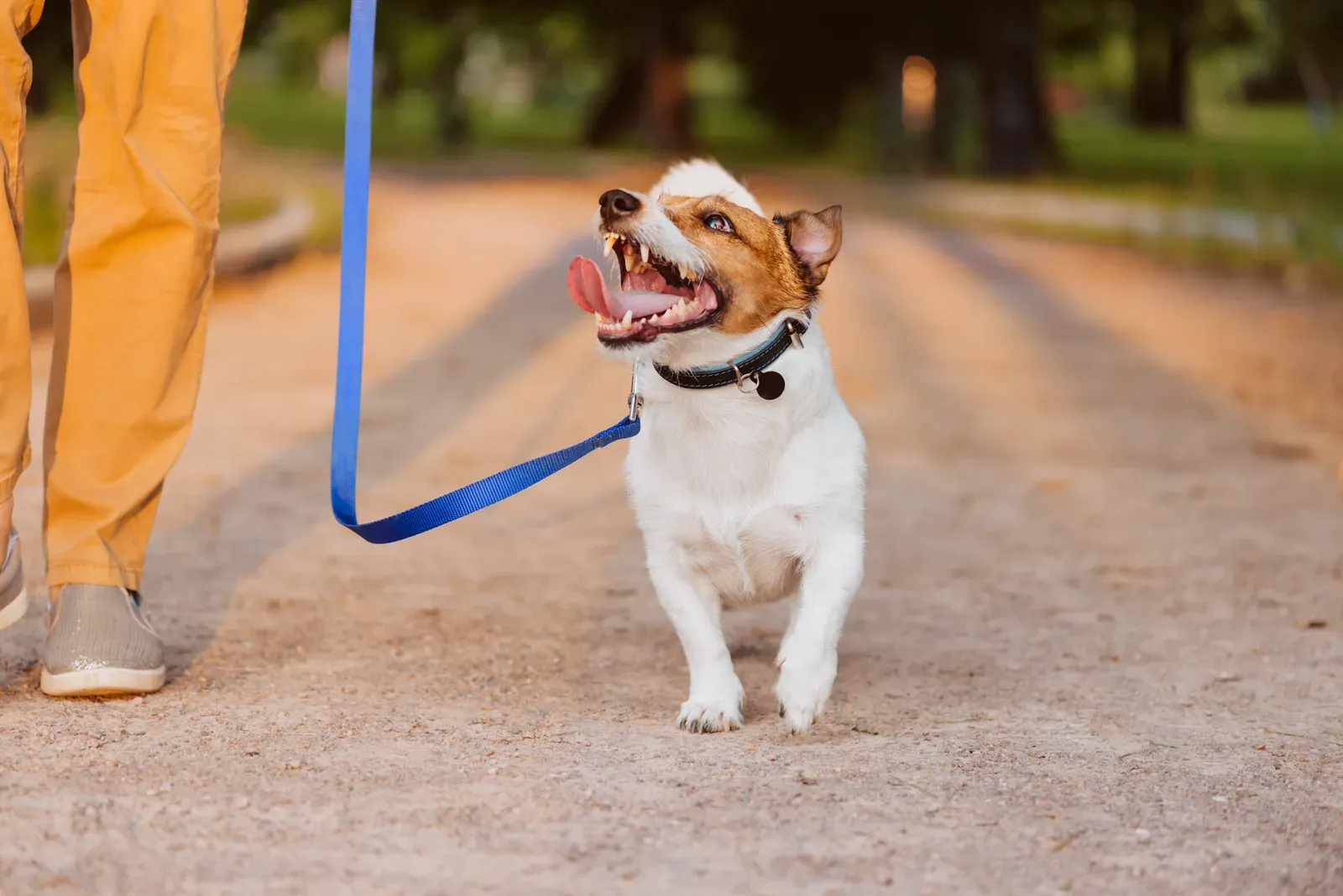
One-on-one coaching with you on the other end of the leash.
Includes a written weekly plan to work from
S · 5–6 week board & train
Behaviour Rehab
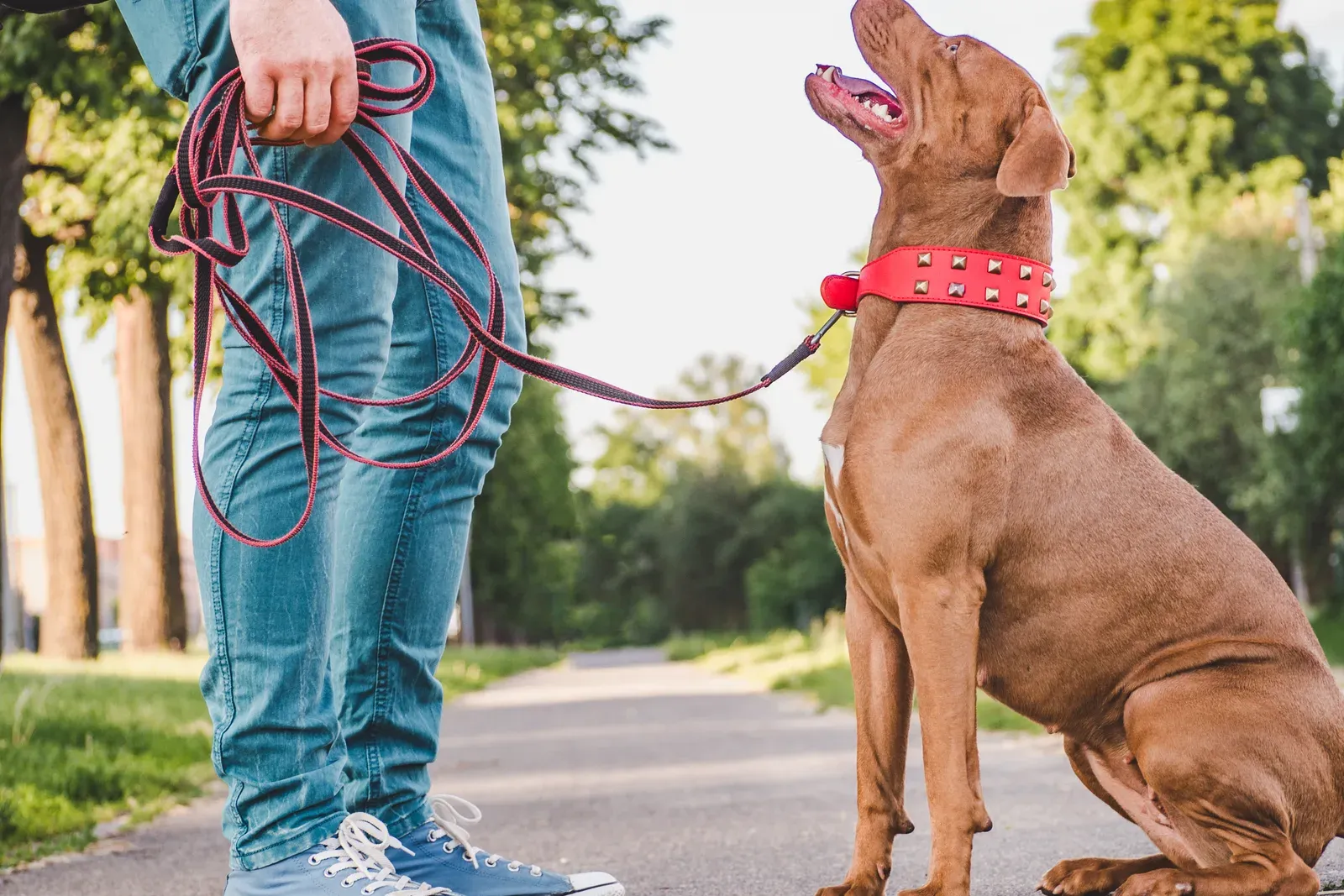
Kaitlin's specialty, and the work she loves most.
Includes assessment-built plan, 2 follow-ups, deep owner education
Asked and answered
The questions people ask us.
What is dog reactivity?
Reactivity is an oversized reaction to a normal trigger, most often another dog or a stranger, seen as barking, lunging, spinning or freezing. It is a stress response rather than a plan to do harm. Most reactive dogs are perfectly pleasant once the trigger is out of range.
What is the difference between reactivity and aggression?
Reactivity is about distance: the dog makes a scene to push the trigger away or to get closer to it. Aggression is about contact: the dog intends to bite and will if given the chance. The two can overlap, which is why an assessment comes before any rehab plan.
What does it mean when a dog is reactive?
It means the dog has learned that a big display works: the other dog moves on, the owner turns around, the pressure ends. Under the display is usually fear, frustration or excitement that the dog has no better outlet for. Reactive is a description of behaviour, not a verdict on the dog.
Is there dog reactivity training in Calgary?
Yes. Northline K9 works one-on-one with reactive dogs in Calgary and the surrounding area, with no group classes. Mild cases often suit Private Training at $150 per one-hour session with a written weekly plan; entrenched reactivity is usually a Behaviour Rehab board and train, customized after a full assessment.
Keep reading
Get the walk back.
Tell us what sets your dog off and where it happens. Book a consultation and we will assess before we recommend.
From real owners
Rated 5.0 on Google.
Real Northline dogs