
Reactive & behaviour
Reactive dog on a narrow pathway
A narrow pathway takes away the one thing a reactive dog needs most: room. Fences, hedges and blind bends put people right on top of you before either of you is ready. This guide covers safety gear, reading sightlines, the step-off and the U-turn, and the signs that mean a vet visit or a professional assessment should come first.
Last reviewed October 4, 2026
Before you set out
Safety starts with the gear and the route.
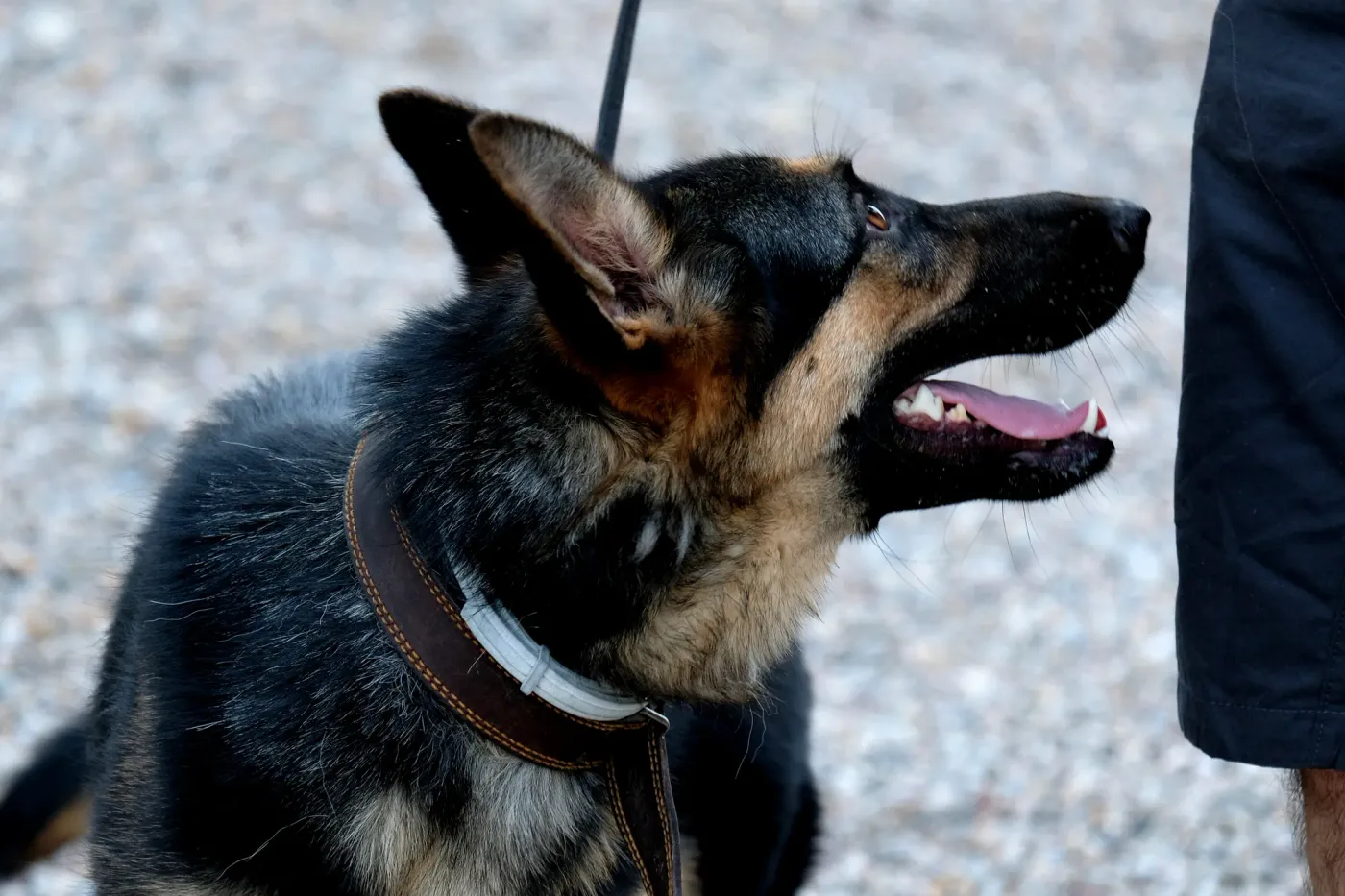
Start with what keeps everyone safe. Use a well-fitted collar or harness and a fixed-length leash, not a retractable one, because a narrow path leaves no room for a dog who suddenly hits the end of a long line. Hold the leash short enough that your dog cannot reach the middle of the path. If your dog has ever bitten or come close, talk to a professional before walking narrow routes at all.
Choose routes deliberately. A path with long straight stretches lets you see people coming; one with tight bends and fences on both sides hides them until they are close. Early on, favour quieter times and paths with wide shoulders or side gaps you can duck into. Keep a mental map of every driveway, bench pocket and gate along your regular loop, so you always know where the next exit is.
- Fixed-length leash, no retractable
- Escape spots mapped in advance
- Treats ready before the bend
- Dog walks on your far side
The two moves
Step off or turn around, and do it early.
The step-off works when you have a gap. Move into a driveway or wide spot, put your body between your dog and the path, and feed or ask for a simple sit while the person passes. Your dog can look; reward calm looking and the glance back to you. Keep moving away afterwards, so the moment ends on distance rather than a long stare.
The U-turn is for when there is no gap. Practise it at home first: a cheerful cue, a quick pivot, a few brisk steps the other way, then a reward. Practised when nothing is happening, the aim is a turn your dog can follow with little thought. Use it the instant someone appears at the far end. If your dog is already lunging, turning away is still the right call; leaving is management, not a reward for the outburst.
Asked and answered
The questions people ask us.
What do you do when someone comes around a corner on a narrow path?
Turn away and create distance immediately, even if your dog is already reacting. Keep the leash short, keep your body between your dog and the person, and leave calmly. Getting out is management; training happens later at a distance your dog can handle.
Should a reactive dog sit while people pass on a trail?
Only if there is room and your dog can still take food. A sit squeezed into a tight spot with a person brushing past often adds pressure. More distance tends to help more than a perfect position.
When is reactivity on walks a job for a professional?
If reactions are new, sudden or getting stronger, start with a vet visit and ask whether pain or discomfort could be involved. If your dog has bitten, redirected onto you, or you cannot hold the leash safely, book a professional assessment before walking narrow routes again.
Can training help a reactive dog pass people on narrow paths?
Training can work on the pieces a tight path asks for: a U-turn on cue, staying on your far side, and taking food when someone appears at the far end. No one can promise how a particular dog will respond, and a fenced path with no exits stays a hard setup. Bring a description of your actual route to the consultation, where we recommend a program, including a smaller one when it is enough.
Keep reading
Walk narrow paths with a plan
Book a consultation and we will look at your routes, your dog and the right next step, including the smallest option that fits.
From real owners
Rated 5.0 on Google.
Real Northline dogs