
Puppy raising
Puppy second fear period: what changes
Many owners describe it the same way: the puppy who strolled past everything now barks at the recycling bin it has seen every day. Adolescence brings a surge of independence, and for many dogs it also brings a wobble of fear. The two arriving together can make a teenage dog look both bolder and jumpier. Here is what changes, and how to steer through it.
Last reviewed October 4, 2026
What actually shifts
Adolescence and fear arrive at the same time.
Two things often happen at once. Your adolescent dog wanders farther, ignores recall more, and tests old rules. At the same time, it may startle at objects that were never a problem: a parked bike, a lawn ornament, a person carrying a ladder. Owners frequently read the spook as stubbornness, then push harder, which tends to deepen the worry. Treat the new fear as real, even when the object is boring.
Manage first. Keep walks on leash, even where your dog used to run free, since a spooked adolescent with weak recall can bolt. Pick quieter routes and times for a while, and skip crowded off-leash areas. Keep the daily routine steady so home stays predictable. Book a vet visit if the fear appeared suddenly, because changes in hearing, vision, or comfort can look exactly like a behaviour change.
- Leash on, even in familiar spots
- Quieter routes for a while
- Steady routine at home
- Vet visit for sudden changes
Steering through it
Let the dog look, then reward the look.
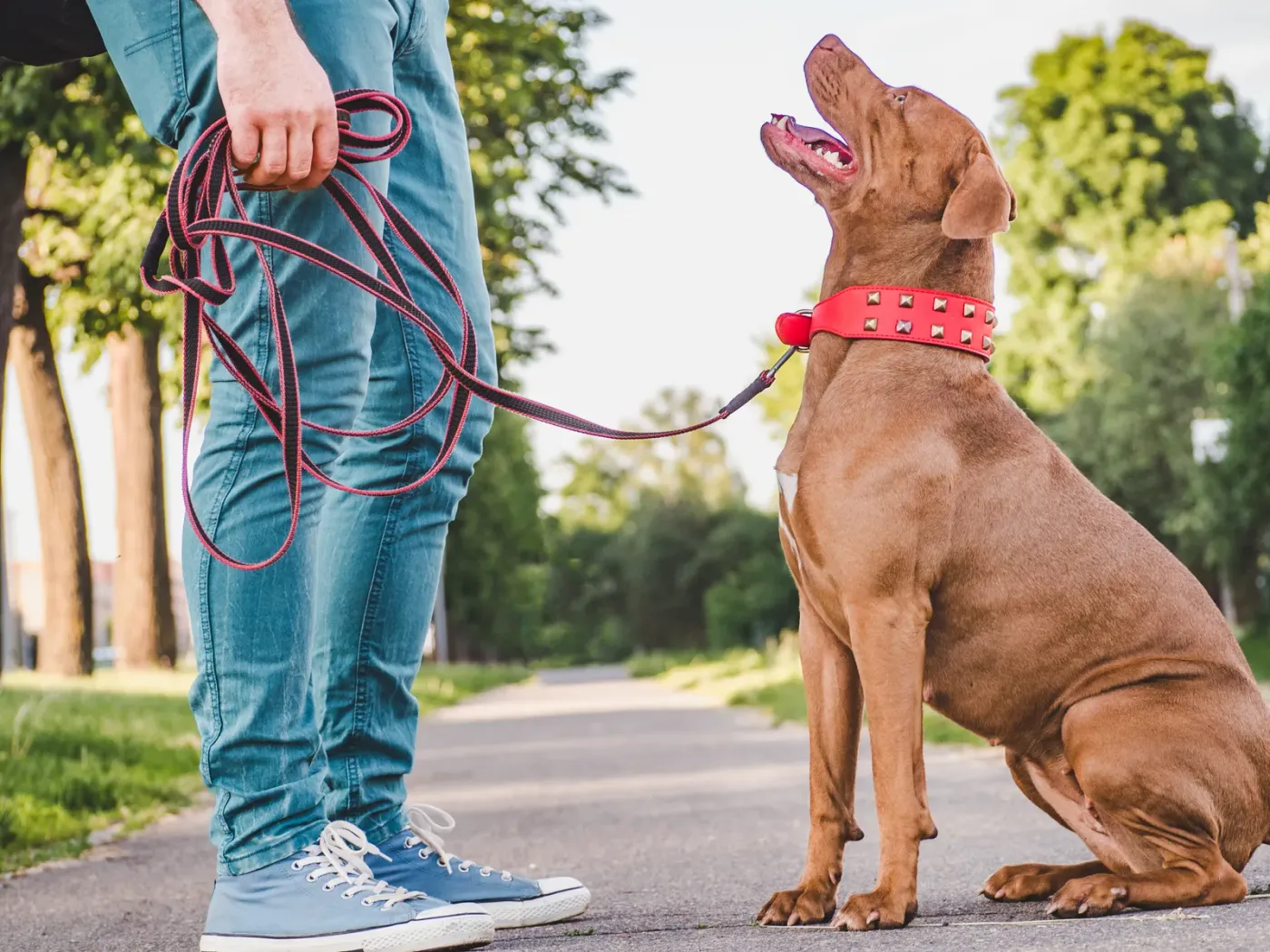
When your dog spots the scary thing, stop at a distance where it can still eat and think. Let it look, then mark and reward the look. If it wants to move closer on its own, let it, slowly, and let it leave whenever it chooses. Never drag, lure or carry it toward the object. Rebuilding sit, down and place at home also gives a wobbly teenager familiar jobs to lean on.
Bring in a professional if fear spreads to more things, if your dog starts barking, lunging, or growling at what scares it, or if it simply is not easing. Behaviour may temporarily increase as you work, and persistence or escalation is a reason to reassess. A Private Training session at $150 + GST builds a written plan, and the consultation points you to the smallest program that will do the job.
Asked and answered
The questions people ask us.
is my dog going through a second fear period
If an adolescent dog suddenly startles at familiar things, or turns wary of people or places it used to enjoy, it may be a fear period. A vet check rules out a physical cause first. After that, handle it with distance and calm rewards rather than pushing through.
how long does the second fear period last
It varies from dog to dog, and nobody can honestly give you a set length. What matters more is how you handle it while it is happening. If fear is spreading or not easing, ask a professional to assess your dog.
should I make my scared puppy face its fears
No. Forcing, dragging or luring a worried dog toward something often makes the fear stronger. Let it observe from a comfortable distance, reward calm looking, and let it choose to approach or leave.
my adolescent dog suddenly barks at strangers
This can be part of a fear period, especially if your dog was previously friendly. Give more distance, avoid forced greetings, and reward calm looks at people. Barking that grows into lunging or growling is a reason to get a professional assessment.
Keep reading
Help your teenage dog through it
Book a consultation and we will look at what changed, find the right next step, and plan from there.
From real owners
Rated 5.0 on Google.
Real Northline dogs