
Adventure dogs
How to teach a dog to wear a backpack
A dog backpack looks like a simple purchase and turns into a training project the moment the dog stands frozen in the hallway, or drops and rolls to scrape the thing off. The fix is the same as with any new piece of gear: fit before weight, home before trail, and the dog's opinion of the pack built one easy repetition at a time. Here is the order we use.
Last reviewed October 4, 2026
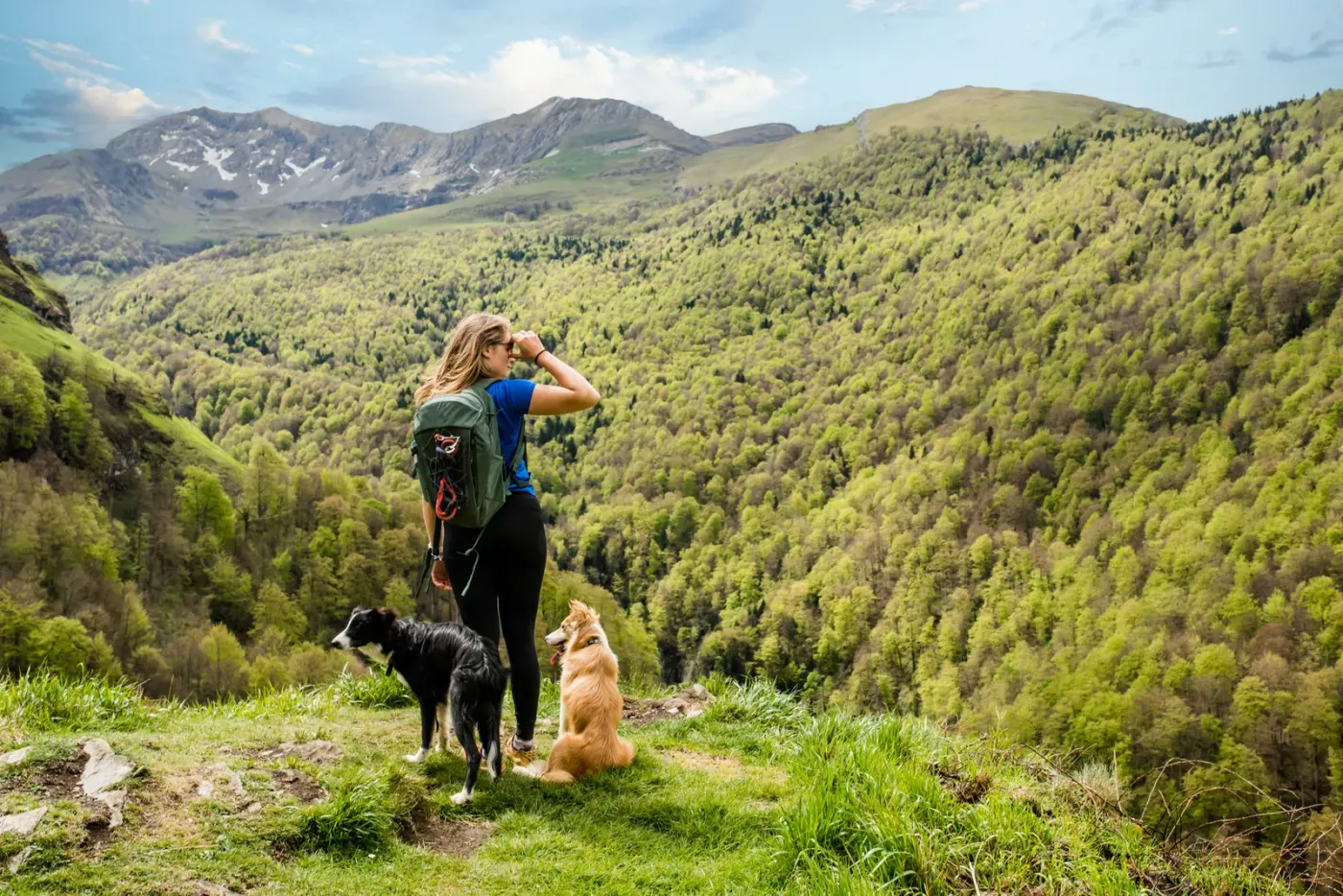
Fit then weight
An empty pack at home before a loaded one anywhere.
Fit comes first because a rubbing pack teaches the dog to hate it. The saddle should sit over the shoulders and ribs, not the lower back, with the chest strap clear of the throat and the girth strap behind the elbows with two fingers of room. Put the empty pack on, mark, pay, and take it straight off. Repeat until the dog pushes into it. Then leave it on through a meal, a game and a nap so it becomes furniture.
Short walks in the empty pack come next, so the dog learns it is wider than it thinks and stops clipping doorframes. Weight comes last and small: a water bottle each side, balanced as closely as you can manage, with the load low and snug so it does not swing. Your vet sets the ceiling and the starting age; a young dog or one with joint trouble may need to carry nothing at all. Add weight only while the gait stays easy.
- Two fingers under every strap
- Empty pack through a meal
- Weight only after easy walks
- Vet sets the load and age
Freezers and rollers
Shutdowns, rub spots, and the job a pack gives a busy dog.
A dog that freezes in the pack is telling you the step was too big. Go back to the empty pack, pair it with meals, and move the dog with a happy voice and food rather than the leash. Never drag a frozen dog forward. The roller is trying to scrape the pack off and often has a strap too tight or a saddle too far back. Refit before you retrain. If it persists with a good fit, get a professional assessment.
Rubbing shows up behind the elbows, in the armpits and along the chest strap. Check those spots at every break and at home after every walk; thinning fur or pink skin means the fit or the load is wrong, not the dog. Why bother? Many busy, scanning dogs settle when they have a job, and a pack is a job they can feel. The dog carrying its own water tends to walk straighter and spend less of the hike hunting for trouble.
Asked and answered
The questions people ask us.
How do you get a dog used to wearing a backpack?
Fit it empty, put it on for a moment, mark and pay, take it off, and repeat until the dog leans into it. Then leave it on through meals and play at home before any walk. Weight only goes in once the empty pack is boring on a walk.
How much weight can a dog carry hiking?
Ask your vet rather than a rule of thumb from the internet, because the answer depends on the dog's age, build, condition and joints. Whatever the ceiling, start far below it, balance both sides, and stop adding weight if the gait changes. Young dogs may need to carry nothing until they are grown.
What if the dog refuses to walk in the backpack?
Freezing means the step was too big, so go back to the empty pack for brief moments paired with food and let the dog move on its own. Never drag the dog forward or hold it still. If a well-fitted pack still shuts the dog down, a professional assessment is the right next step.
Does a backpack calm a hyper dog on walks?
Many busy dogs settle somewhat when they have a job to carry, and a pack can give a scanning, pulling dog something to focus on. It is a tool, not a fix; the heel and recall still need training. Keep the load light and the fit checked, or the pack becomes the problem.
Keep reading
A job for a busy dog
Want a dog who carries its share and walks calmly beside you on the trail? Book a consultation.
From real owners
Rated 5.0 on Google.
Real Northline dogs